Alert Issued for Severe Solar Storms

This image provided by NASA's Solar Dynamics Observatory shows a solar flare, right, on May 14, 2024. (NASA/SDO via AP)
Space weather forecasters have issued an alert for powerful solar storms expected to hit Earth Tuesday night into early Wednesday—events that could create dazzling northern lights while also disrupting communications and navigation systems.
According to the National Oceanic and Atmospheric Administration (NOAA), several coronal mass ejections—massive bursts of charged solar particles—have erupted from the sun in recent days and are now barreling toward Earth. These geomagnetic storms, rated at a G4 severity level on a five-point scale, are considered “severe” and capable of temporarily interfering with radio signals, GPS, and even sections of the power grid.
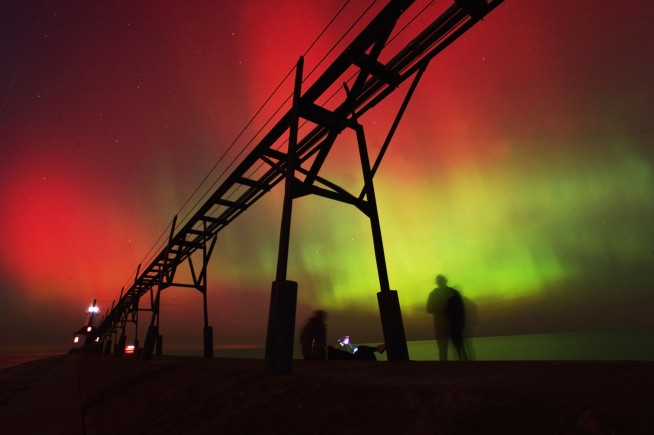
How brilliant the auroras appear, and how far south they can be seen, depends on the timing and impact of these solar eruptions as they collide with Earth’s magnetic field. NOAA forecasters say the northern lights could be visible well beyond their usual range—potentially as far south as Alabama and Northern California. Those eager to watch can check real-time forecasts on NOAA’s Space Weather Prediction Center website or use aurora-tracking apps.
The surge in auroral activity is part of the sun’s natural 11-year cycle, during which its magnetic poles flip and create powerful magnetic disturbances. This ongoing solar “makeover” has recently triggered some of the most spectacular sky shows in decades. Last year, Earth was hit by the strongest geomagnetic storm in 20 years, producing glowing skies across the Northern Hemisphere—from Germany and the UK to New England and New York City.
While the light displays are a wonder to behold, scientists caution that solar storms can have serious side effects. When high-speed solar particles collide with Earth’s magnetic field, they can cause voltage fluctuations in power systems and disrupt satellite operations, radar, and air traffic control communications.
Forecasters expect the current G4-level activity to peak Wednesday, with a slightly milder G3 “strong” storm likely on Thursday.
President Trump has been briefed on national infrastructure protections and ongoing monitoring efforts as the U.S. prepares for potential impacts from the incoming solar storms.
About Post Author