Cat’s Death Could Change Robotaxi Rules in SF
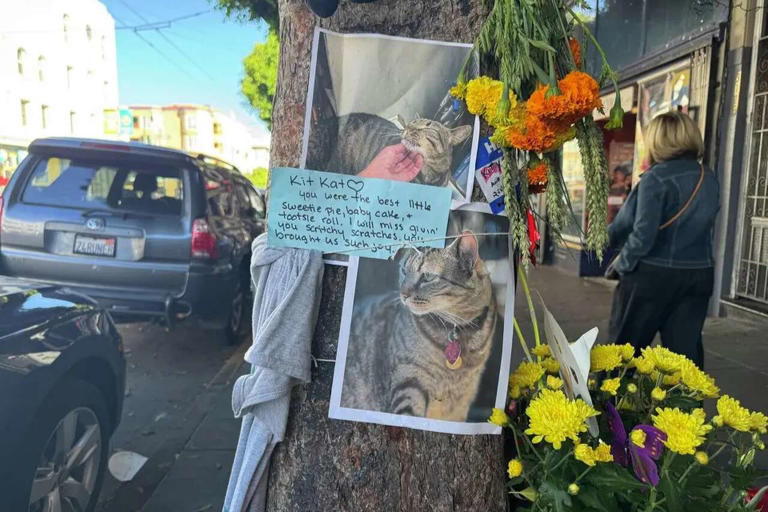
A makeshift altar memorializes KitKat, a feline killed by a Waymo driverless taxi on 16th Street in San Francisco's Mission District. (Aidin Vaziri/S.F. Chronicle)
The death of a well-known San Francisco cat named KitKat — affectionately known by locals as the “Mayor of 16th Street” — has ignited renewed anger toward autonomous vehicles in the city.
KitKat, a friendly neighborhood fixture who spent his days greeting customers outside Randa’s Market in the Mission District, was struck and killed last week by a Waymo robotaxi. The company says the cat darted under the vehicle as it began to pull away.
Market owner Mike Zeidan told Rolling Stone that witnesses desperately tried to stop the driverless car. “This lady said there was nobody to yell at in the car, no driver. They were touching the car, hoping it wouldn’t move, and it just … ran over him,” Zeidan said.
Heartbroken community members have built a small shrine for KitKat outside the market, leaving flowers, photos, and notes. Online, tributes have poured in for the cat that many saw as a symbol of the Mission’s spirit.
Local officials are using the tragedy to call for greater oversight of autonomous vehicles. San Francisco Supervisor Jackie Fielder announced plans to introduce legislation allowing counties to decide whether self-driving cars can operate within their borders. She said KitKat’s death reflects broader concerns about the unchecked spread of AI-driven technology.
“Here in the Mission, we will never forget our sweet KitKat,” Fielder said in an Instagram post. “We will always put community before tech oligarchs.”
At a press conference outside Randa’s Market, Fielder and local business owners condemned what they described as the growing influence of tech corporations over city life. “The mayor of this space was taken by technology that none of us asked for — and none of us consented to,” said Justin Dolezal, a neighborhood bar owner.
The tragedy has intensified an already heated debate over self-driving vehicles. While Waymo touts its safety record — with around 1,500 autonomous cars operating nationwide — critics highlight high-profile accidents involving driverless vehicles, including one that dragged a pedestrian last year.
In San Francisco, activists have protested the cars by disabling them with traffic cones, and in rare cases, setting them on fire.
Waymo did not comment on the proposed legislation but reiterated its “commitment to safety” and said it had made a donation to an animal rights organization in KitKat’s memory.
About Post Author


