When “Unsubstantiated” Starts to Mean “False”: The Army’s New Complaint Policy

U.S. Army Officer Speaking Before a Panel
.
In July 2025, the U.S. Army announced changes to its investigative procedures that, on the surface, seem straightforward. Under the updated Army Regulation 15-6, soldiers who knowingly submit false or harassing complaints can now face disciplinary action. Investigators are also instructed to conduct a preliminary credibility assessment before launching a full inquiry, and servicemembers accused of misconduct will no longer have their personnel files automatically flagged while investigations are ongoing.
The Army’s stated goal is to deter malicious reporting and restore confidence in a system critics say is vulnerable to abuse.
However, the real concern is not the language of the regulation itself, but how it may be applied in practice. An “unsubstantiated” complaint is not the same as a false one, and if the Army blurs that distinction, it risks silencing the very voices it aims to protect.
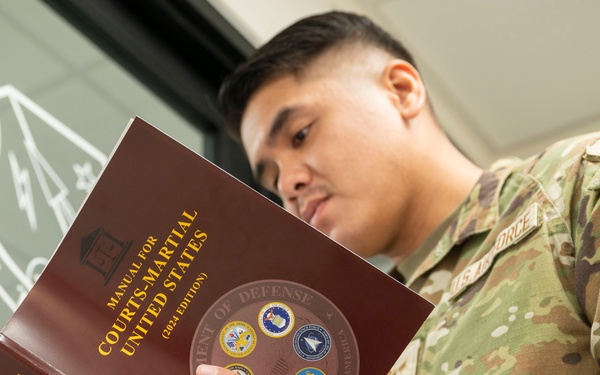
What Changed and Why It Matters
The revisions fall under Army Regulation 15-6, which governs administrative investigations. Army leaders say the new measures are intended to strike a balance: protecting soldiers from frivolous accusations, shielding the accused from unnecessary career damage, and holding accountable those who weaponize the system.
Article 107 of the Uniform Code of Military Justice already makes lying in an official statement an offense, and commanders have long had authority to address false reports. The new administrative pathway appears to be less about legal necessity and more about cultural reassurance. For years, leaders have voiced frustration over frivolous complaints that waste time and erode unit cohesion. The update signals that those concerns were heard. Yet, if “unsubstantiated” comes to be treated as synonymous with “false,” the consequences could extend far beyond the intended target.
Unsubstantiated Is Not False
The distinction between unsubstantiated and false is crucial. An unsubstantiated complaint is one investigators cannot prove due to insufficient evidence, conflicting testimony, or missing witnesses. It does not mean the allegation was untrue.
A false complaint, by contrast, requires intent—the individual knowingly made an untrue allegation to harass or retaliate. Confusing the two risks punishing soldiers who act in good faith for trusting a system that may be flawed, rather than holding accountable those who intentionally deceive.
How Investigations Often Fall Short
Army investigations frequently struggle to inspire confidence. Investigating officers are often drawn from the same chain of command or specialty as the accused, creating potential conflicts of interest. Many investigators have minimal formal training, and cases can linger for months or even years with little accountability.
The process is often opaque, leaving both complainants and accused servicemembers without clear access to findings or the ability to correct errors. Investigations may fail not because claims are false, but because the system is incapable of fully assessing them.
The human cost can be severe. The Defense Department’s Suicide Event Report found that nearly 30% of servicemembers who died by suicide were under investigation or facing administrative action at the time of their deaths. Extended uncertainty damages morale, careers, and mental health. If an inconclusive investigation also carries the risk of being labeled dishonest, the psychological toll grows even heavier.
Fear of Retaliation
The Army already struggles with a culture of silence around reporting. According to the 2023 DoD Workplace and Gender Relations Survey, more than 60% of troops who experienced sexual assault or harassment but did not report it cited fear of reprisal, disbelief, or career damage.
Retaliation rarely appears as a formal charge. It often manifests as reassignment, blocked promotions, poor evaluations, or quiet ostracism within a unit. If a complaint is later deemed unsubstantiated, those pressures can intensify. The new policy could inadvertently lend legitimacy to these practices by framing complainants as potential bad actors.
What Needs to Change
False complaints do real harm, and it is fair to hold perpetrators accountable. But fairness must extend to both sides. To maintain the distinction between “unsubstantiated” and “false,” several measures are critical:
-
Adverse action should never be based solely on an unproven complaint.
-
Clear evidence of intent to deceive must exist before a report is labeled false.
-
Alleged false reports should be reviewed outside the original chain of command, especially if leaders themselves are implicated.
-
Investigative outcomes should be transparent, explaining why a complaint could not be proven.
-
Accountability should extend upward: commanders who retaliate, interfere, or misuse authority must face consequences.
The Bottom Line
On paper, the Army’s updated rules are carefully written, limiting punishment to those who knowingly lie or harass. But fairness in practice will depend on the competence, impartiality, and transparency of the investigative system—qualities it often lacks.
When commanders control who investigates, interprets results, and determines career consequences, discretion can become control. Without independent oversight and meaningful safeguards, the new rules risk becoming a tool that silences soldiers rather than protecting them.
False reports are rare. Fear of retaliation is common. If “unsubstantiated” begins to be treated as “false,” the Army may be trying to solve one problem while only creating another.
About Post Author


