Discomfort with modern technology shapes Gen Z’s desire to live in the past
A new national survey suggests many young adults aren’t feeling optimistic about where things are headed—and some would prefer to trade the present for an earlier era altogether.
According to an NBC News Decision Desk Poll conducted with SurveyMonkey, 47% of Americans ages 18 to 29 said they would choose to live in the past if given the option. Of those, about one-third would go back less than 50 years, while 14% said they’d prefer a time more than half a century ago. By comparison, 38% said they’d stay in the present, 10% would jump ahead less than 50 years, and just 5% would opt for a more distant future.
The findings were fairly similar across political affiliations and between men and women. However, differences did appear among racial groups: 33% of young Black respondents said they’d prefer the past, compared with 52% of young white respondents and 47% of young Hispanic respondents.
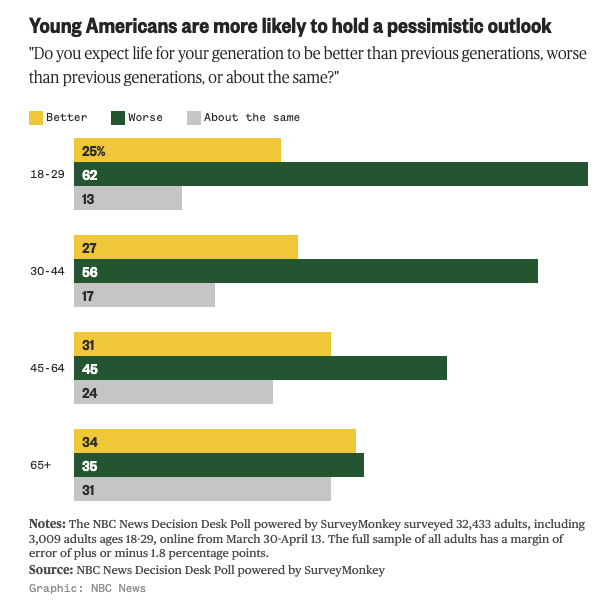
The poll reflects a broader sense of concern among younger Americans. A majority—62%—said they believe their lives will be worse than those of previous generations, while only 25% expect things to improve and 13% think conditions will stay about the same. Additionally, 80% of Gen Z respondents said the country is headed in the wrong direction, the highest level of pessimism among any age group surveyed.
In conversations with NBC News, several young adults pointed to technology as a major factor shaping their outlook. Many expressed discomfort with the constant presence of the internet and social media, saying it contributes to stress and disconnection. For some, earlier decades represent a time with fewer digital distractions and stronger in-person relationships.
That sentiment is also showing up in cultural trends. Styles and products from the 1980s, 1990s, and early 2000s—like baggy clothing, cassette tapes, and older music devices—are seeing renewed popularity among younger generations.
Experts say this kind of nostalgia often surfaces during periods of rapid change or uncertainty. Concerns about political division, artificial intelligence, and shifting social norms can lead people to look back at earlier times for a sense of stability and familiarity. At the same time, some young people are trying to strike a balance—embracing certain aspects of modern life while setting limits on how much technology shapes their daily routines.
Several individuals interviewed said they’re making more intentional choices about how they use digital tools. Rather than rejecting technology entirely, they’re seeking ways to reduce its influence and prioritize real-world connections.
Others said they remain hopeful about the future, particularly when it comes to social progress and community building. Some described using online platforms as a way to connect with others, organize events, and strengthen relationships offline.
The survey was conducted online from March 30 to April 13 and included more than 32,000 adults, with just over 3,000 respondents in the 18-to-29 age group. The margin of error was plus or minus 1.8 percentage points for the full sample and 2.4 points for the Gen Z subgroup.
About Post Author