Traditional Beef Stew Recipe. Easy & Delicious Beef Stew (Minimal Ingredient Version)

Fortunately, this homemade beef stew recipe is super easy to follow. Just sear the stew meat and then add all of the ingredients to the slow cooker. Walk away and when you get home from work your stew will be ready to serve your family. I love easy meals like this one! Keep reading for some serving suggestions to go with this simple beef stew recipe.
Recipe Ingredients
- Beef stew meat
- Carrots
- Potatoes
- Pearl onions (you can use a regular onion instead)
- Dale’s Sauce* (substitution below)
- Beef broth
- Flour
- Salt and black pepper
- Dried thyme
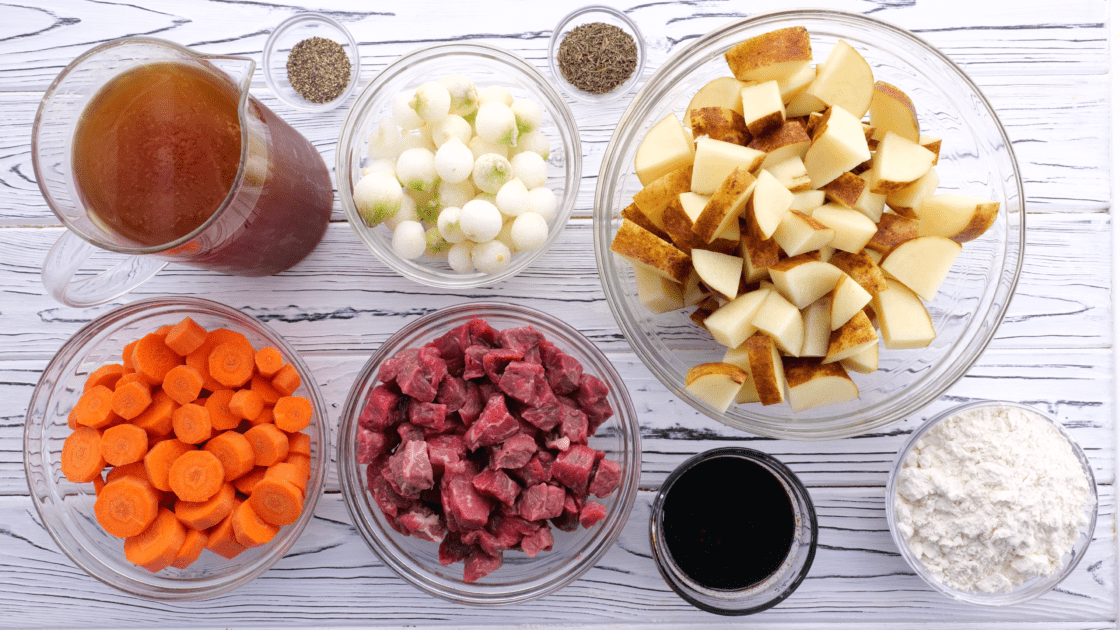
How to Make My Traditional Beef Stew Recipe
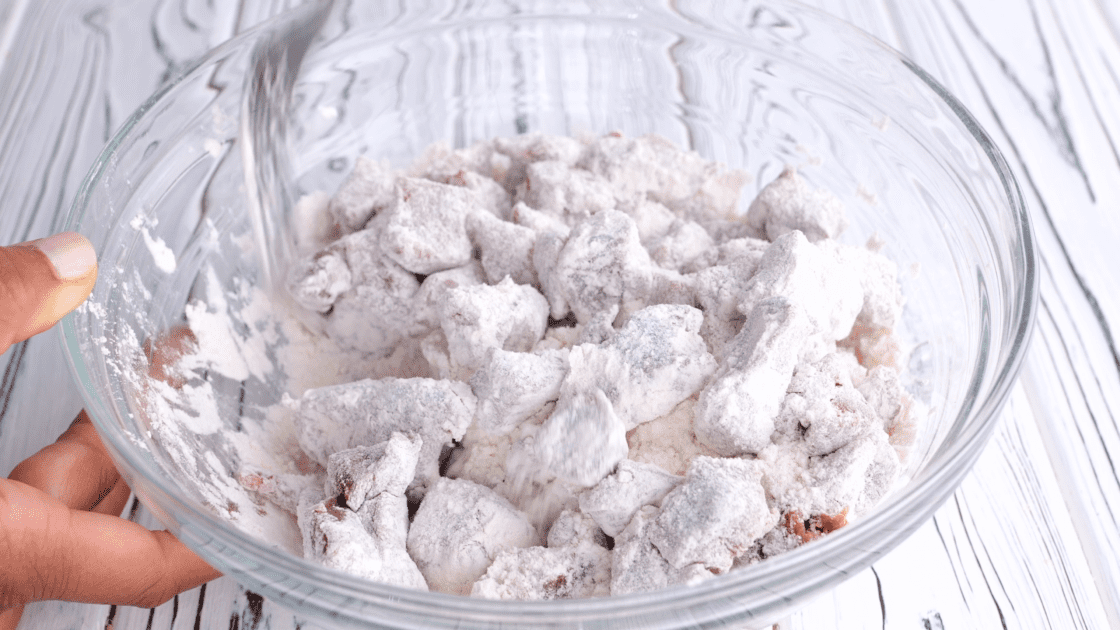
Place your stew meat in a medium bowl and pour about a cup of flour over it.
You can use any flour, including almond flour if gluten-free.
Stir it well to coat.
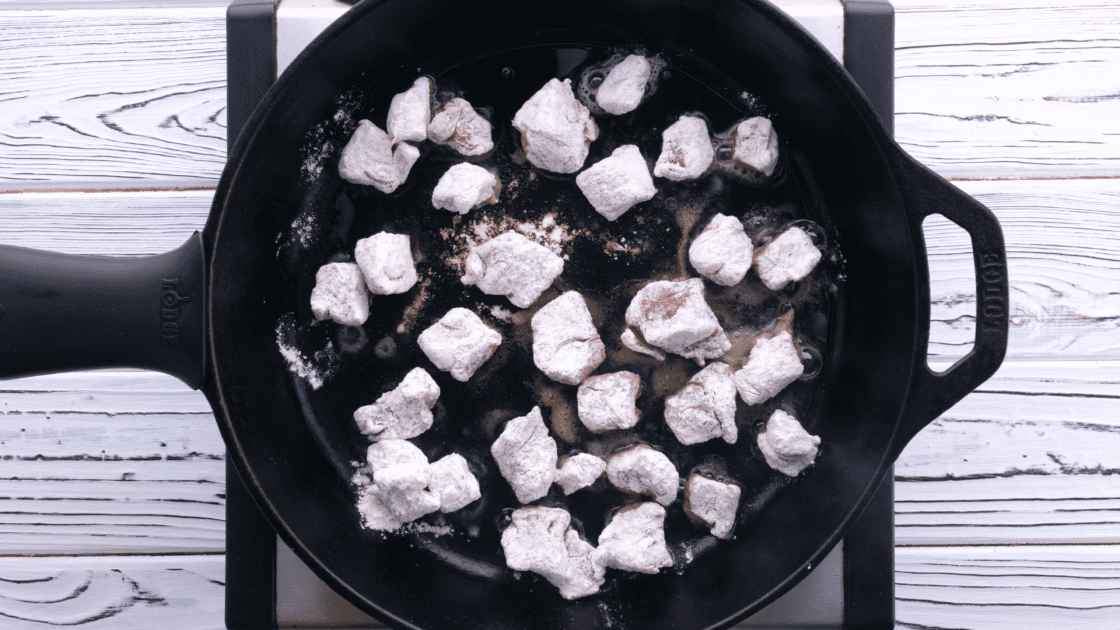
Now place the in a large skillet with a tablespoon or two of olive oil and cook over medium heat until lightly brown.
We’re not trying to get the meat completely cooked here, just brown. The flour will act as a thickener to our stew as well.
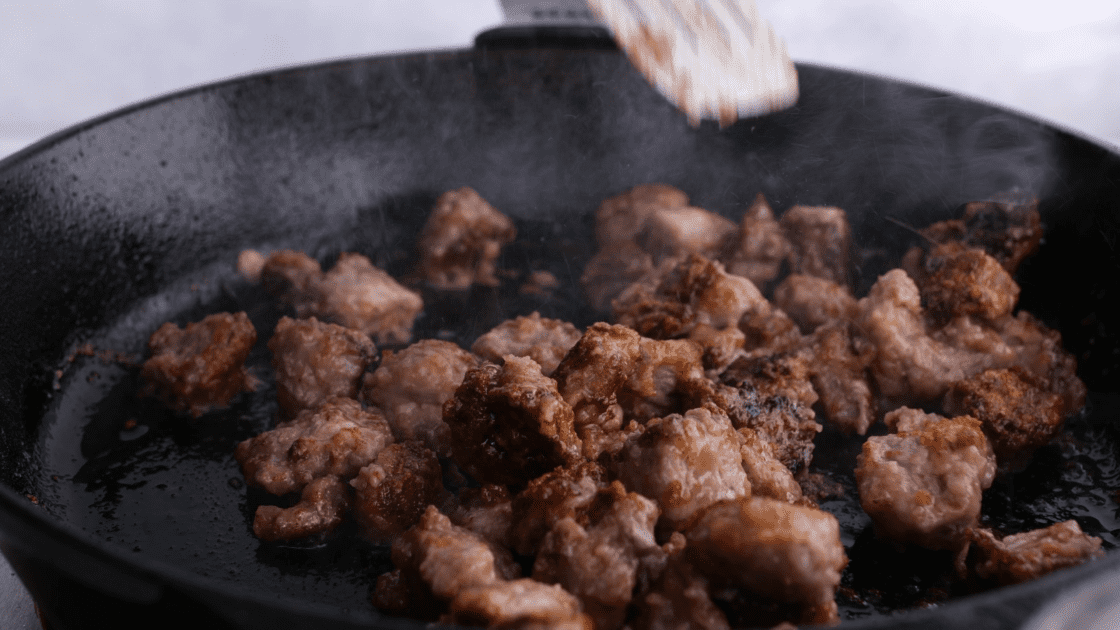
There ya go! All ready.
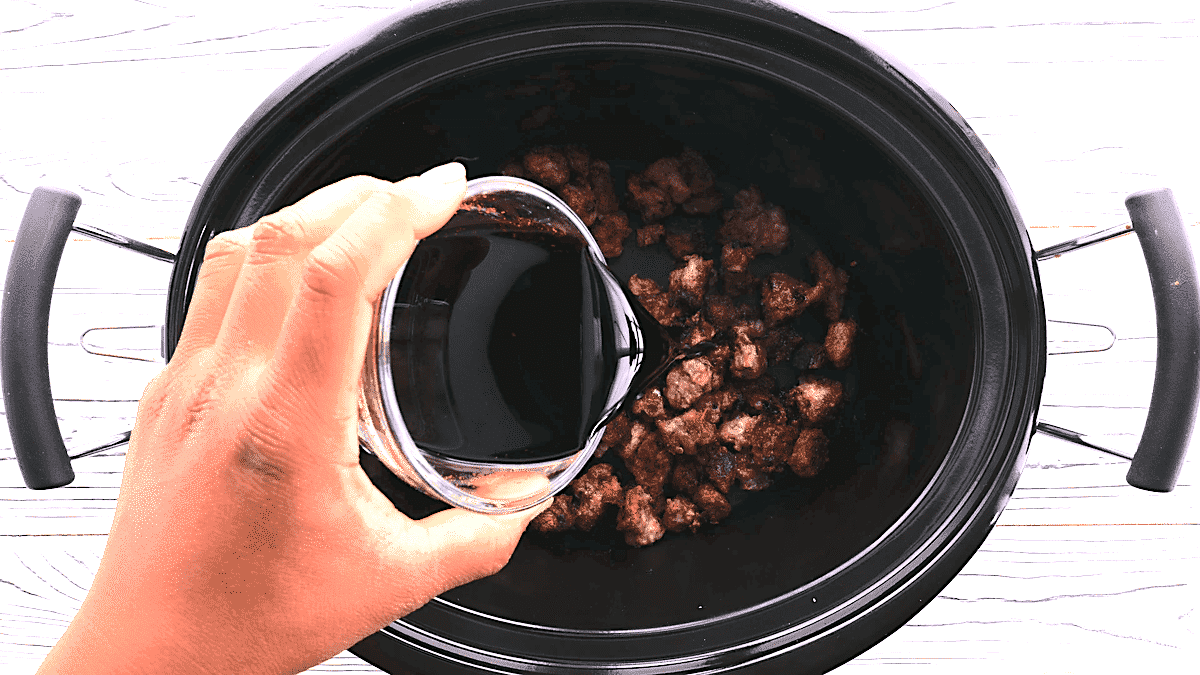
Now we’re going to add of these ingredients to the slow cooker. Let’s start with the browned meat before adding the marinade.
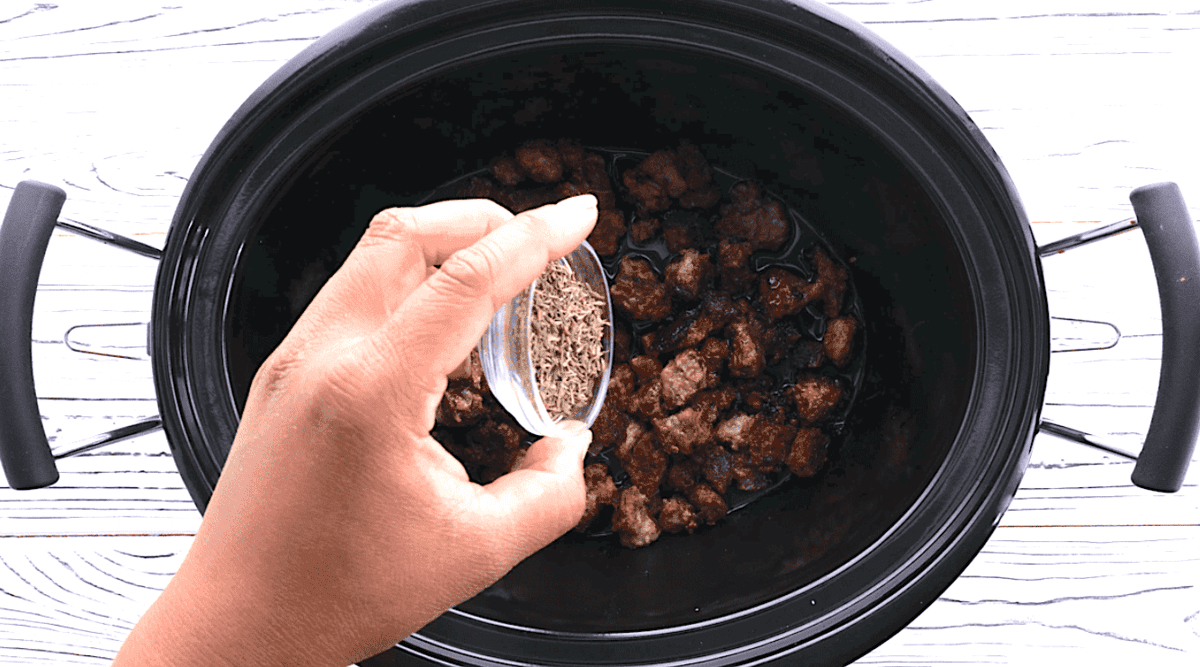
Both seasonings…

And the beef broth.
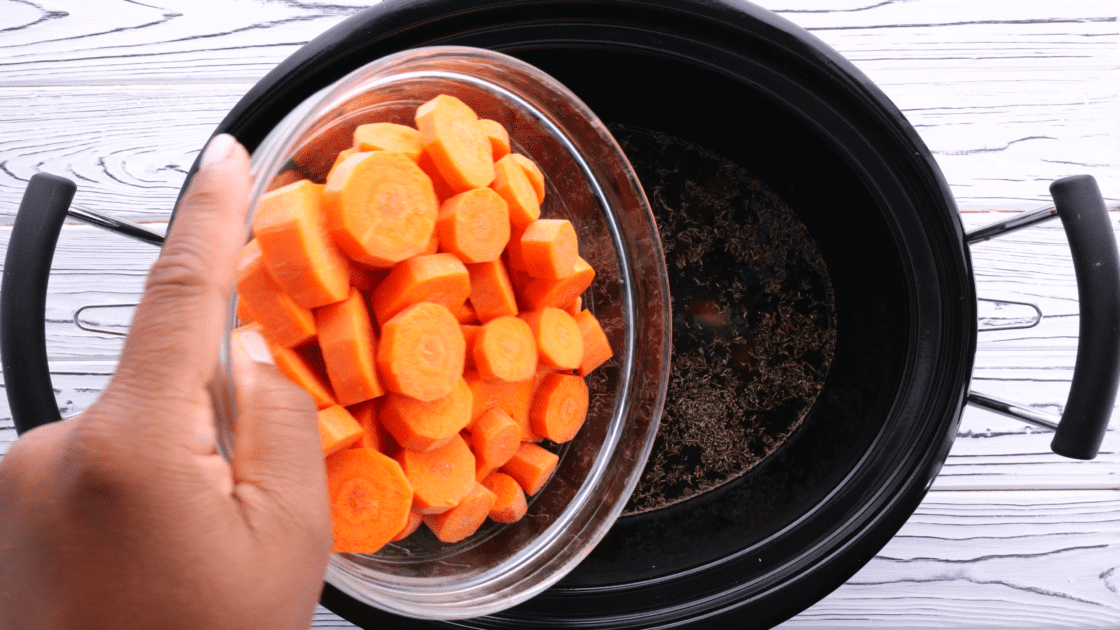
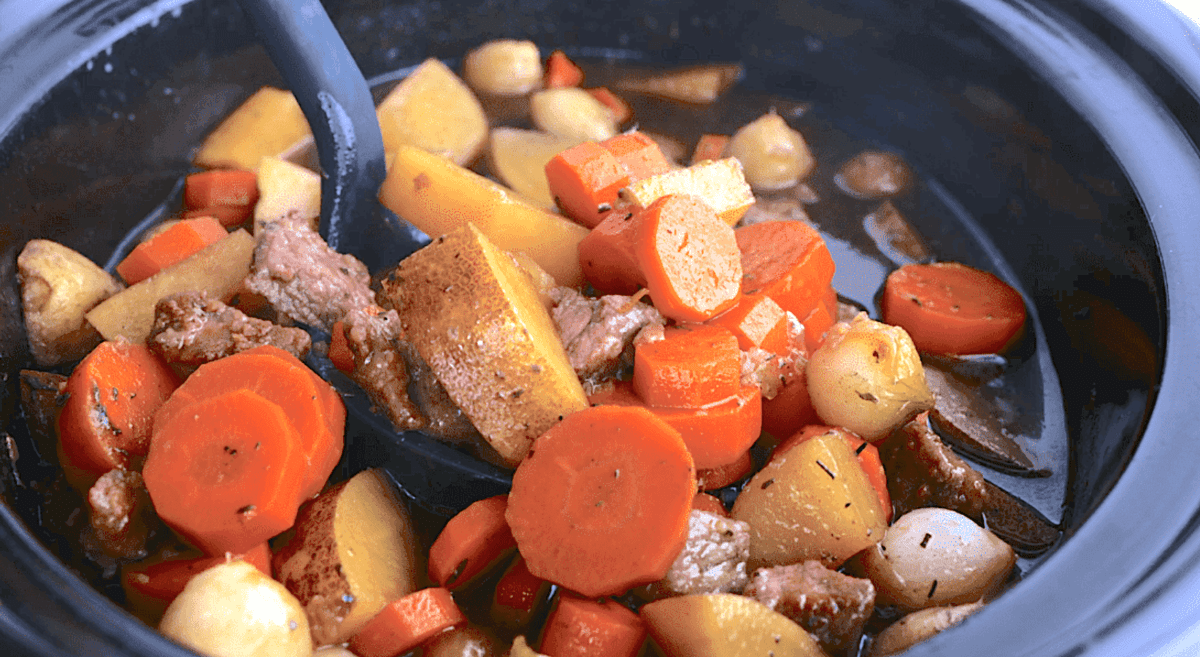
Next, peel and chop up your carrots a bit and add those.
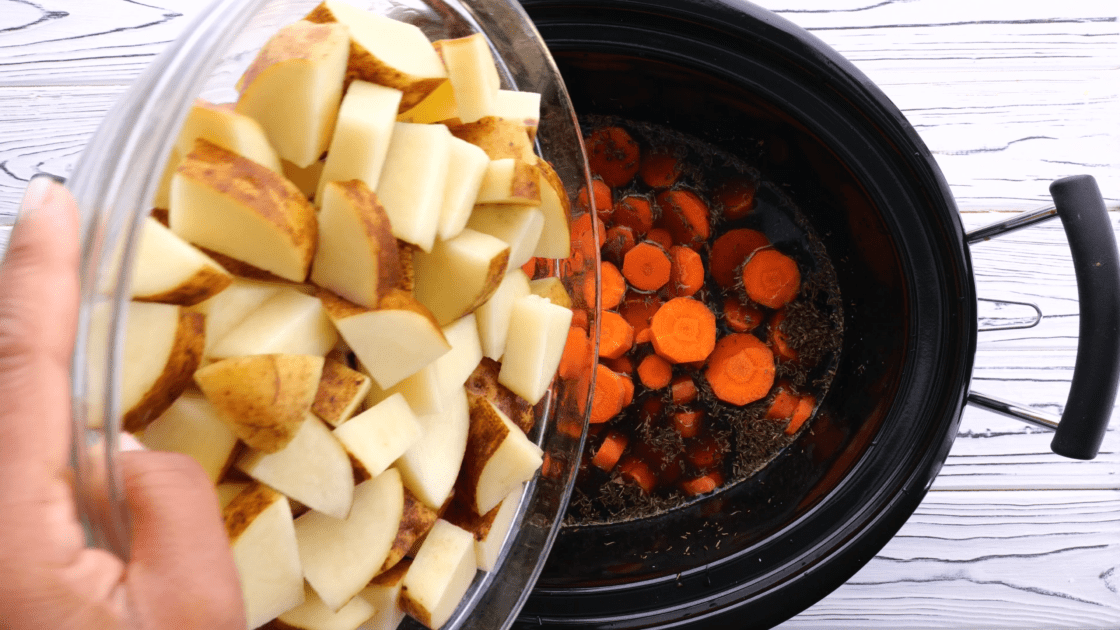
Then wash your potatoes, chop them up in whatever way you want, and add them to the crockpot too.
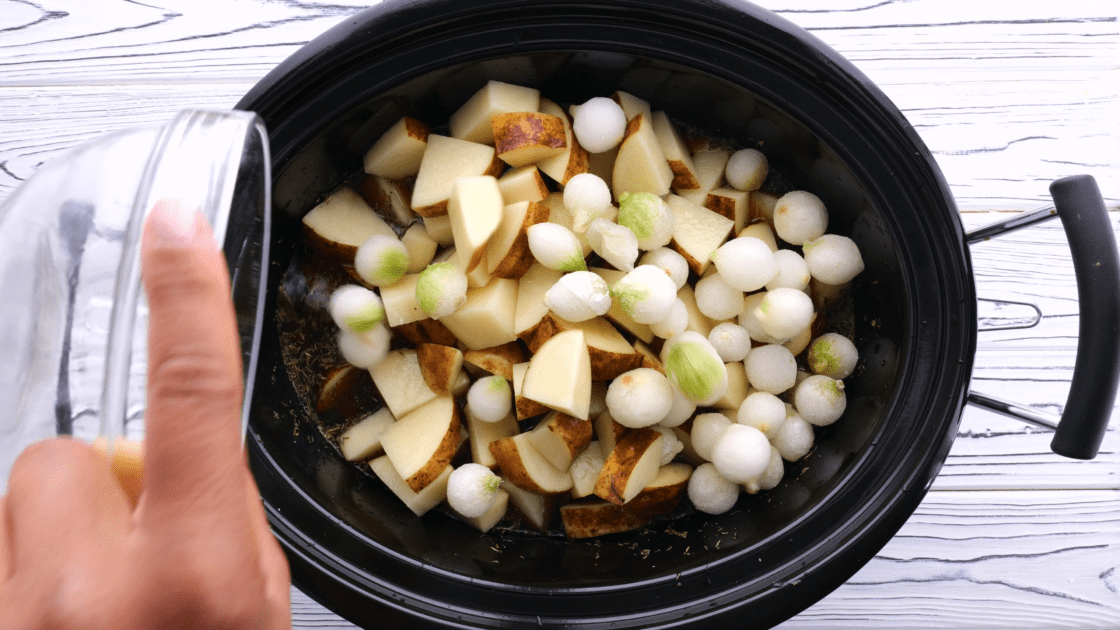
Pour your pearl onions over that.
The bag I used had about a cup and a half of them. If you don’t have pearl onions don’t worry about going out and buying them. I make this a lot using just a chopped Vidalia onion. Whatever you have on hand is fine.
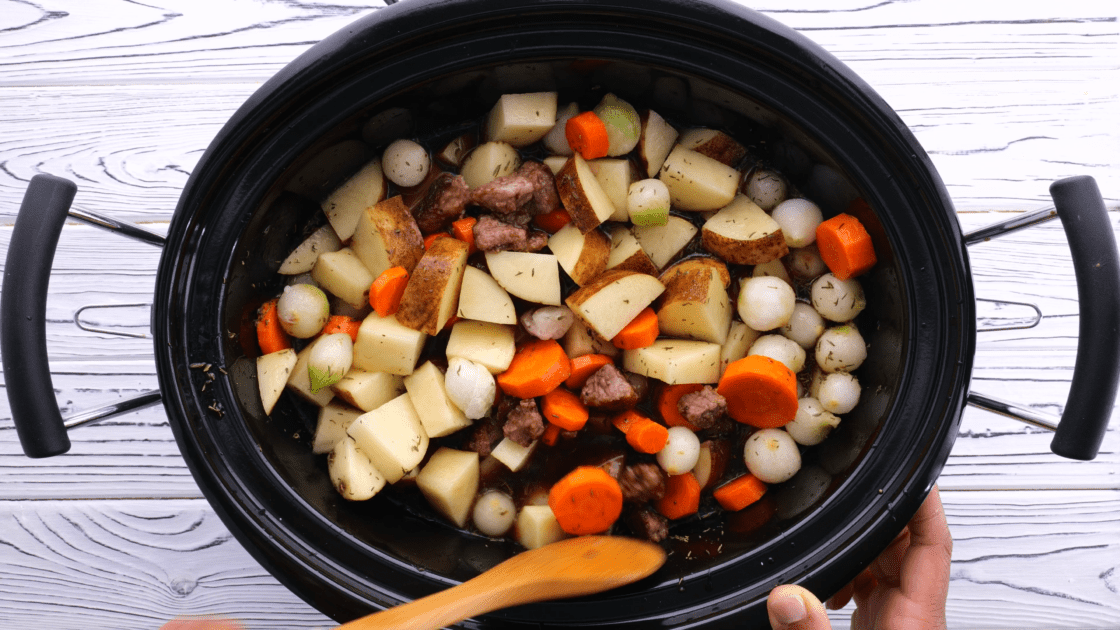
Now give those ingredients a good stir to ensure the marinade and seasonings are evenly spread throughout.
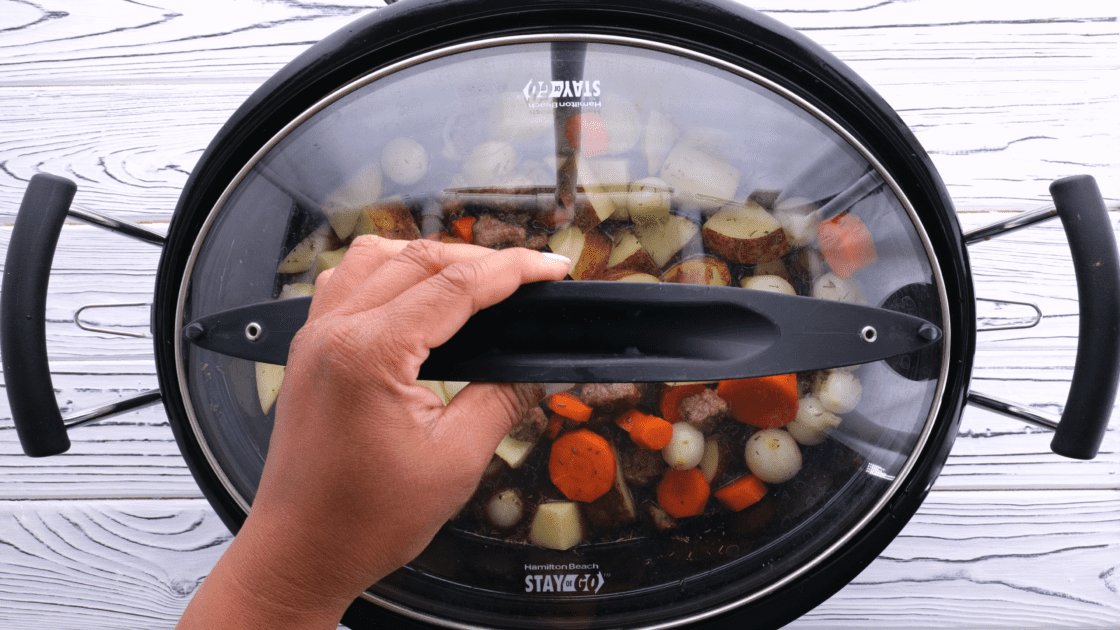
Then cover the crock pot and cook your classic beef stew on low for 7 to 8 hours or on high for 3 to 4 hours.
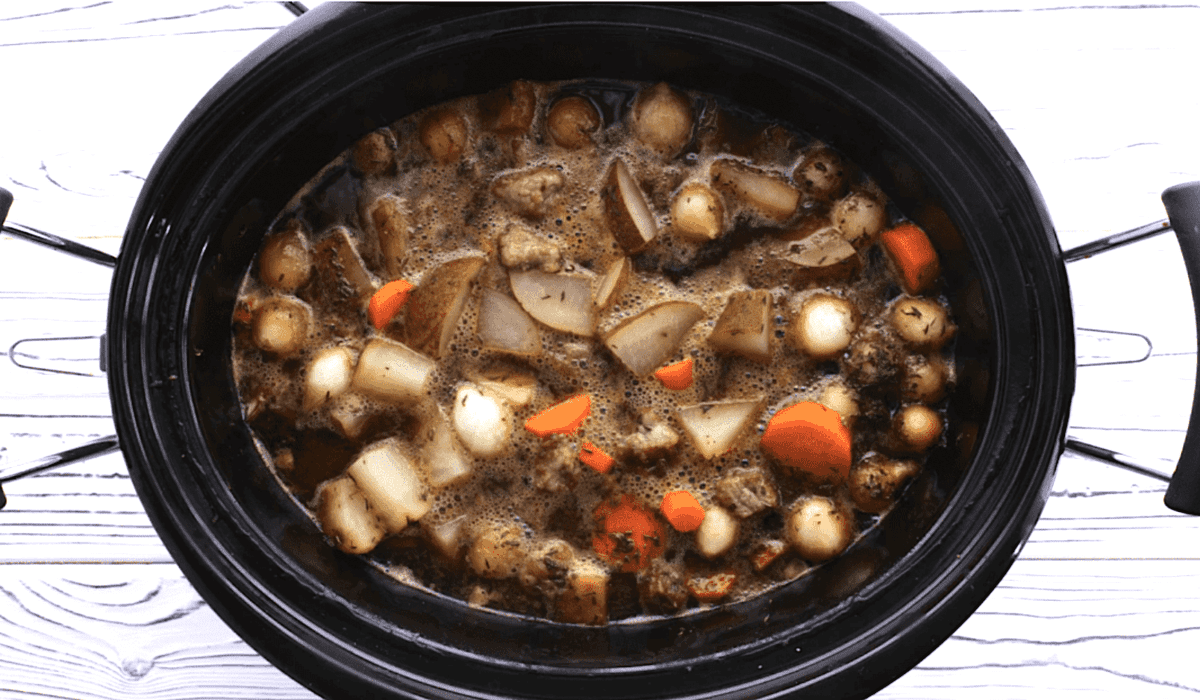
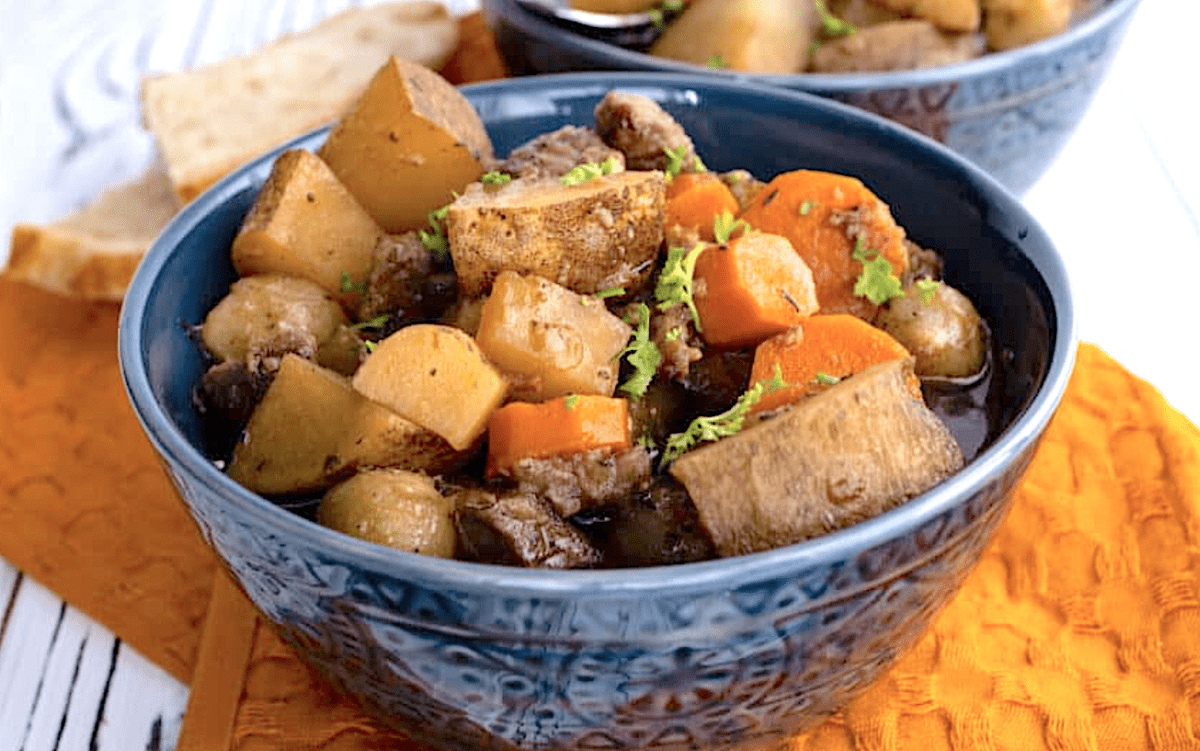
Every time I see the end shot of a good meal I go all Doctor Seuss: Yum diddy dum dum yum yum YUM!
Grab your ladle and load up your bowls!
Recipe Notes
- If you don’t have thyme, don’t sweat it. Just use Italian seasoning in its place and your stew will have a bit different flavor but still be wonderful. If you are new here you may not realize that I pretty much think you could save the world with a $1 bottle of dry Italian seasoning. I love that stuff.
- Dale’s Sauce is a marinade available in my neck of the woods but a lot of y’all may not have it near you. If you can get Moore’s Marinade, that’ll work too. I use the two interchangeably depending on which one is cheapest and I’ve never been able to tell the difference (although I’m sure the Dale’s and Moore’s folks will disagree with that). However, if you can’t get either of them, you can easily whip up my homemade all-purpose marinade recipe. If you use my recipe, you’ll need to salt your stew a little to taste, because my homemade version isn’t nearly as salty as Dale’s and Moore’s. They give new meaning to the term “salty” so most folks think that is a good thing.
- You can peel your potatoes or leave them unpeeled.
- If you want to add more veggies to this old-fashioned beef stew, opt for 1 chopped bell pepper, 1 celery stalk, or 1 cup of fresh or frozen peas.
- Stew meat or boneless beef chuck roast is the best to use in this old-fashioned recipe.
CLICK HERE TO VIEW ALL OTHER RECIPES ON TNBD
About Post Author


You must be logged in to post a comment.