What happens when you disable AFM in your engine

Active Fuel Management can improve fuel efficiency by up to 12% under ideal driving conditions. This gain typically occurs during steady highway cruising, where engine load remains low. The system reduces fuel consumption by limiting the number of active cylinders.
During operation, a V8 engine can function as a four-cylinder engine. This significantly lowers fuel use when full power is not required. The transition between modes happens automatically through the engine control module.
However, real-world results vary depending on speed, terrain, and payload. Drivers towing or driving in hilly areas may see smaller efficiency gains.
Active Fuel Management relies on specialized hydraulic lifters and oil-control solenoids. These components control whether intake and exhaust valves open or remain closed. The engine control module manages the process electronically.
When the system activates, pressurized oil collapses specific lifters. This prevents the valves from opening in selected cylinders, while fuel delivery to those cylinders is shut off.
When more power is needed, oil pressure changes restore normal lifter operation. This reactivates all cylinders and returns full engine performance quickly.
Active Fuel Management introduces additional moving parts into the engine. These include specialized lifters, solenoids, and oil pathways. Each added component increases the chance of mechanical failure over time.
This complexity can lead to issues such as lifter collapse and improper valve operation. These problems may not appear immediately, but often develop with mileage. Repairing these components requires significant labor.
The added system complexity is a key reason why some drivers question long-term reliability despite fuel savings.
Collapsed or failed lifters are among the most widely reported issues in Active Fuel Management engines. A malfunctioning lifter can prevent proper valve movement, leading to a misfire or ticking noise.
When this happens, the engine may run roughly or trigger a check engine light. In more severe cases, continued operation can contribute to internal engine damage, and repairs often require significant engine disassembly.
Fixing lifter issues can cost thousands of dollars because of the labor involved. This makes lifter repair one of the more expensive AFM-related problems owners may face.
Active Fuel Management systems are linked to several additional problems beyond lifter failure. These include excessive oil consumption and engine misfires. Both issues can reduce engine performance and efficiency.
Drivers may also experience rough idling or check engine warnings. These symptoms often appear when AFM components fail to operate correctly. Over time, unresolved issues can worsen.
According to reported cases, premature camshaft wear is also possible. This adds further repair costs and increases long-term ownership concerns.

A GM service bulletin filed with NHTSA links AFM-related ticking noise and misfire complaints to issues such as low oil level, incorrect oil viscosity, poor oil quality, contamination, and oil aeration. The bulletin also identifies mechanically collapsed or stuck AFM lifters as a possible cause.
Poor oil condition can affect lifter performance and hydraulic pressure. That can interfere with proper cylinder activation and deactivation. Regular oil checks are recommended to reduce risk.
Maintaining the correct oil level, viscosity, and quality is one of the simplest ways to reduce AFM-related problems. Routine maintenance plays a critical role in system reliability.
Dynamic Fuel Management arrived on certain 2019 General Motors truck engines as a more advanced cylinder-deactivation system. This newer system allows up to 17 different cylinder activation patterns. It offers more flexibility than the older fixed AFM system.
Unlike traditional AFM, which commonly switches a V8 between 8-cylinder and 4-cylinder operation, DFM can vary cylinder operation across more combinations based on driving conditions. This can improve smoothness and efficiency.
DFM has been used in engines such as the 5.3-liter L84 and 6.2-liter L87 V8S, though availability can vary by model year, application, and production constraints.
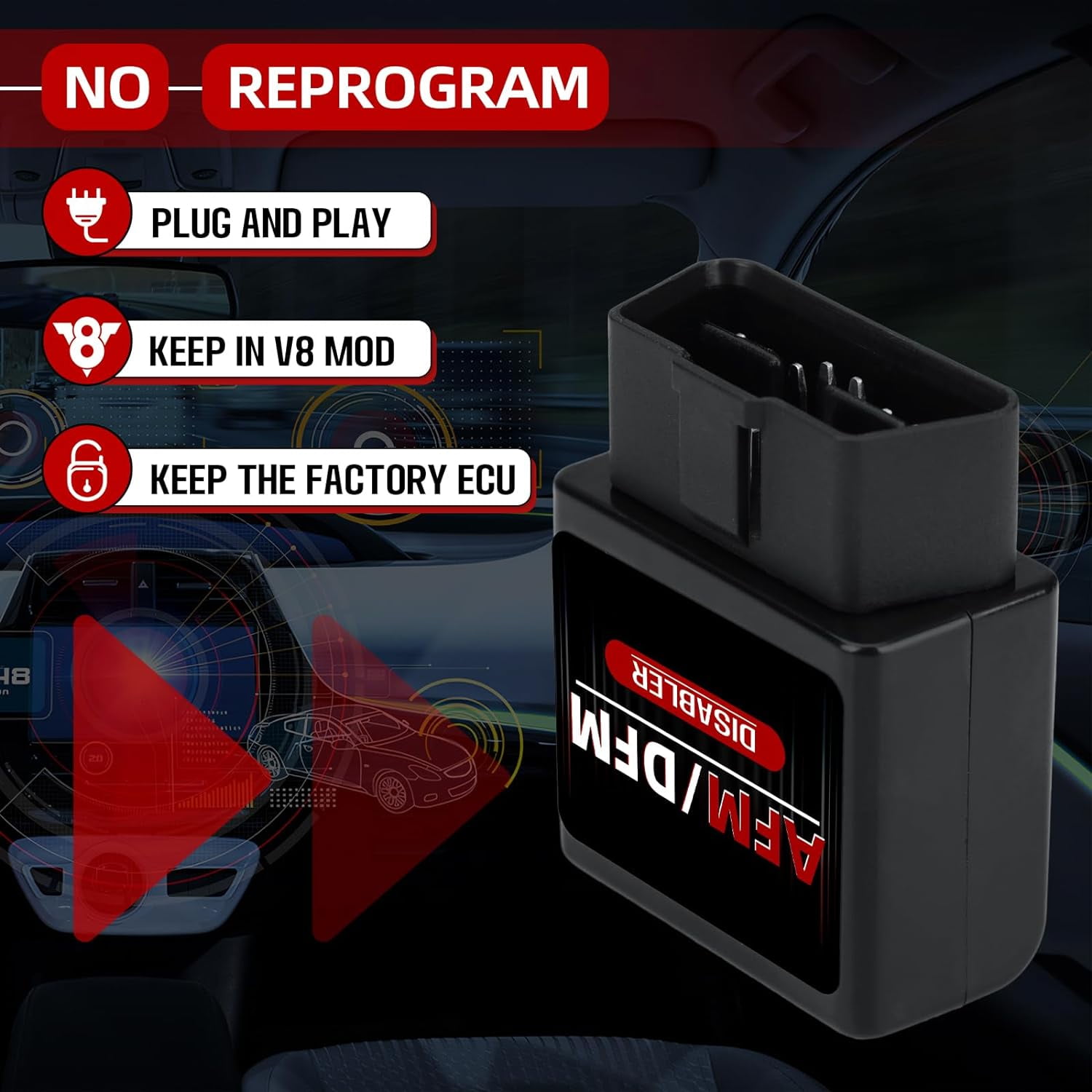
AFM disablers are plug-in devices that connect to a vehicle’s OBD-II port. They are designed to prevent the engine from entering cylinder-deactivation mode, keeping all cylinders active while the device is installed.
These devices generally do not permanently modify factory software. Instead, they work through the vehicle’s control and diagnostic systems to keep AFM or DFM from engaging. This makes many plug-in disablers reversible and easy to remove.
Name-brand plug-in disablers commonly cost more than $100, though cheaper generic devices may be advertised online. Many drivers use them to avoid AFM-related drivability or reliability concerns without major mechanical modifications.
Using an AFM disabler keeps all cylinders active while the device is installed. That can reduce AFM cycling and may help some drivers avoid drivability concerns linked to cylinder deactivation, such as mode-change shudder or related complaints.
Drivers often report fewer issues, such as ticking noise, rough operation, or misfires, but a plug-in disabler is not a guaranteed fix for existing lifter or camshaft damage. Mechanical failures may still require diagnosis and repair.
The trade-off is usually lower fuel efficiency, especially during steady highway driving, where AFM would normally be active. Drivers should also consider warranty and emissions-compliance concerns before using a disabler or delete kit.
Disabling Active Fuel Management usually results in lower fuel efficiency. Many users report minimal or no change, while others see drops of 0.5 to 2 MPG, especially on highway driving. The exact impact depends on driving conditions.
Highway driving tends to show the most noticeable drop. Factors such as speed, elevation, and load also affect fuel consumption. City driving may show smaller differences. This trade-off is important for drivers who prioritize fuel savings. It highlights the balance between efficiency and reliability.
AFM delete kits physically remove or replace cylinder-deactivation components in the engine. Depending on the kit and engine, this can include non-AFM lifters, a non-AFM camshaft, valley-cover or oil-control changes, and related tuning.
Installation requires significant mechanical work and partial engine disassembly. Costs can range from several hundred dollars for parts to much more once labor, tuning, and related repairs are included. It is generally treated as a permanent modification.
These kits are often used during engine rebuilds or performance upgrades. Drivers should check emissions rules before installing one because federal law prohibits removing or rendering inoperative emissions-related devices or design elements on certified vehicles.
Active Fuel Management is not unique to General Motors. Other automakers use similar technologies under different names. Ford uses variable displacement on select engines, while Ram uses the Multi-Displacement System.
All systems aim to reduce fuel consumption by shutting down cylinders. Despite different names, their core function remains similar. Each uses variations in design and control strategy.
These technologies are widely adopted to meet fuel economy standards. However, real-world reliability concerns continue to influence driver opinions and modification choices.
Would you keep cylinder deactivation for better fuel economy or disable it for reliability? Share your take and join the conversation.
–
–
Source: What happens when you disable AFM in your engine
About Post Author


