Cold Outbreak In Midwest, East Could Also Be Southeast’s Record Coldest Veterans Day, Including Florida

A major cold outbreak is descending on the United States, bringing the season’s coldest air to the Midwest and Northeast, and triggering a widespread freeze across the Deep South—including Florida—with the coldest early November temperatures in 32 years.
The plunge in temperatures could be strong enough for some areas to see their first snow of the season.
When Will It Arrive
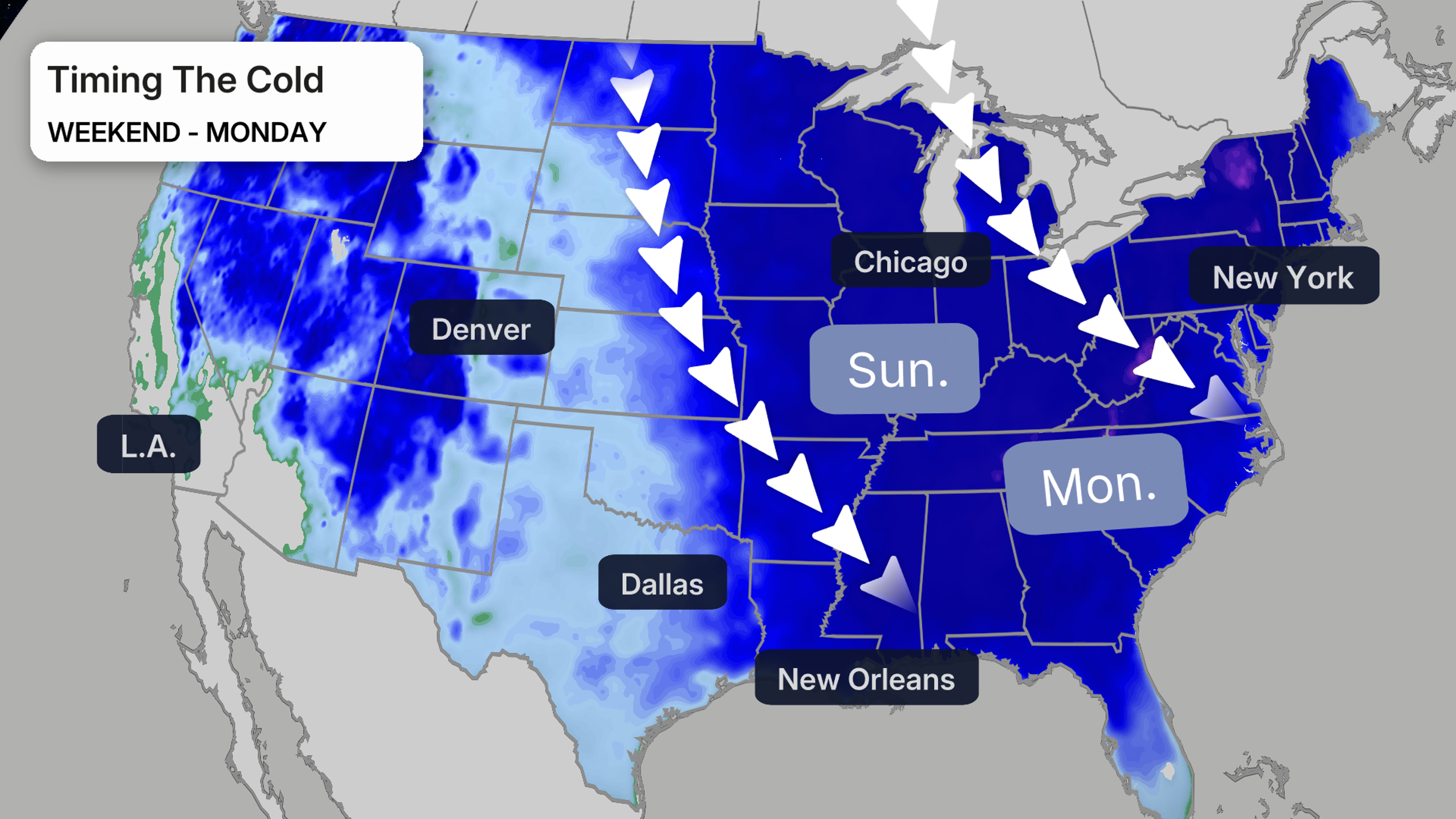
Cold air began moving into the Upper Midwest on Saturday and is expected to spread through the East and South early this week.
Here’s a general timeline of its arrival:
-
Monday: Most of the South—including the northern Gulf Coast, northern Florida, and the East Coast—will feel the chill.
How Cold Will It Be?
For much of the Midwest, South, and East, this will be the coldest daytime temperatures of fall so far.
-
Monday: Highs may remain in the 30s as far south as the southern Appalachians. Daytime temperatures could barely reach the 40s from the Northeast’s I-95 corridor down through parts of Alabama, Georgia, and Mississippi. These could set record low highs for November 10 in places like Huntsville, Alabama (43 degrees), and Macon, Georgia (49 degrees).
-
Tuesday: Highs struggling to reach 50 degrees in the coastal Carolinas could break record cold for Veterans Day. Charleston, South Carolina, normally sees highs in the low 70s at this time of year. Central Florida may only climb into the low to mid-60s, also flirting with record cold highs for the day. Morning lows could drop into the 20s as far south as the Florida and Alabama Gulf Coast, with some 30s in northern and central Florida. This will create a widespread freeze across the Deep South Tuesday morning, including parts of the northern Gulf Coast.
Over a dozen Southeast locations could see record-low temperatures, including Savannah, Georgia (31 degrees), Mobile, Alabama (31 degrees), and Ft. Myers, Florida (45 degrees). Atlanta may see its Tuesday low approach its record of 26 degrees. Even Florida cities such as Orlando and Tampa could tie record lows of 39 and 40 degrees, respectively.
This could be Florida’s coldest early November outbreak in 32 years, since the November 1993 freeze that plunged Birmingham, Alabama, to 24 degrees and affected Gainesville, Florida. Strong winds following the cold front will make it feel even colder, with wind chills plunging into the teens and 20s in the Southeast, and possibly single digits in parts of the Northern Plains and upper Midwest.
Fall Cold Tips
With this abrupt cold snap after recent fall warmth, here are a few tips:
-
Pull out your winter jackets, hats, and gloves—you’ll need them.
-
Dress children warmly for outdoor sports, school, or waiting at the bus stop.
-
Complete yard work before the cold arrives to avoid working in wind and chill.
-
Shut off outside faucets and drain garden hoses to prevent freezing.
Fleeting Cold
If this cold feels premature, there’s good news: it won’t last long. Milder air is expected to return to the nation’s mid-section by Tuesday. The Northeast may experience slightly longer cold as another reinforcing front moves down from Canada.
Here’s what temperatures are like right now.


🥶 Frigid temperatures are forecast to expand southward into much of the Southeast and Gulf Coast early next week. Numerous daily record lows are possible on Tuesday, November 11. Check https://t.co/pGx1JRZdMa for local forecasts and specifics regarding frost/freeze concerns. pic.twitter.com/wSuGB0apxU
— NWS Weather Prediction Center (@NWSWPC) November 8, 2025


About Post Author


You must be logged in to post a comment.