China is calling it a win. What’s in it for them?
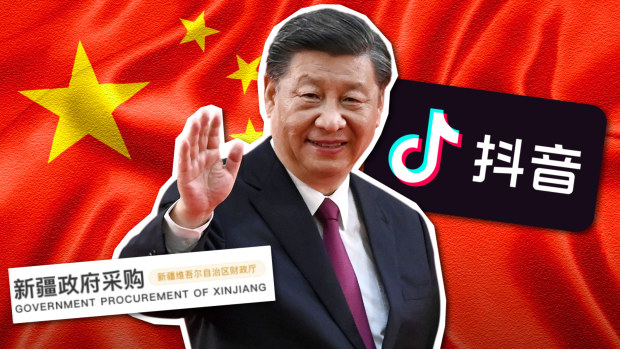
A long-awaited deal over TikTok appears to be approaching, with U.S. President Donald Trump and Chinese President Xi Jinping expected to discuss terms during a key meeting on Friday.
Top officials from both nations reached a tentative “framework” agreement earlier this week. Reports suggest it could result in TikTok’s U.S. operations being sold to a consortium of American firms — a move that some analysts are calling a rare moment of progress in broader U.S.-China trade relations.
If finalized, the deal could reshape the experience for TikTok’s 170 million U.S. users and potentially signal a shift in Beijing’s stance on exporting its tech capabilities.
Algorithm at the Heart of the Deal
While Chinese state media is promoting the potential agreement as a “win-win,” President Trump has framed the deal more simply: “I’d like to do it for the kids,” he said.
However, key details remain unresolved — especially around the fate of TikTok’s algorithm, the technology that powers the app’s content recommendations and makes it so addictive.
This “secret sauce” is what sets TikTok apart from its competitors, such as Instagram’s Reels or YouTube’s Shorts, which have struggled to match TikTok’s engagement. ByteDance, TikTok’s Beijing-based parent company, has long refused to give up this intellectual property, and until recently, had the full backing of the Chinese government.
In a surprising development, however, China’s top cybersecurity regulator has signaled a willingness to allow ByteDance to license the algorithm — rather than sell or transfer it — to a U.S. entity. This would be a notable softening of China’s position on tech exports.
But even licensing the algorithm in a “stripped-down” version could open the door to insights about how it works, including how it drives engagement, moderates content, and targets ads — all of which are key to TikTok’s profitability.
“It simply doesn’t make business sense for ByteDance to hand over its most valuable asset when a lighter version can keep the app running without giving away its edge,” said Dr. Kokil Jaidka, a computing expert at the National University of Singapore.
The trade-off? A reduced user experience. Dr. Jaidka warned that American users could end up with a less dynamic, more limited version of TikTok, curated to operate within U.S. borders — while ByteDance retains the crown jewels back in Beijing.
A Deal Still in the Making
While the user interface is expected to remain mostly unchanged, U.S. Treasury Secretary Scott Bessent noted it will reflect “Chinese characteristics” — a phrase often used by the Chinese Communist Party to denote its unique governance approach.
That could be a sticking point for lawmakers. Security concerns around data access and foreign influence drove the passage of legislation last year — signed by then-President Joe Biden — that demanded TikTok either divest or face a ban in the United States.
Trump, now back in office, has reversed course. He credits TikTok with boosting his support among younger voters during his 2024 reelection campaign and has expressed a desire to keep the app available — but under American control.
Still, any final sale will require approval from Congress, where skepticism remains high. Some lawmakers worry that the current framework might not go far enough to cut off Chinese government influence.
“The law requires full separation from foreign adversary control,” noted legal analyst Hdeel Abdelhady. “A licensing arrangement doesn’t necessarily meet that threshold.”
Moreover, because ByteDance is privately held, its board would have to approve the arrangement — and any IP licensing would still be subject to Chinese export controls.
Trump’s involvement — unpredictable as ever — could further complicate negotiations if his administration shifts strategy or pushes for stricter terms at the last minute.
China Gains Time — and Leverage
Trump’s administration appears eager to strike a deal, and for good reason. TikTok is one of the most powerful social platforms on the planet, with users spread across nearly every major market.
“This is the only social media app that didn’t originate in the U.S., and that gives it outsized value,” said a former executive who previously worked with major tech companies including Snap and Viber.
The U.S. generates significantly more ad revenue per user than other regions — up to 10 times more, in some cases — and likely represents nearly half of ByteDance’s total revenue. One estimate from tech publication The Information puts TikTok’s 2024 revenue at $30 billion out of ByteDance’s global $39 billion total.
What’s less clear is what China stands to gain — at least on paper.
Allowing a licensing deal instead of a full sale gives Beijing a strategic edge. It keeps the algorithm within its legal control while allowing ByteDance to maintain a financial stake and brand influence in the U.S. market.
More broadly, this arrangement could serve as a blueprint — a “TikTok Template” — for how other Chinese tech companies might enter or remain in Western markets. According to investor and analyst Kevin Xu, it opens a path for China to license critical technologies like electric vehicle batteries or rare earth processing to U.S. firms while retaining strategic control.
In that way, China can frame the outcome as a geopolitical win: exporting its technology on its own terms and preserving key leverage in ongoing trade negotiations.
Strategic Calculations Continue
As former World Bank official Bert Hofman observed, “The Chinese side has called the talks in-depth, constructive, and candid. That signals they’re actually quite happy with how things are going.”
A TikTok deal could help both sides buy time — and goodwill — ahead of further trade talks. The U.S. remains a crucial market for Chinese exports, and China continues to be a major buyer of American agricultural products. Tariff battles or export restrictions would hurt both economies.
While a finalized TikTok agreement would not resolve all the tension, it may provide momentum. Still, the underlying uncertainties — about data, trust, and national security — remain unresolved.
“The deal might work on paper,” said Dr. Jaidka. “But in practice, it will always sit under a cloud.”
“A U.S. TikTok will look like the same app, but behind the scenes it will run on borrowed code, firewalled data, and political trust that could vanish overnight.”
About Post Author


