Mexican Independence Day in Chicago Overshadowed by Fears of ICE Raids

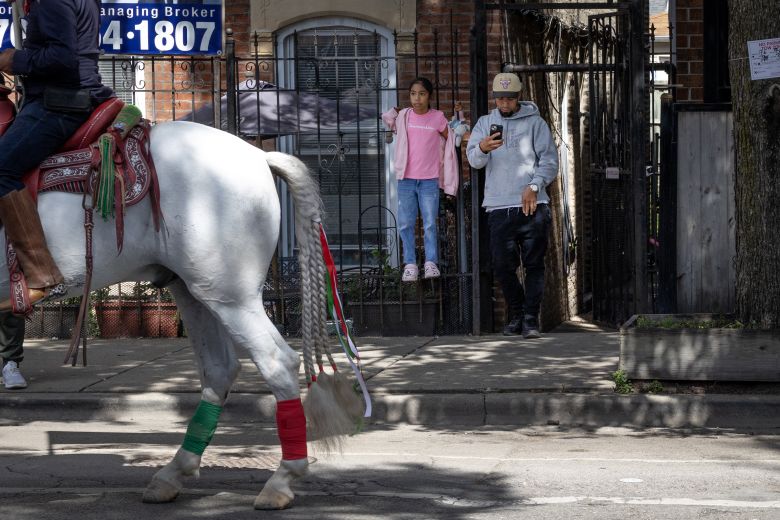
People participate in the Mexican Independence Day parade along 18th Street in the Pilsen neighborhood of Chicago on Saturday. Scott Olson/Getty Images
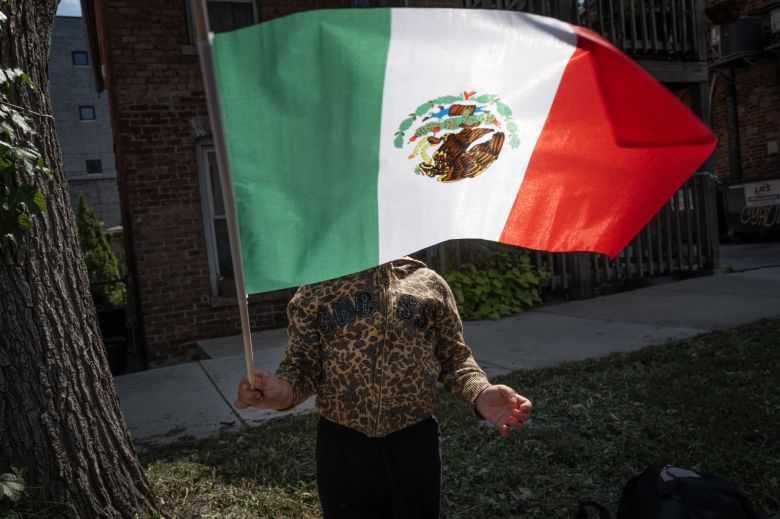
On Saturday, the vibrant streets of Chicago’s Lower West Side came alive with music and the colors of Mexico’s flag—green, white, and red—as the predominantly Latino Pilsen neighborhood kicked off its Mexican Independence Day celebrations. Families lined the sidewalks, cheering as costumed performers and children carrying baskets of treats paraded through the community.
Yet this year, the festivities carried a cautious note. Bright orange whistles hung around the necks of many parade-goers, ready to cut through the music if federal immigration agents showed up.
This caution mirrors a growing anxiety across Chicago, as residents worry the city could soon face intensified immigration enforcement under President Donald Trump’s administration. Many celebrations around the city were quieter or postponed, reflecting concerns about the escalating crackdown.
Still, in Pilsen, the community chose to come together, embracing joy despite the uncertainty.
“It’s always a special time to honor our culture and traditions,” said Araceli Lucio, a longtime resident. “Now more than ever, we need to show that we’re united and strong as a community.”
Events Silenced or Postponed Amid Concerns
Typically, Mexican Independence Day draws hundreds of thousands to events across Chicago over more than a week. But this year, anticipated immigration enforcement has cast a shadow over the festivities.
In Wauconda, a village northwest of the city, the annual Latino Heritage Festival was canceled, with local police citing both recent weather issues and immigration worries. Meanwhile, Fiesta Patrias, a major celebration in nearby Waukegan, was postponed for the first time in its 30-year history—from mid-September to November 1. The shift comes as the area braces for the arrival of federal immigration agents, with the Great Lakes naval base nearby reportedly set to serve as a command center.
Margaret Carrasco, president of Fiesta Patrias, acknowledged the disappointment but stressed safety concerns: “I know vendors are upset, but protecting people comes first.”
El Grito Chicago, a popular two-day festival in downtown’s Grant Park, also delayed its event, citing community safety as a priority.
Event organizers lamented the lost chance to celebrate “dignity, strength, and belonging” during such a crucial time.
Those at Pilsen’s parade expressed solidarity with communities who postponed their celebrations.
“We support them and understand their fears,” said Claudia Villagrana, joining Saturday’s festivities.
Illinois Representatives Mike Quigley and Jesús “Chuy” García also marched in Pilsen, highlighting the state’s awareness of the looming immigration actions.
A City on Alert
Chicago officials have been closely watching warnings that the city may soon become a focal point of expanded federal immigration enforcement. President Trump has frequently criticized Chicago’s “sanctuary” policies that limit cooperation between local law enforcement and federal immigration agencies.
The city has already seen waves of migrants arriving during the Biden administration, partly due to increased border crossings and Texas Governor Greg Abbott sending migrants to Democratic cities.
Chicago was targeted by immigration raids early in Trump’s presidency, and current enforcement efforts are expected to be larger, involving multiple federal agencies including ICE and Customs and Border Protection.
In response, Mayor Brandon Johnson recently signed an executive order pledging that Chicago police will not cooperate with federal immigration operations. The order explicitly bars joint patrols, arrests, or other immigration enforcement activities involving local police.
Still, many residents are preparing for the possibility of ICE raids. Flyers with information on legal rights—such as the right to remain silent and refuse searches—are being distributed in neighborhoods.
Sylvelia Pittman, a teacher on Chicago’s West Side, shared a glimpse of the tension: her students spoke about potential ICE arrests just days before the weekend, saying goodbye with uncertainty—“I hope to see you next week.”
About Post Author


