Yellowstone Visitor Learns the Hard Way That a 2,000-Pound Bison Is Not a Photo Prop
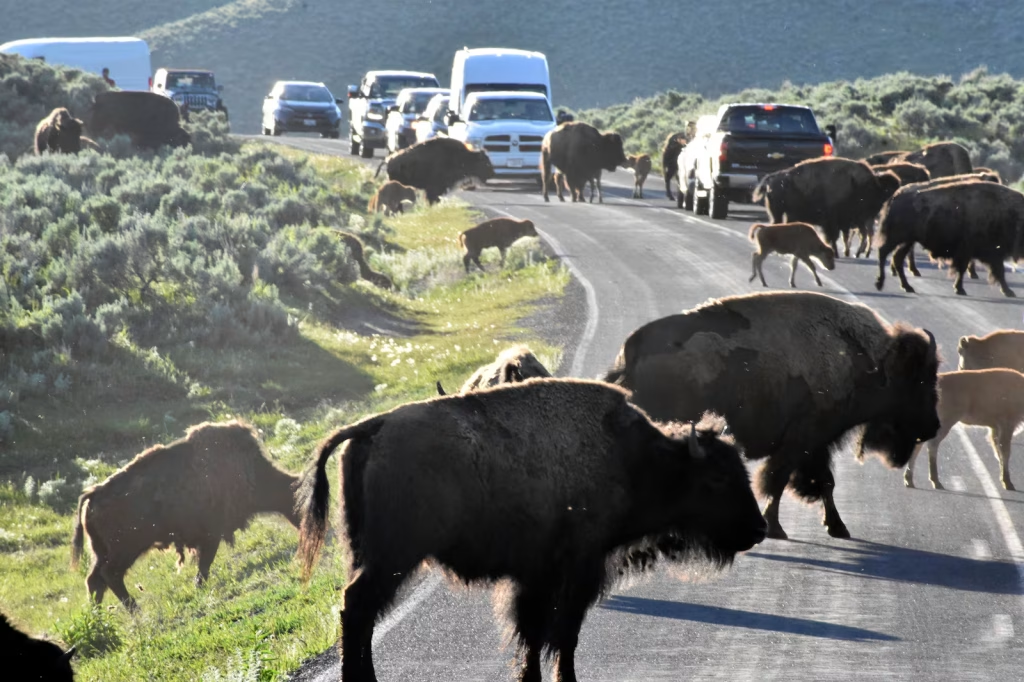
A 65-year-old man was seriously injured at Yellowstone National Park after getting close enough to an agitated bull bison for the animal to chase him through a campground and launch him roughly eight feet into the air.
Video recorded Friday shows Carl Isom-McDaniel standing with his grandchild and taking photographs near a bison that had been lying on the ground. The pair were reportedly about 100 yards away at first, but the situation quickly deteriorated after the animal stood up and moved toward them.
At that point, the grandfather apparently realized what park officials have been telling visitors for decades: wild bison are not oversized cows, scenic lawn ornaments or cooperative background actors for vacation pictures.
They ran toward a group of trees, but the bison followed.
Footage captured by professional photographer Mike MacLeod shows Isom-McDaniel trying to evade the animal by circling through the trees. This was not an especially promising contest. A bull bison can weigh as much as 2,000 pounds and run at least three times faster than an average human.
The bison caught him, struck him with its horns and flipped him into the air.
Isom-McDaniel landed near the animal, which MacLeod described as extremely agitated. MacLeod stopped recording and joined several other men in yelling, advancing and waving objects to drive the bison away from the injured visitor.

Park emergency personnel transported Isom-McDaniel to a hospital, where he underwent surgery. He later wrote on Facebook that he was recovering and thanked people for their concern.
The outcome could have been considerably worse, particularly because his grandchild was standing nearby before the chase began.
Yellowstone instructs visitors to remain at least 25 yards from bison, elk, moose, deer, bighorn sheep and coyotes. The rule is not bureaucratic overkill. Bison injure more Yellowstone visitors than any other animal in the park.
They are fast, unpredictable and highly defensive of their personal space. Their warning signs may include staring, raising the tail, pawing the ground, shaking the head or bluff-charging. Ideally, tourists should respond to those signals by increasing the distance—not by trying to determine how many additional photographs they can squeeze in first.
This was not Yellowstone’s first recent bison injury. A 12-year-old was hurt in another encounter in late June, and several visitors were gored during the previous year.
Every incident is different, and the precise distance at each moment in Friday’s encounter remains unclear. But the larger lesson is not mysterious.
When a wild animal the size of a compact car begins showing interest in you, the correct response is not to keep filming, circle a tree or hope it respects seniority.
The correct response is to have been farther away in the first place.

About Post Author


You must be logged in to post a comment.