On this day in History

Martin Luther King Jr. (born Michael King Jr.; January 15, 1929 – April 4, 1968) was an American civil rights activist and Baptist minister who was a prominent leader of the civil rights movement from 1955 until his assassination in 1968. He advanced civil rights for people of color in the United States through the use of nonviolent resistance and civil disobedience against Jim Crow laws and other forms of legalized discrimination, which most commonly affected African Americans.
A Black church leader, King participated in and led marches for the right to vote, desegregation, labor rights, and other civil rights. He oversaw the 1955 Montgomery bus boycott and was the first president of the Southern Christian Leadership Conference (SCLC), leading the unsuccessful Albany Movement in Albany, Georgia, and helping organize nonviolent 1963 protests in Birmingham, Alabama. King was one of the leaders of the 1963 March on Washington, where he delivered his “I Have a Dream” speech, and helped organize two of the three Selma to Montgomery marches during the 1965 Selma voting rights movement. There were dramatic standoffs with segregationist authorities, who often responded violently. The civil rights movement achieved pivotal legislative gains in the Civil Rights Act of 1964, the Voting Rights Act of 1965, and the Fair Housing Act of 1968.
After being contacted by Reverend James Lawson Jr., King would fly out to Memphis on March 18 to help the strikers, and announced that he would head a march in a few days. On March 28, Dr. King and Reverend Ralph Abernathy, a colleague and friend of his, then began this peaceful march at the Clayborn Temple. 6,000 people participated in this march, but it would end in violence.
King traveled to Memphis, Tennessee, in support of striking African-American city sanitation workers. At the time, Memphis paid black workers a wage of just $1 an hour. There were also no city-issued uniforms, no restrooms, no recognized union, and no grievance procedure for the numerous occasions on which they were underpaid.
King was deeply upset by the failure of the march, and left Memphis the following day, but would return along with Abernathy and administrative assistant Bernard Scott Lee on April 3, although their flight had been delayed due to a bomb threat. King then checked into room 306 at the Lorraine Motel at about 11:20 a.m., before leaving shortly past 12 p.m. to go to a meeting, announcing that he would head another march on April 5.
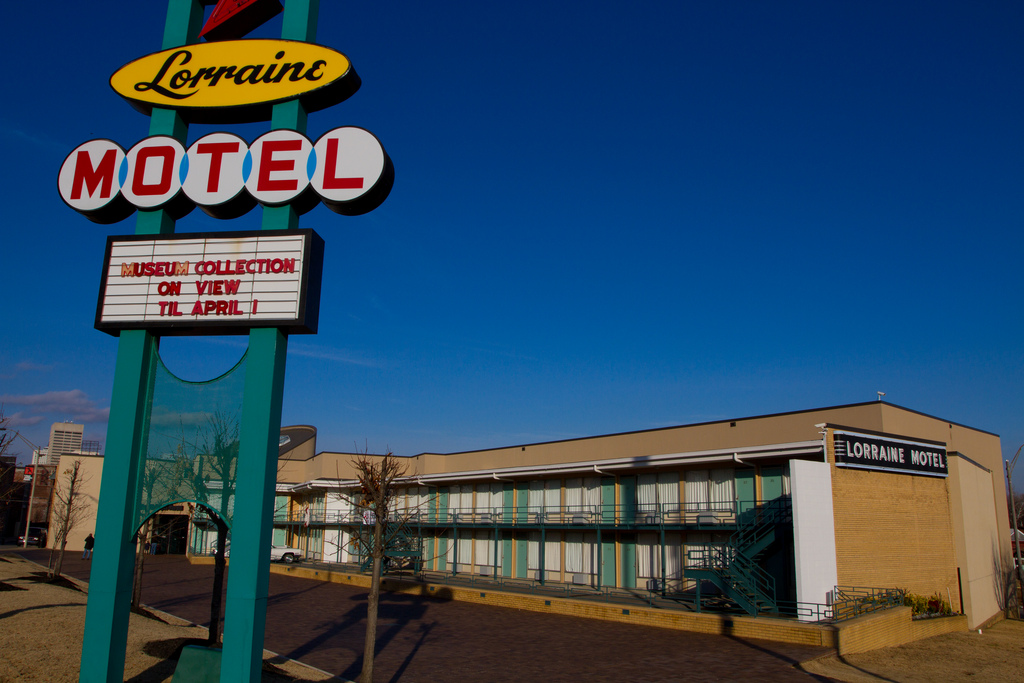
After the night of April 3 went into April 4, King’s brother, A. D. King, checked into room 201 at the Lorraine Motel at roughly 1 a.m. after coming from Florida. After King woke up, Walter Bailey, the owner of the Lorraine Motel at the time, later stated that King seemed particularly happy that day. King, a regular smoker, had gone out to the balcony to smoke a cigarette, a habit he hid from the public.
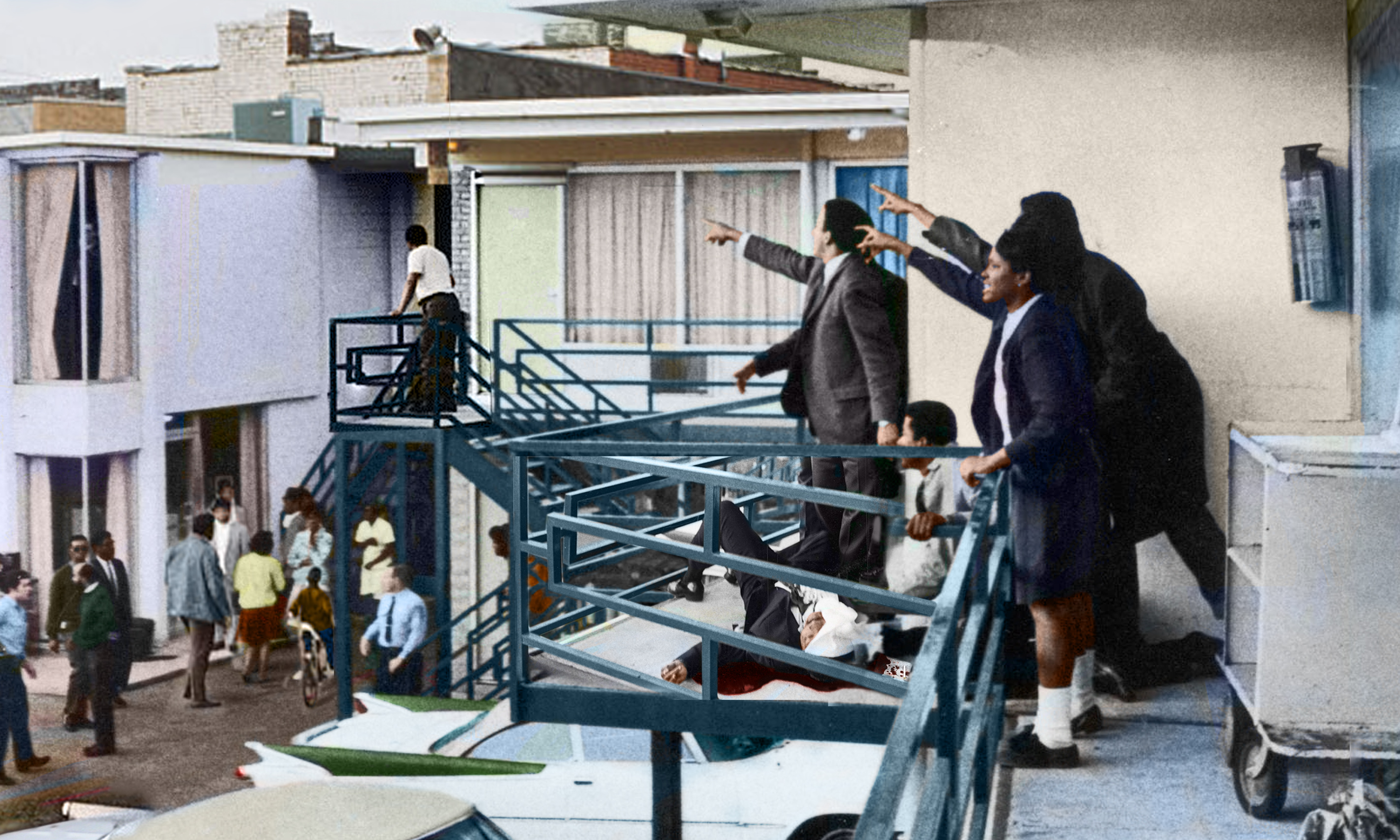
On April 4, 1968, at 6:01 p.m. CST, Martin Luther King Jr., an American civil rights activist, was fatally shot at the Lorraine Motel in Memphis, Tennessee.
He was rushed to St. Joseph’s Hospital, where he was pronounced dead at 7:05 p.m. at age 39.
The alleged assassin, James Earl Ray, an escaped convict from the Missouri State Penitentiary, was arrested on June 8, 1968, at London’s Heathrow Airport, extradited to the United States and charged with the crime. On March 10, 1969, Ray pleaded guilty and was sentenced to 99 years in the Tennessee State Penitentiary. He later made many attempts to withdraw his guilty plea and to be tried by a jury, but was unsuccessful, before he died in 1998.

The King family and others believe that the assassination was the result of a conspiracy involving the U.S. government, the mafia, and Memphis police, as alleged by Loyd Jowers in 1993. They believe that Ray was a scapegoat. In 1999, the family filed a wrongful death lawsuit against Jowers for the sum of $10 million. During the trial, both sides presented evidence alleging a government conspiracy. The accused government agencies could not defend themselves or respond because they were not named as defendants. Based on the evidence, the jury concluded that Jowers and others were “part of a conspiracy to kill King” and awarded the family the symbolic $100 they requested in damages. The allegations and the finding of the Memphis jury were later disputed by the United States Department of Justice in 2000 due to a perceived lack of evidence.
The assassination was one of four major assassinations of the 1960s in the United States, coming several years after the assassination of John F. Kennedy in 1963 and the assassination of Malcolm X in 1965, and two months before the assassination of Robert F. Kennedy in June 1968.
About Post Author


