U.S. Marines with Lima Company, Battalion Landing Team 3/5, 11th Marine Expeditionary Unit, board a CH-53E Super Stallion with Marine Medium Tiltrotor Squadron (VMM) 163 (Reinforced), 11th MEU, before an amphibious assault in the Pacific Ocean, March 2, 2026. (U.S. Marine Corps photo by Lance Cpl. Luke Rodriguez)
Thousands of Marines are heading to the Middle East as the United States considers whether to expand its involvement in Iran as part of a growing military buildup, raising new questions about possible ground missions or operations connected to the Strait of Hormuz.
About 2,500 Marines are deploying along with additional warships as the conflict enters a more dangerous stage, according to reporting Friday from Reuters and the Associated Press citing U.S. officials. Military.com requested comment from the Defense Department, U.S. Central Command and the White House.
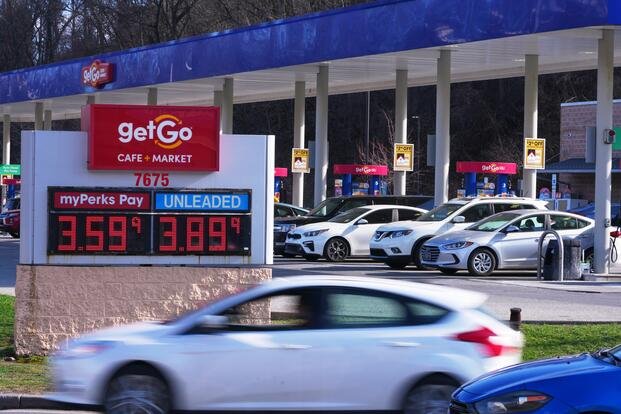
The move comes as the conflict expands beyond airstrikes into a wider struggle over shipping lanes, oil infrastructure and regional deterrence. President Donald Trump sought to lower expectations of a ground deployment earlier this week, saying, “I’m not putting troops anywhere,” before adding, “We will do whatever is necessary.” The situation also highlights the continuing importance of the Strait of Hormuz, one of the world’s most critical oil chokepoints. Reopening it after mines, drones and attacks on commercial vessels remains a major concern, with U.S. gas prices rising to levels not seen since the COVID-19 pandemic.
This latest development follows earlier reports of warships already moving toward the region carrying roughly 2,500 Marines, suggesting the buildup has been underway for days rather than hours.
According to Reuters, the deployment includes the USS Boxer, its embarked Marine Expeditionary Unit (MEU), and an accompanying warship. The Associated Press reported the broader movement as three additional warships and approximately 2,500 Marines.
Marine Expeditionary Units are designed for crisis response, amphibious operations, evacuations and maritime security. These forces are often used when missions shift from strike operations to securing shipping routes or controlling key terrain.
The United States has also expanded combat operations against Iranian targets connected to missile launches, naval threats and disruptions to maritime traffic. Meanwhile, Iran has continued missile and drone attacks on Israel, U.S. positions and regional energy infrastructure, according to Reuters and the Associated Press.
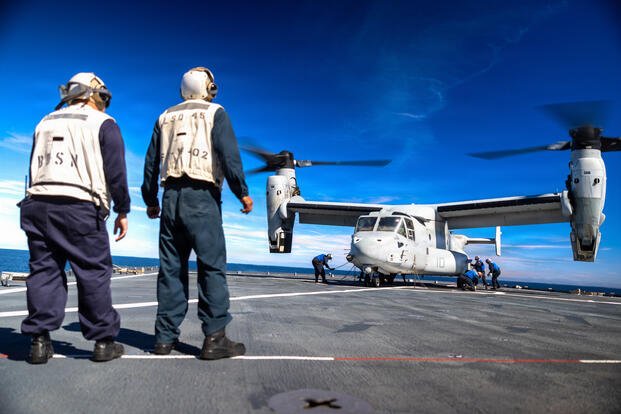
U.S. Sailors assigned to Whidbey Island-class dock landing ship USS Comstock (LSD 45), observe a U.S. Marine Corps MV-22B Osprey assigned to Marine Medium Tiltrotor Squadron (VMM) 163 (Reinforced), 11th Marine Expeditionary Unit, while supervising flight deck operations in the Pacific Ocean, Feb. 26, 2026. (U.S. Marine Corps photo by Sgt. Trent A. Henry)
The Wall Street Journal and other outlets have reported that A-10 aircraft, Apache helicopters and additional rapid-response forces are being used or moved into the region. The Pentagon has not publicly detailed the full operational package referenced in those reports. The growing exchange of attacks adds weight to President Trump’s statement that he is not deploying ground troops, even as forces capable of such missions move closer to the region.
Defense Secretary Pete Hegseth has indicated the campaign is unlikely to end quickly. Official Defense Department statements describe the mission as focused on destroying Iran’s offensive missile capabilities, missile production infrastructure, naval assets and security networks.
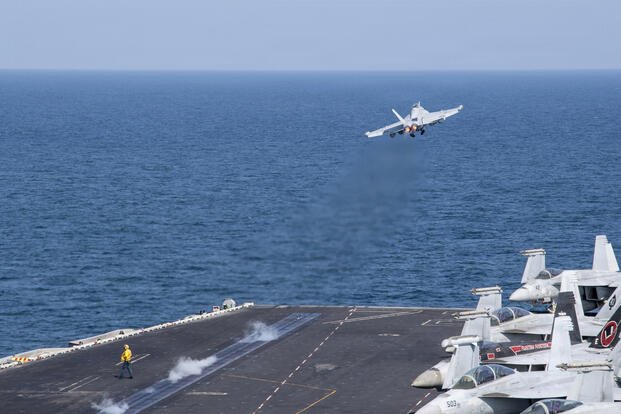
An EA-18G Growler, attached to Electronic Attack Squadron (VAQ) 133, launches from the flight deck of Nimitz-class aircraft carrier USS Abraham Lincoln (CVN 72) in support of Operation Epic Fury, March 6, 2026. Abraham Lincoln is deployed to the U.S. 5th Fleet area of operations to support maritime security and stability in the Middle East. (U.S. Navy photo)
Oil prices remain above $100 per barrel based on current reporting, with Reuters stating prices are around $108 amid concerns that attacks on Gulf energy facilities and near-shutdown conditions in the Strait of Hormuz could continue to pressure global markets.
The strait carries roughly 20 percent of the world’s oil supply, meaning even limited disruptions can push prices higher and create economic effects far beyond the battlefield. Kharg Island, a key Iranian oil export hub, has reportedly been discussed by U.S. officials as a potential target for occupation or blockade. The island handles about 90 percent of Iran’s oil exports.
ars drive past a mini-mart gas station in Pittsburgh on Thursday, March 19, 2026. (AP Photo/Gene J. Puskar)
Kharg Island and other strategic locations in Iran carry both economic and security implications. If the United States moves from striking targets to physically controlling or isolating key territory, amphibious and ground-capable forces would become significantly more important.
At the same time, reports indicate some strategic differences between the United States and Israel regarding attacks on energy infrastructure that could cause wider economic consequences, even as both countries remain aligned in confronting Iran militarily.