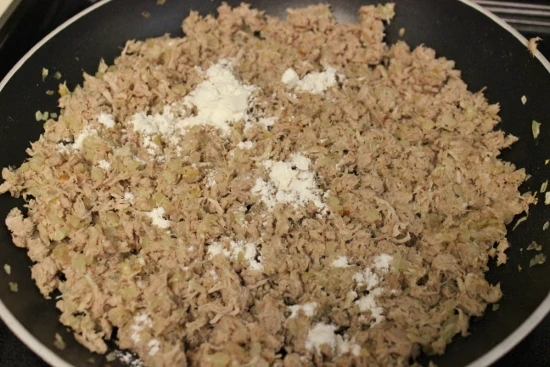
A Russian invention that was supposedly created to feed sailors cheaply and easily.

112233/Getty Images
Navy macaroni
Navy macaroni, a simple pasta dish, originated in Russia as a cost-effective way to feed sailors. Its basic formula—pasta combined with whatever meat was available, often canned rather than fresh—meant it was cheap, filling, and easy to prepare. Traditionally, no pasta sauce was used.
After leaving the 19th-century Russian navy, the dish made its way into home kitchens. Published recipes suggested additions like onion, egg, butter, or breadcrumbs, but the dish remained straightforward, emphasizing affordability and convenience. Today, some people continue to make navy macaroni with whatever ingredients are on hand, keeping the spirit of the historic dish alive.
Russia was not unique in creating pared-down pasta meals for its military. The U.S. Navy, for example, has a mild, basic macaroni and cheese recipe designed to use long-lasting, shelf-stable ingredients. The U.S. Marine Corps serves chili mac, a version closer to a home-cooked meal, featuring ground beef, seasonings like cumin and paprika, and a tomato-based sauce.
By: Olga Klyuchits
Ingredients:
1 lb elbows pasta
2 cups cooked pork, Pulled Pork
1- 2 onions, chopped
1 Tablespoon butter
⅓ – ½ cup broth or reserved cooking liquid
1 ½ Tablespoon all purpose flour
1 Tablespoon fresh parsley, minced
Instructions:
Bring a pot of water to a boil and cook 1 pound of elbows pasta according to the package instructions or however you like them.
Place 1 cup of cooked pulled pork in a food processor.
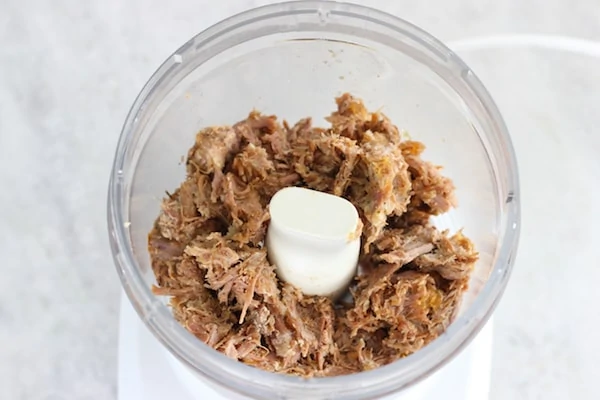
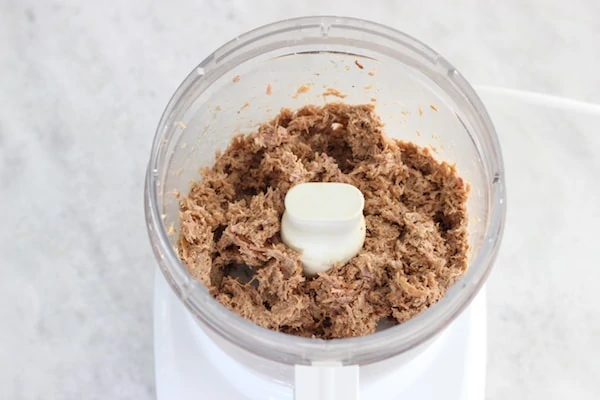
Pulse until the meat is nicely ground. You don’t want it to be a puree, but it should definitely be on the smaller size. You can also use a meat grinder instead of the food processor.
In a skillet, melt the butter. Add the minced onion, season with salt and cook on medium heat until the onions are tender and slightly golden in color. The caramelized onions will give a lot of really great flavor to the dish. Add the flour, mixing to incorporate into the onions.
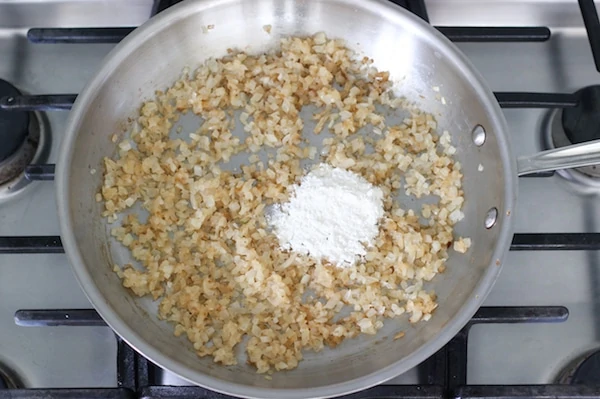
Adding flour is optional, but I really like that it gives this dish a subtle, velvety sauce. The sauce is barely noticeable, but it helps to coat the pasta with extra flavor and smoothness.
Add the meat to the skillet.
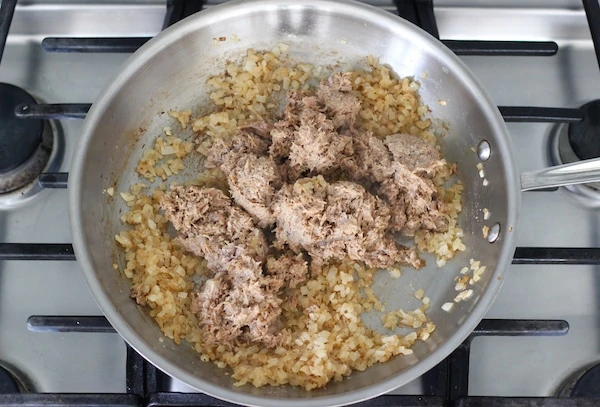
Increase the heat to medium high heat and continue cooking until the meat is heated through. You can cook it slightly longer, so that the edges of the meat get golden around the edges. The meat should still be tender for the most part, with nicely browned bits here and there. This also improves the overall taste of the dish.
Add the broth and cook for another 3-5 minutes, scraping the bottom of the skillet to get all the brown bits from the bottom. Mix until the broth thickens. Use more or less broth, depending on how “saucy” you want it to be
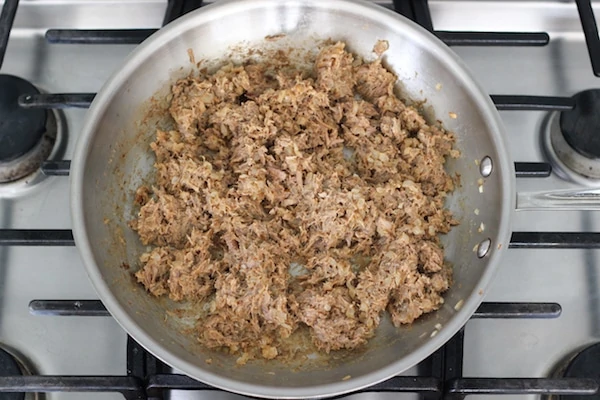
You can use chicken broth or reserve some of the cooking liquid that was used to cook the meat before you reduce the rest of it for the Pulled Pork.
Add the meat to the pasta.
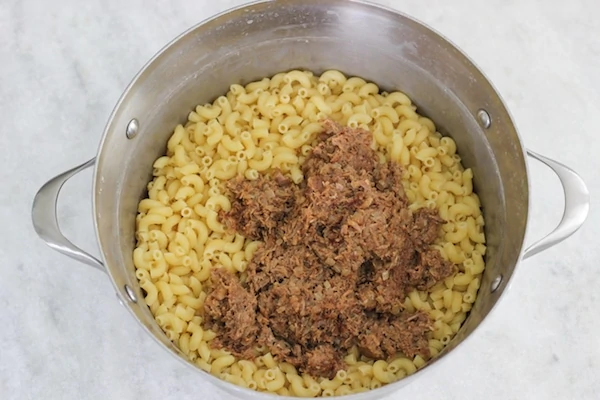
Mix and garnish with fresh herbs
About Post Author