Resolution to Limit Trump’s War Powers Passes Senate

President Trump listens as Chairman of the Joint Chiefs of Staff Gen. Dan Caine speaks at Mar-a-Lago, Saturday, Jan. 3, 2026. (AP Photo/Alex Brandon)
The Senate moved forward Thursday with a resolution that would restrict President Trump’s ability to carry out additional military attacks against Venezuela, signaling growing concern over his expanding actions in the Western Hemisphere. The measure advanced by a 52–47 vote, with Democrats joined by five Republicans, setting up a final vote next week.
The resolution is unlikely to become law, since it would require approval from the Republican-controlled House and President Trump’s signature. Still, the vote represented a notable rebuke, highlighting unease among some Republicans following the U.S. military’s surprise nighttime raid that resulted in the capture of Venezuelan leader Nicolás Maduro, according to the Associated Press.
The Trump administration is now seeking to assert control over Venezuela’s government and oil resources. The war powers resolution would require congressional authorization for any further military action against the country. “To me, this is all about going forward,” said Sen. Josh Hawley of Missouri, one of the five Republicans who supported the measure. “If the president were to decide to put troops on the ground in Venezuela, Congress should have a say.” The other Republicans backing the resolution were Sens. Rand Paul of Kentucky, Lisa Murkowski of Alaska, Susan Collins of Maine, and Todd Young of Indiana.
President Trump strongly criticized the five Republicans in a post on Truth Social, saying they “should never be elected to office again.” He wrote that Republicans “should be ashamed” of the senators who voted with Democrats, arguing the resolution would weaken the president’s authority as commander in chief and undermine national security.

Democrats have attempted several times to pass similar measures during President Trump’s campaign against Venezuela. A comparable resolution failed narrowly in November, with Paul and Murkowski the only Republicans supporting it at the time. Lawmakers said circumstances have changed following Maduro’s capture and Trump’s broader ambitions, including interest in Greenland.
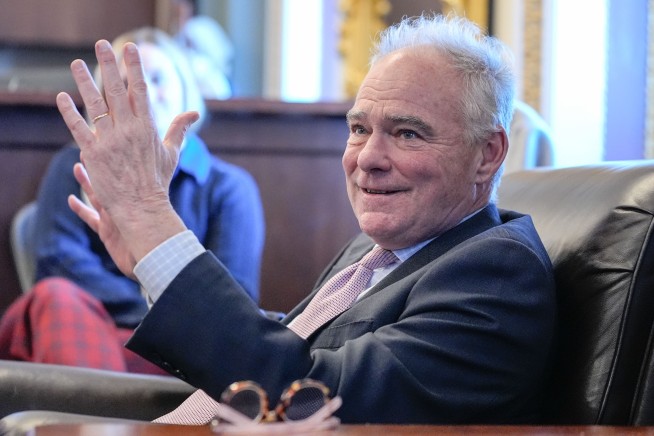
“This is the moment for Congress to reassert its authority over military action and bring these decisions out of secrecy,” said Sen. Tim Kaine of Virginia, who pushed for the vote.

Under the Constitution, Congress holds the power to declare war, while the president serves as commander in chief. However, Congress has not formally declared war since World War II, allowing presidents wide latitude in military decisions. The War Powers Resolution, passed after the Vietnam War, was intended to limit that authority by requiring notification to Congress and setting time limits on unauthorized military actions—restrictions that presidents of both parties have often tested. Democrats argue those limits are now being stretched further than ever, while some Republicans contend congressional approval is not required at all.
About Post Author


