Exonerated Former Inmate Wins New Orleans Election

Calvin Duncan, center, stands with supporters on the steps of Orleans Parish Criminal Court to speak about his ambitions to be the next Clerk of Court, Oct. 2, 2025. (Chris Granger/The Times-Picayune/The New Orleans Advocate via AP, File)
Calvin Duncan, a New Orleans man who spent nearly 30 years in prison before his murder conviction was overturned, won election Saturday as the city’s clerk of criminal court—despite ongoing challenges to his exoneration by some state officials. Duncan, a Democrat, spent decades working to prove he was wrongfully convicted in a 1981 fatal shooting. His conviction was ultimately vacated in 2021 after he uncovered evidence that police officers had lied during his trial, the AP reports.
According to unofficial results from the Louisiana secretary of state, Duncan secured the position with 68% of the vote.
“Tonight is a dream that’s been forty years in the making,” Duncan said Saturday night. “I hope all those people who died in prison because we couldn’t get their records are looking down now. I hope they’re proud of me. We never stopped fighting for each other’s rights, and I will never stop fighting for yours.”
Duncan is listed in the National Registry of Exonerations. His opponent, incumbent Darren Lombard—also a Democrat—repeatedly argued in debates and campaign materials that Duncan was guilty of the crime. Louisiana Attorney General Liz Murrill likewise disputed Duncan’s innocence, even as more than 160 legal professionals publicly affirmed that he had been wrongfully convicted. “The facts, the law, and the procedural history are clear: Calvin Duncan was wrongfully convicted, he has proved his innocence, and he is now fully exonerated,” their letter stated.
Duncan once pleaded guilty to a lesser charge in 2011 in order to vacate his original murder conviction and gain his release, but that plea was later fully erased from the record following his exoneration, according to the New York Times.
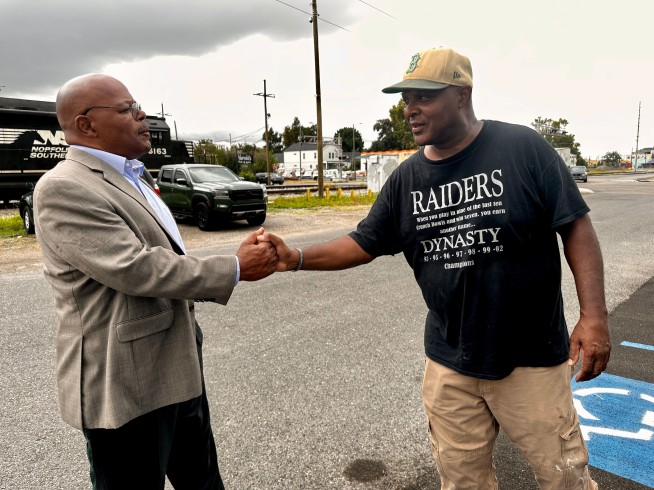
In October’s primary, Duncan led a three-way race with 47% of the vote, triggering a runoff against Lombard, who received 46%. Although the mayor-elect and several influential political figures backed Lombard, Duncan narrowly defeated him in the Nov. 15 runoff. Lombard later congratulated Duncan and said he would support a “smooth and professional transition” to ensure office operations continue without disruption.
Now 62, Duncan had only an eighth-grade education when he entered prison, yet he became a recognized legal advocate behind bars, assisting other inmates in challenging unconstitutional practices. He later graduated from law school at age 60. His work contributed to a landmark 2020 U.S. Supreme Court decision ending non-unanimous jury verdicts in Louisiana and Oregon—a system traced back to the Jim Crow era.
Duncan says his run for clerk was driven by a desire to ensure fair access to court records, noting that incarcerated people often waited years for basic documents. The Times describes the clerk position as “bureaucratic and technical,” a race that typically draws little public interest, but Duncan’s campaign persuaded voters that the office’s work is essential to justice.
New Orleans’ criminal court system still depends heavily on paper records, though the city plans to introduce digital filing. Duncan says he intends to accelerate that transition. Concerns about record-keeping intensified in August, when a batch of court documents was mistakenly thrown out, forcing staff to search through a landfill to recover them.
About Post Author