Alabama Executes Man. Lawyers asked a judge to allow time for more scrutiny of the use of nitrogen gas

This undated photo provided by the Alabama Department of Corrections shows Anthony Boyd. (Alabama Department of Corrections via AP, File)
An Alabama man convicted of helping burn a man alive over a $200 drug debt in 1993 was executed Thursday using nitrogen gas. Anthony Boyd, 54, was pronounced dead at 6:33 p.m. at William C. Holman Correctional Facility, authorities said. The execution employed a method Alabama began using last year, according to the Associated Press.
Boyd was sentenced to death for his role in the murder of Gregory Huguley in Talladega County. Prosecutors said Huguley was set on fire after failing to pay for $200 worth of cocaine. During the trial, a prosecution witness—testifying under a plea agreement—said Boyd had taped Huguley’s feet together before another man doused him in gasoline and set him on fire. A jury convicted Boyd of capital murder during a kidnapping and recommended a death sentence by a 10-2 vote.
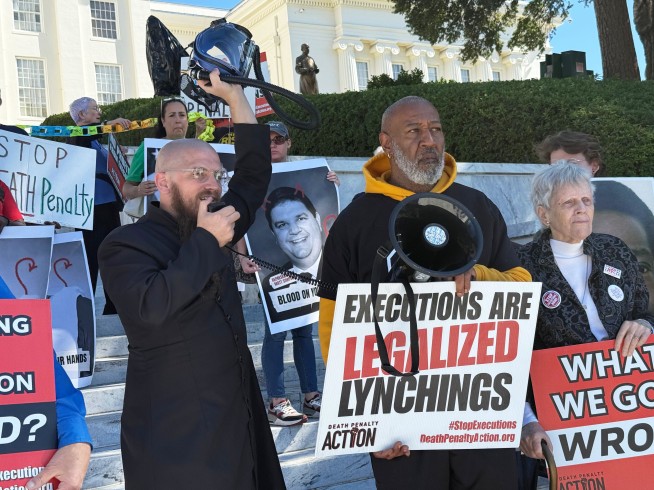
Boyd always maintained his innocence, with defense attorneys saying he was at a party the night Huguley was killed. “I didn’t kill anybody. I didn’t participate in any killing,” Boyd told supporters by phone during a news conference on Oct. 8. He had been on Alabama’s death row since 1995 and was a member of Project Hope to Abolish the Death Penalty, a group founded by men on death row.
Alabama’s nitrogen gas method replaces breathable air with pure nitrogen through a gas mask, causing death by lack of oxygen. Nationwide, it has been used in eight executions: seven in Alabama and once in Louisiana. Boyd’s lawyers had sought to halt the execution for additional review of the method, but a federal judge denied the request, ruling Boyd was unlikely to succeed in claims that it is cruel and unusual punishment. The U.S. Supreme Court also denied his appeal Thursday afternoon.
About Post Author


