‘Giant Nagging Mosquitoes’ May Soon Be Your DoorDasher

Despite being able to deliver a pint of ice cream before it melts, drone delivery services in the U.S. have yet to truly lift off. More than six years after the Federal Aviation Administration (FAA) approved commercial home drone deliveries, the technology remains largely limited to select suburban and rural areas.
That could soon change. The FAA recently proposed a new rule that would make it easier for drones to fly beyond the operator’s line of sight, paving the way for longer-range deliveries. Currently, only a few companies are allowed to do this, and only after securing waivers and being certified as air carriers. The proposed rule could open the skies to more businesses and retailers, many of which say they’re ready to scale up and serve millions more U.S. households.
A Slow Climb in the U.S.
Drone delivery has seen more success abroad. Zipline, a drone company partnering with Walmart, began delivering medical supplies to hospitals in Rwanda back in 2016. In 2017, Flytrex—a partner of DoorDash—launched residential drone deliveries in Iceland.
However, in the U.S., progress has stalled. Adam Woodworth, CEO of Wing (a drone delivery firm owned by Google parent Alphabet), says the industry has been stuck in “treading water mode” due to regulatory uncertainty, which has discouraged investment and expansion.
Capacity and Capabilities
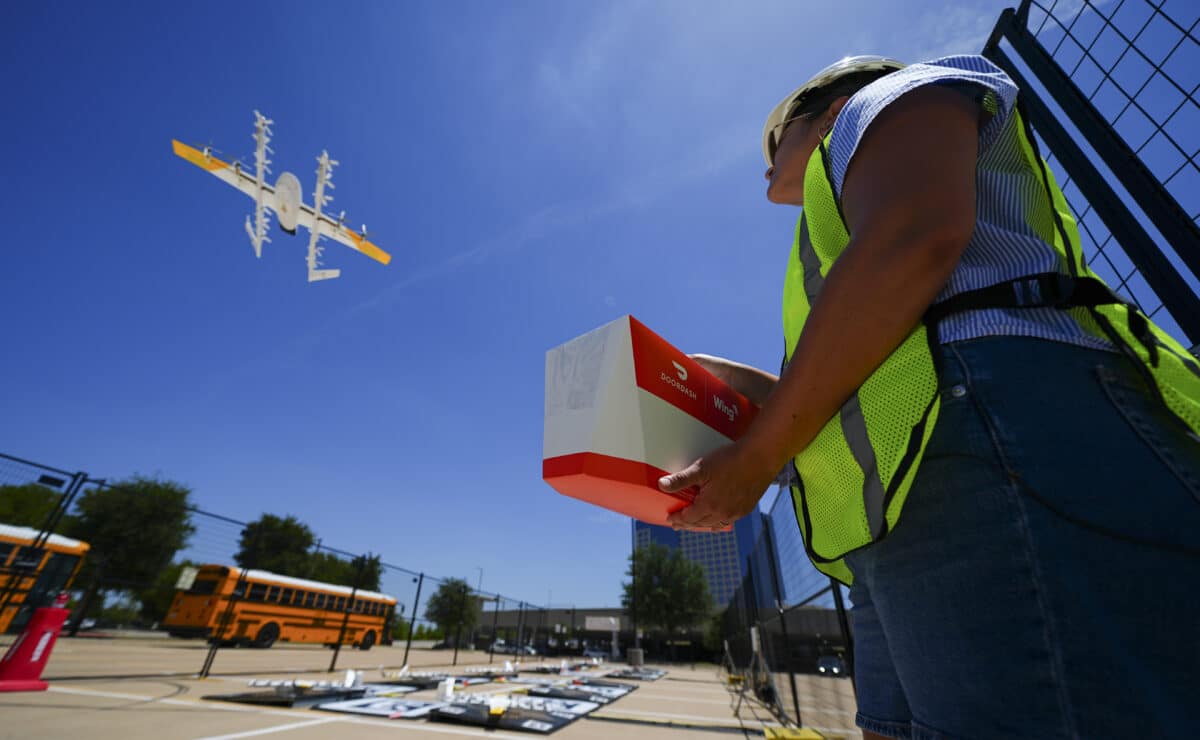
Unlike vans or bikes, drones typically deliver one order at a time. Wing’s drones can carry packages up to 2.5 pounds and travel 12 miles round trip, with one pilot able to supervise up to 32 drones. Zipline’s drones have greater range and can carry up to 4 pounds over 120 miles. Amazon’s drones are designed to carry even heavier loads.
The delivery process is largely automated: after a customer places an order, it’s packed and attached to a drone at a launch site. The drone then follows a programmed route, avoiding obstacles, and lowers the package to the ground using retractable cords. A pilot oversees the flight remotely.
Pros and Cons
Supporters tout drone delivery as a greener, faster alternative to traditional methods, especially valuable in hard-to-reach rural areas. But the technology has drawbacks.
According to Shakiba Enayati, a supply chain instructor at the University of Missouri-St. Louis, drone deliveries cost about $13.50 per package—compared to just $2 for a traditional vehicle. Drones also require trained operators, are weather-sensitive, and pose risks like collisions or crashes. There’s also concern about the impact on delivery jobs and the persistent, mosquito-like buzzing sound drones produce, which some people find annoying.
Still, with the FAA’s proposed rule in motion, the long-anticipated drone delivery revolution might finally get off the ground.
About Post Author


