Forty years ago, on April 26, 1986, a catastrophic explosion occurred at reactor number 4 of the Chernobyl Nuclear Power Plant in what was then the Soviet Union. The blast tore through the reactor core and sparked a graphite fire, releasing large amounts of radioactive material into the air.
It became the most severe nuclear accident in history. Contamination spread across large parts of what is now Ukraine, as well as into Belarus and Russia, while radioactive fallout also reached much of Europe. Entire communities were evacuated, and a vast surrounding area was eventually sealed off as the Chernobyl Exclusion Zone, where human settlement was no longer considered safe.
Decades later, the region remains largely uninhabitable for people, yet nature has made a striking return. Wildlife has gradually reclaimed the abandoned landscape, turning the exclusion zone into an unexpected refuge for many species.
Among the most notable reintroductions are Przewalski’s horse, a rare wild horse species now roaming in significant numbers across the area. In this vast stretch of land spanning Ukraine and Belarus, these animals graze freely in forests and open fields that were once densely populated by humans.
Volunteers in the Chernobyl Exclusion Zone have discovered packs of dogs with bright blue fur, Daily Mail reports. According to researchers, the animals appear healthy and active despite their unusual coloration.
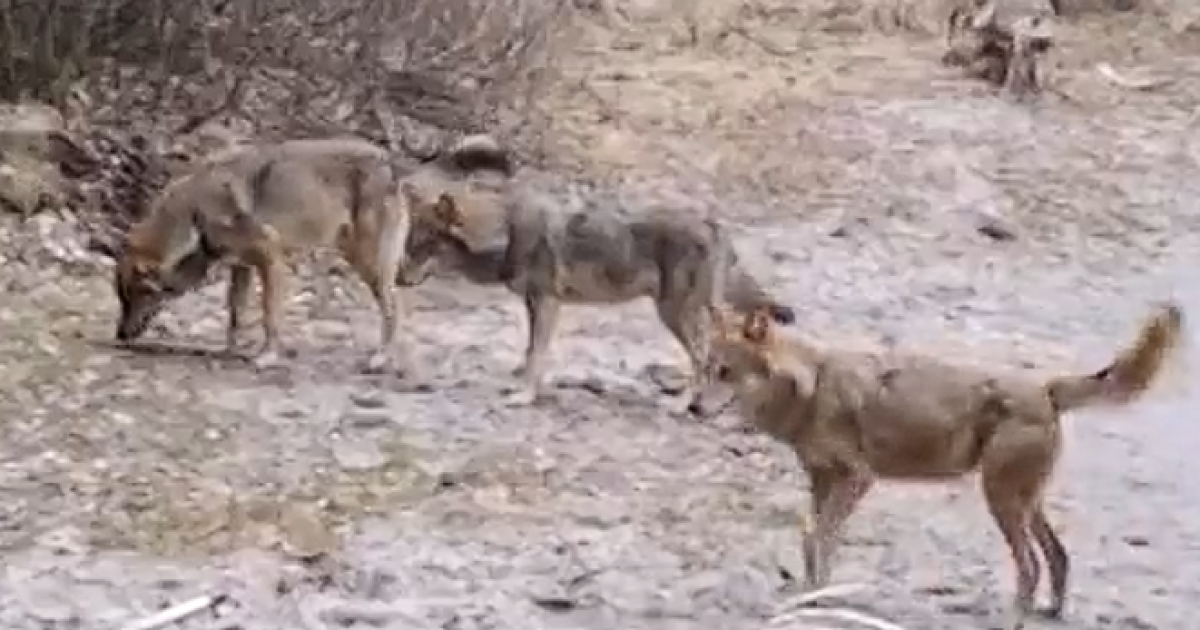
Other wildlife has also re-established itself. Wolves now move through the territory in growing numbers, while brown bears have returned after being absent for more than a century. Populations of lynx, moose, red deer, and feral dogs have all shown signs of recovery as the absence of human activity has allowed ecosystems to re-form.
A quasi 40 anni dal disastro, Chernobyl è un ecosistema unico. Cavalli di Przewalski, lupi e orsi bruni ripopolano la zona di esclusione tra Ucraina e Bielorussia. Senza la presenza umana, la natura ha riconquistato le città fantasma. pic.twitter.com/c1ZfvbPFpY
There have also been unusual sightings, including groups of dogs with bright blue fur. Investigations suggest the coloring is not linked to radiation exposure, but rather to a harmless dye they encountered, likely from materials used in portable sanitation equipment. Despite their unusual appearance, the animals are reported to be active and in good condition.
Four decades on, the region remains a place defined by its disaster, but also by an unexpected ecological transformation. While human life has not returned, the land has become an evolving sanctuary where wildlife continues to adapt and thrive in the absence of people.