British sailors forced to use GERMAN ship on crucial Nato mission in ‘national embarrassment’

Posted For: Layla Godey
British sailors will serve aboard a German warship during an upcoming NATO operation after the United Kingdom ran out of available vessels for the mission, a situation critics have described as a national embarrassment.
The Royal Navy had been scheduled to command Standing NATO Maritime Group One, a permanent rapid-response naval force that operates across the Baltic Sea and the North Atlantic Ocean. However, the United Kingdom currently does not have a warship available to lead the deployment in those waters.
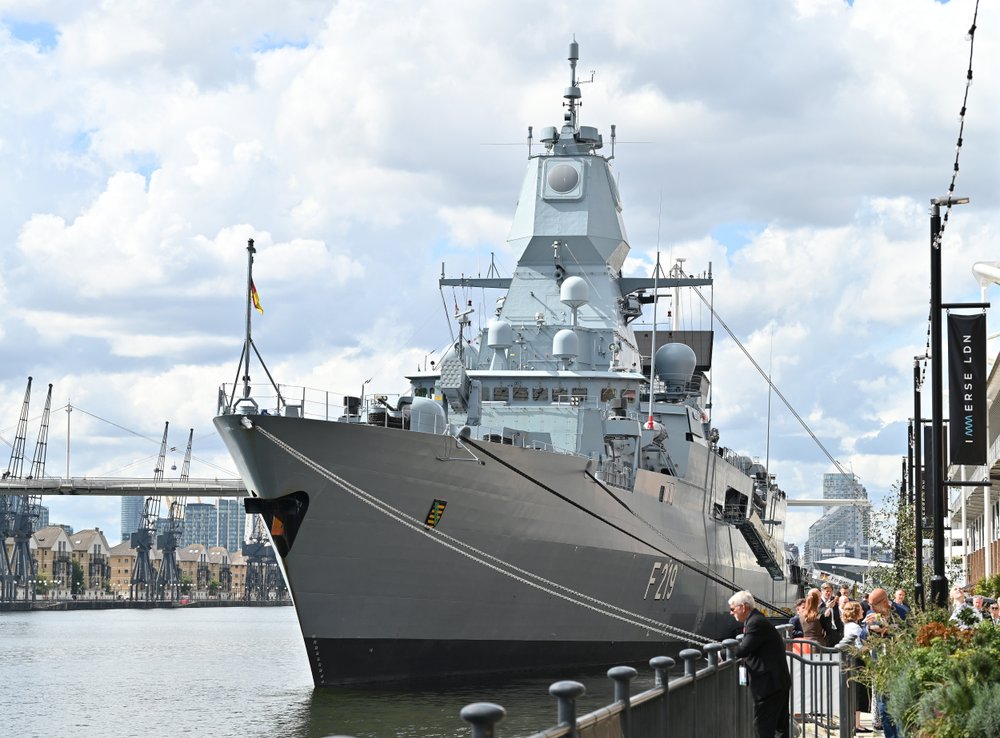
Instead, a German frigate will take over the role. The German Embassy in London confirmed that the German vessel Sachsen will replace HMS Dragon as the flagship of the NATO maritime task group. British personnel will still be assigned to the ship as part of the mission, which officials described as an example of cooperation between Germany and the United Kingdom.
HMS Dragon, a Type 45 destroyer, was recently sent to the eastern Mediterranean and reached waters near Cyprus earlier this week. With Dragon deployed, the Royal Navy was left with only one other operational Type 45 destroyer, HMS Duncan. Another destroyer, HMS Daring, has only recently returned from eight years in maintenance and is currently undergoing sea trials.
Earlier in the month, Defence Secretary John Healey said the United Kingdom would be able to meet its NATO responsibilities. But the lack of a ship available for the assignment has raised concerns among lawmakers.
A senior Labour member of Parliament said the situation reflects broader concerns about Britain’s defence capacity, pointing to what he described as a shortage of both personnel and equipment.
Conservative MP and military veteran Ben Obese-Jecty said he had repeatedly warned about the possibility of the United Kingdom failing to meet its NATO obligations. Speaking to The i Paper, he called the situation embarrassing for the country and said the Royal Navy has effectively run out of ships, adding that Britain can no longer claim to dominate the seas.
Obese-Jecty said Healey previously assured him that the navy would meet its commitments to NATO. He blamed the current shortage in part on a decision made under the Blair government to reduce the planned number of Type 45 destroyers from twelve to six.
HMS Duncan, the final destroyer delivered under that order in 2010, is scheduled to participate in Operation Firecrest in the High North. That operation is being led by the aircraft carrier HMS Prince of Wales, which had been prepared for possible deployment to Iran earlier this month.

Lord West, a former head of the Royal Navy who now sits in the House of Lords for Labour, said the situation highlights the need for greater defence spending. He told The i Paper that the recent blockade of the Strait of Hormuz demonstrates how critical naval power remains, while warning that the navy currently lacks the capacity expected by the British public.
The Royal Navy has even considered the possibility of sending civilian vessels to clear Iranian sea mines in the region instead of military ships.

Lord West warned that global shipping routes have long required significant protection and that the shrinking number of British warships puts the country at risk. He said the public may not fully understand how vulnerable the situation could become.
He argued that defence funding must be increased immediately and urged the government to treat the issue with urgency, saying the country is approaching a point where a wartime level of mobilization may be required to address the problem.
A spokeswoman for the Ministry of Defence said the United Kingdom remains fully committed to NATO and will carry out its leadership role in Standing NATO Maritime Group One as planned. A Royal Navy commodore is expected to assume command of the mission next month.
About Post Author


