What countries have voter identification requirements?
Posted For:
A debate circulating on social media claims that voter ID rules requiring proof of citizenship in the United States would prevent certain groups from voting, particularly college students and people who have changed their names after marriage. Available data and existing identification practices suggest those claims are inaccurate.
Research from surveys conducted by YouGov, Pew Research, the Brennan Center for Justice, the Cato Institute, a Reuters report, and the Good American Citizen Project indicates that most adults in the United States already possess documents that verify citizenship. About 89 percent of Americans age 18 and older have these documents readily available. Another 9 percent possess them but may not have them immediately accessible, such as college students who left documents at their parents’ homes. Only about 2 percent of adults are estimated to have no citizenship documentation at all.
Among the small group without documentation, the largest share tends to be people between 18 and 24 years old, many living in rural areas, along with a portion of the very elderly. Most younger individuals in this category eventually obtain the necessary records as they get older.
Some social media posts also claim that moving away to attend college would invalidate identification documents. In reality, key forms of identification such as passports, Social Security cards, and birth certificates do not contain a residential address, meaning that relocating for school does not affect their validity.
Another argument online suggests that people who change their names after marriage could face difficulty voting because their documents might not match. However, previous identification documents remain valid even after a legal name change. When necessary, individuals can provide a document that connects the old name to the new one, such as a marriage certificate or a court order approving the name change. Federal guidance for citizens and lawful permanent residents already addresses situations where a name differs between documents.
These facts undermine the claim that college attendance or a name change would automatically prevent someone from voting under a voter identification system. Critics of voter ID laws and supporters alike continue to debate the policy itself, but the argument that these specific groups would broadly lose their ability to vote is based on an incorrect premise.
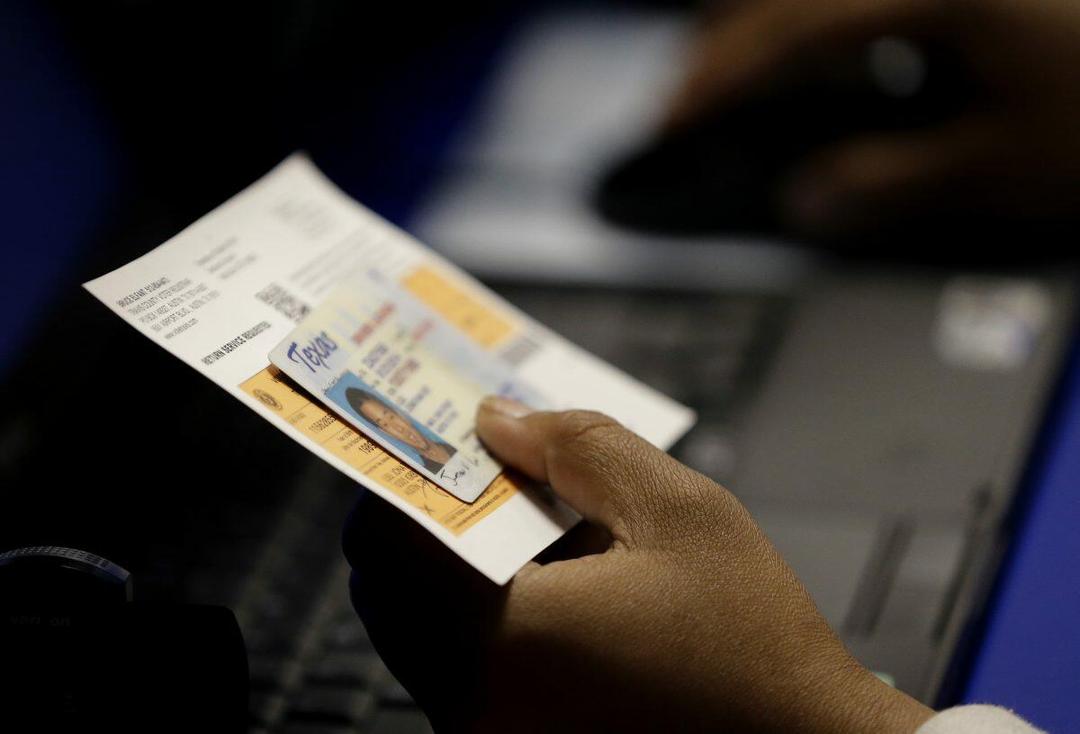
Currently, identification rules for voting in the United States vary by state. Roughly half of U.S. states require voters to present a photo ID. About a quarter accept other forms of identification instead of photo ID, while another quarter do not require identification at all.
The most common proof of citizenship is a birth certificate. In the United States, certified copies can be obtained from a state or county government office, typically costing between $10 and $34 depending on location. Birth registrations are usually completed automatically by hospitals at the time of birth. Fewer than 1 percent of births occur outside hospitals, and nearly all of those are attended by certified midwives or other medical professionals who are required to register the birth. Families can request certified copies of birth certificates during the registration process.
Birth certificates are often needed later for common activities such as enrolling children in school or obtaining health or auto insurance that lists a child on a family policy.
Looking beyond the United States, voter identification requirements are common worldwide. Most countries require some form of identification at the polling place, often a government-issued photo ID or a voter identification card that includes a photograph.
Europe is one of the clearest examples. Forty-six of the forty-seven countries in the European region require photo identification to vote. The United Kingdom historically did not require it but is moving toward mandatory identification. Sweden allows alternative forms of ID if a photo ID is unavailable.
Many countries in other regions also require identification. Nations such as India and Mexico use formal voter identification systems, while Mexico issues a national voter ID card used specifically for elections.
Canada uses voter information cards and allows several alternative documents to verify identity rather than requiring a photo ID. Similar systems exist in a small number of other democracies, including Australia and New Zealand, which rely more heavily on voter rolls and signature verification.
Overall, identification requirements for voting are common across much of the world. Europe is nearly universal in requiring photo ID, many countries in Africa, Asia, and South America require some form of identification, and the United States currently operates a mixed system where rules vary widely by state.
About Post Author