Negotiations between the United States and Iran appear to be back on track. After hours of reports suggesting the planned talks were at risk over disputes about location and format, Iranian Foreign Minister Abbas Araghchi said nuclear discussions will take place in Oman on Friday, according to the AP.
The White House confirmed that the US will participate in high-level talks in Oman instead of Turkey, which had originally been the planned venue. Sources told Axios that several countries in the region encouraged the US not to cancel the talks. “They asked us to keep the meeting and listen to what the Iranians have to say,” said one US official. “We have told the Arabs that we will do the meeting if they insist. But we are very skeptical.”
Reports from Iranian media—including semi-official outlets ISNA and Tasnim and the Student News Network—said the talks would be in Oman, although the sultanate has not officially confirmed the meeting. Oman has previously hosted multiple rounds of US-Iran nuclear negotiations.
The venue had been a point of contention. Axios, citing two US officials, reported that Istanbul had originally been agreed upon, with other Middle Eastern countries observing. US officials told Iran they would not accept changes to the location or format. “We told them it is this or nothing, and they said, ‘OK, then nothing,’” one source said.
Secretary of State Marco Rubio told the Times of Israel, “We thought we had an established forum that had been agreed to in Turkey that was put together by a number of partners who wanted to attend. I saw conflicting reports yesterday from the Iranian side saying that they had not agreed to that, so that’s still being worked through.”
Tensions between Washington and Tehran remain high following Iran’s violent crackdown on nationwide protests last month. President Trump has previously suggested the US could use force in response to Iran’s actions and is seeking a deal to limit Tehran’s nuclear program.
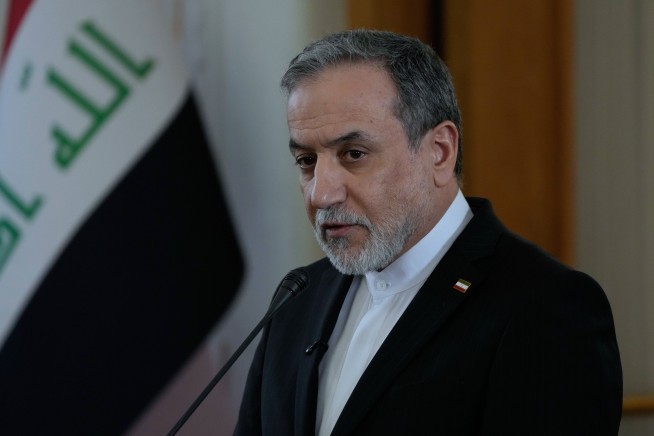
Iranian Foreign Minister Abbas Araghchi speaks during a joint press briefing with his Iraqi counterpart Fuad Hussein in Tehran, Iran, Sunday, Jan. 18, 2026. (AP Photo/Vahid Salemi)
Rubio said, “At the end of the day, the United States is prepared to engage, and has always been prepared to engage with Iran. But for talks to actually lead to something meaningful, they will have to include certain things: the range of Iran’s ballistic missiles, their sponsorship of terrorist organizations in the region, the nuclear program, and the treatment of their own people.”
According to Axios, Iran has indicated it will only agree to bilateral talks focused strictly on the nuclear issue. On Tuesday, Iran’s reformist President Masoud Pezeshkian instructed the foreign minister to “pursue fair and equitable negotiations” with the US, signaling Tehran’s willingness to negotiate.
Meanwhile, military tensions remain. On Tuesday, a US Navy fighter jet shot down an Iranian drone near an American aircraft carrier, and Iranian Revolutionary Guard boats attempted to intercept a US-flagged ship in the Strait of Hormuz. Iran has not publicly acknowledged either incident, which strained but did not end prospects for talks.
Crude oil prices jumped 3% Wednesday after Axios reported that negotiations could be in jeopardy.