A solution for crowded cemeteries: Turn loved ones into gardening soil
Detroit City Limits 20 hours ago 0
Joseph Charap, vice president of horticulture at Green-Wood Cemetery in Brooklyn. © Sara Hylton for WSJ
A quiet but significant challenge is emerging across America’s cemetery system: many burial grounds are running out of space. Green-Wood Cemetery in Brooklyn believes it may have found a practical and environmentally focused solution.
The historic 478-acre cemetery, like many across the country, faces limited room for new burials. Working with a German company, cemetery officials plan to introduce a process that transforms human remains into nutrient-rich soil that can be used to support trees, meadows, and landscaped grounds.
The method, known as natural organic reduction, relies on the body’s own microbes to break down tissue. The deceased is placed in a carefully controlled vessel filled with plant materials such as clover, hay, and straw. Airflow, temperature, and moisture are regulated as microbes gradually decompose the body. After the process, only bones remain, which are then ground and mixed into the final soil.
Green-Wood plans to use this soil to maintain and improve its landscape while also creating a new revenue stream. “It’s a way to integrate revenue generation with ecological regeneration,” said Joseph Charap, vice president of horticulture at Green-Wood. The cemetery intends to begin with about 18 composting vessels supplied by Berlin-based startup Meine Erde, meaning “My Earth.”
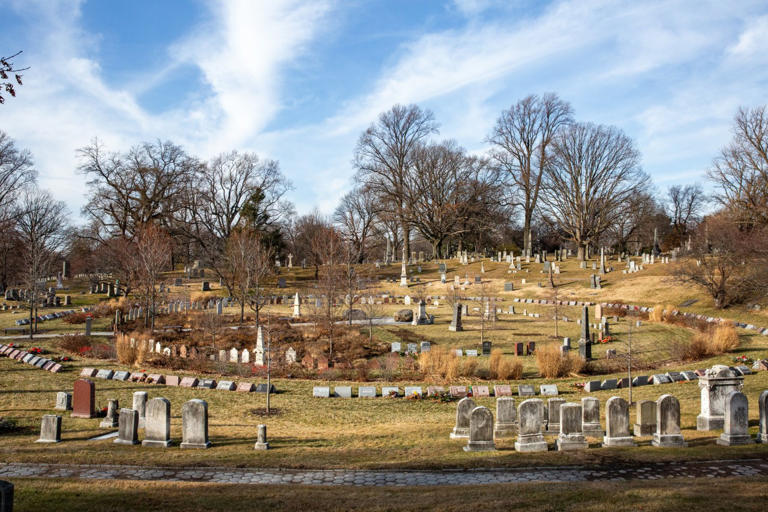
Meera Joshi, Green-Wood’s president and a former deputy mayor of New York City, said the cemetery is considering dedicating specific areas for families who choose this form of remembrance. “The idea of getting in on the ground floor, especially in a beautiful place like Green-Wood, is a little irresistible,” she said.
As the large baby boomer generation ages, funeral and burial practices are seeing renewed attention and new ideas. Alongside biodegradable coffins and digital memorials, environmentally conscious options are gaining interest.
Fourteen U.S. states have legalized human composting since Washington became the first to do so in 2019. Lawmakers in several European countries, including Germany, Switzerland, Belgium, and the United Kingdom, are also examining the practice.
Washington state Sen. Jamie Pedersen, who helped pass the original legislation there, noted that the growing number of deaths expected over the coming decades is encouraging people to rethink traditional approaches. Around three million Americans die each year, a number projected to rise to nearly four million annually over the next twenty years, according to the National Funeral Directors Association. Cremation currently accounts for more than 60% of deaths in the U.S., a share expected to increase significantly in the coming decades.

Surveys indicate that many Americans favor simpler, more affordable, and environmentally friendly burial options.
However, human composting has drawn criticism. Some funeral industry representatives argue the process lacks sufficient regulation and could disrupt established services. Religious groups, including the U.S. Conference of Catholic Bishops, have expressed concerns that the method does not show appropriate respect for the body.
Green-Wood itself has a long history. Founded in 1838 as one of the first “garden cemeteries” in the country, it became a destination for visitors, inspiring park design and serving as both a memorial space and a public landscape. After a period of decline in the mid-20th century, the cemetery has revitalized itself with tours, art events, concerts, and wildlife activities.
Cemetery officials believe natural organic reduction could become another part of that evolution. The cost is expected to fall between cremation and a traditional burial, which at Green-Wood can exceed $30,000.
The modern concept of human composting traces back roughly a decade. Architect Katrina Spade worked with researchers at Washington State University to study the process and later founded the company Recompose. Since legalization in Washington, several companies have entered the field. Facilities there report steady growth, with families sometimes visiting during the process.
Many funeral homes remain cautious, noting that embalming, caskets, and burial services form the backbone of their business model. Industry groups in multiple states have raised concerns about training, oversight, and the handling of the resulting soil.

Meanwhile, in Germany, Meine Erde has been working through a complex regulatory landscape. Founder Pablo Metz has spent years seeking approvals from lawmakers and health authorities. A pilot program in the northern state of Schleswig-Holstein has composted around 60 bodies inside converted chapel spaces.
German scientists have debated the safety of the process, raising questions about pathogens, implants, and emissions. Metz commissioned independent analysis that concluded the soil posed no risk. Courts have also weighed in on how the company describes its environmental claims and research.
Despite setbacks, lawmakers in Schleswig-Holstein are considering broader legalization, and interest from U.S. partners has grown. Meine Erde’s investors say the company plans to establish production facilities in the United States.
Green-Wood officials say the vessels for natural organic reduction would be housed in a dedicated building capable of holding up to 40 units.
“We will one day come to a time when we won’t have the capacity for traditional burials,” Joshi said. “But that doesn’t mean we have to close our doors.”


