Tiny ‘Survivor’ island with 18K population to welcome Trump’s deportees — for $7.5 million

Palau’s main city of Koror is home to most of the county’s 18,000 people. © Amos Nachoum/CORBIS
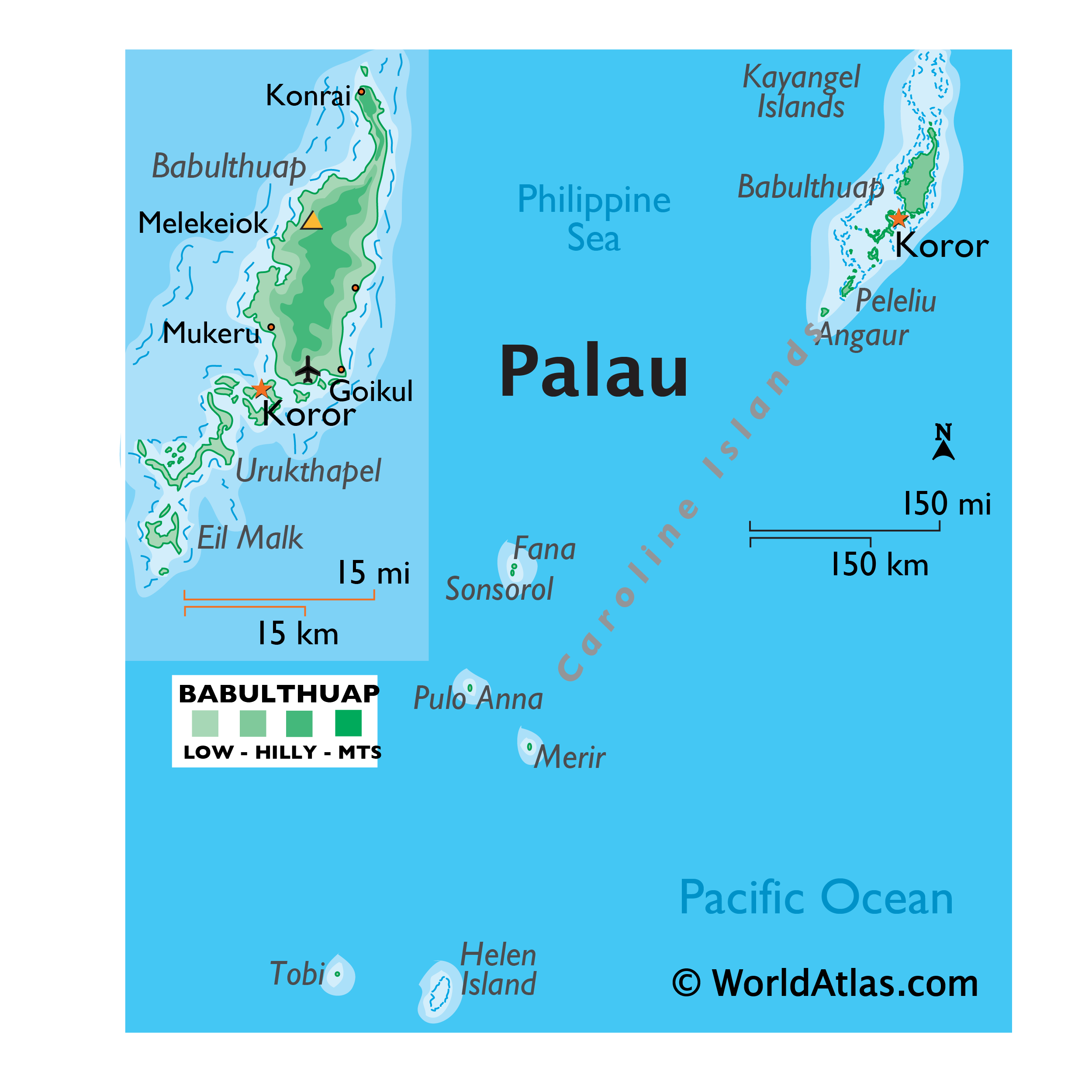
WASHINGTON — The small Pacific nation of Palau, once a filming location for Survivor, has agreed to accept up to 75 third-country deportees from the United States who have no criminal record. In return, the island nation will receive a $7.5 million grant to support its roughly 18,000 residents.
The arrangement, announced on Christmas Eve by Palau’s President Surangel Whipps Jr. and the U.S. embassy in Koror, sets one of the most favorable options yet for deportees whose home countries—such as China, Cuba, Russia, or Iran—refuse to accept them.
“Palau and the United States signed a Memorandum of Understanding allowing up to 75 third-country nationals, who have never been charged with a crime, to live and work in Palau, helping address local labor shortages in needed occupations,” President Whipps said. “In connection with this arrangement, the United States granted $7.5 million to help Palau meet related public service and infrastructure needs, while both countries continue close cooperation on immigration and security matters.”
The U.S. embassy added, “The United States deeply appreciates Palau’s cooperation in enforcing U.S. immigration laws, which remains a top priority for the Trump Administration.”
Alongside the $7.5 million grant, the Trump administration agreed to provide $6 million to stabilize Palau’s civil service pension system and $2 million for new law enforcement initiatives. Palau, whose main industries are tourism and fishing, was already slated to receive $889 million in U.S. aid over 20 years—roughly $44.45 million annually—under an agreement brokered by the Biden administration last year. Those funds support education, health, environment, justice, public safety, and auditing programs.
Palau, located east of the Philippines and about a two-hour flight from Guam, was previously governed by the United States. The U.S. took control from Japan following the 1944 Battle of Peleliu, which claimed 1,544 American lives. In the late 1970s, then-President Jimmy Carter led the process granting independence to Palau, along with Micronesia and the Marshall Islands. Carter also returned the Panama Canal Zone to Panama.

So far, Palau, Micronesia, and the Marshall Islands have not been directly affected by President Trump’s broader territorial ambitions, which include proposals to reclaim the Panama Canal and annex Greenland.
Palau gained international attention in 2005 as the site of Survivor: Palau, won by New York City firefighter Tom Westman.
The island nation is heavily reliant on foreign aid, which makes up about 12% of its GDP, and also receives support from Taiwan and Japan. Palau observes Oct. 1, 1994, as its independence day, when its Compact of Free Association with the U.S. took effect. As part of the compact, Palau uses the U.S. dollar, its citizens can live and work in the United States, and U.S. federal benefits are accessible to them. The U.S. provides defense, the Postal Service handles mail, and English is a co-official language.
Other countries have participated in similar programs under Trump’s mass-deportation initiative. These programs have encouraged some undocumented immigrants to voluntarily leave the U.S., typically for $1,000 to $3,000 and a one-way ticket, compared to the average $17,121 cost of detention and deportation.

For example, Equatorial Guinea received $7.5 million to accept an unspecified number of deportees. El Salvador placed 238 alleged gang members in high-security facilities for $6 million, while seven were sent to South Sudan. Rwanda accepted a single Iraqi man for $100,000 and later agreed to take 250 more. Uganda and Honduras also signed agreements to accept third-country immigrants without criminal records, with Uganda taking African nationals and Honduras taking 200 Spanish speakers from other countries.
About Post Author


