Why the Air Force Is Buying 2 Lufthansa 747s

In this Sept. 6, 1990, file photo, a crowd of people stand on the tarmac of the Topeka airport as the new United States Air Force One presidential aircraft taxis up in Topeka, Kansas. (AP Photo/Cliff Schiappa, File)
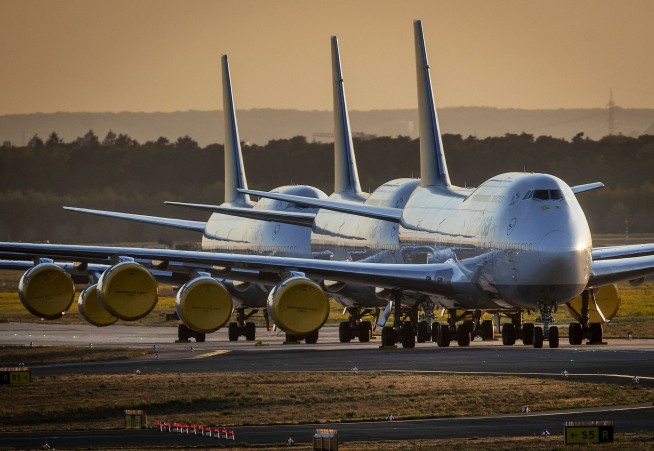
The Air Force’s next generation of presidential aircraft is still several years from entering service, but preparations are continuing behind the scenes. To support the transition, the Air Force plans to spend roughly $400 million to purchase two used Boeing 747-8 jets from German airline Lufthansa.
The aircraft are not intended to become the next Air Force One planes themselves. Instead, they will be used for crew training and as a source of spare parts as the military phases out its aging Boeing 747-200 fleet, which has been in service since 1990. According to CNN, the first Lufthansa jet is expected to arrive early next year, with the second arriving by the end of the year.
Because Boeing no longer produces passenger versions of the 747-8, Air Force officials say acquiring these aircraft now is critical to sustaining long-term operations of the future VC-25B fleet—the official designation for the next Air Force One planes. Boeing’s primary contract to build the new presidential aircraft has grown to more than $4.3 billion following a December modification and remains several years behind schedule.
An Air Force spokesperson said recent contract changes are largely tied to upgraded communications systems to ensure the VC-25B aircraft can meet evolving mission requirements. The first of the new presidential planes is now projected for delivery in mid-2028, well beyond the original 2022 target, with modification work ongoing in San Antonio.
Under the current timeline, President Trump is expected to receive the new aircraft during his final year in office. He has publicly expressed frustration with the delays, noting that he is still flying on planes that once carried President George H.W. Bush, according to the San Antonio Express-News. Trump has also suggested a Qatari-donated aircraft could be used as Air Force One as early as February, though aviation experts have expressed skepticism, saying the extensive modifications required would more realistically take until around 2028 and could cost close to $1 billion.
About Post Author


