High School Can’t Play at Night Until Ospreys Leave

It wasn’t a gridiron clash, but the Nesting Ospreys have scored a surprise win over the Apple Valley Eagles—by moving in.
A pair of ospreys built a massive nest atop a light pole at Apple Valley High School’s football stadium, effectively grounding the school’s traditional night games. Because the birds are protected under both state and federal law, school officials were forced to reschedule football and soccer games to daylight hours to avoid turning on the floodlights, which could overheat the nest—or even start a fire.
“When you tell someone this story of ‘Wow, we have to reschedule because there’s an osprey nest in our stadium,’ they’re like, ‘You can’t make this type of stuff up, right?'” said Cory Hanson, the school’s athletic director.
The discovery came in June, when staff started noticing large birds soaring across the field carrying huge sticks. One look at the towering nest made it clear—this wasn’t the work of just any bird.
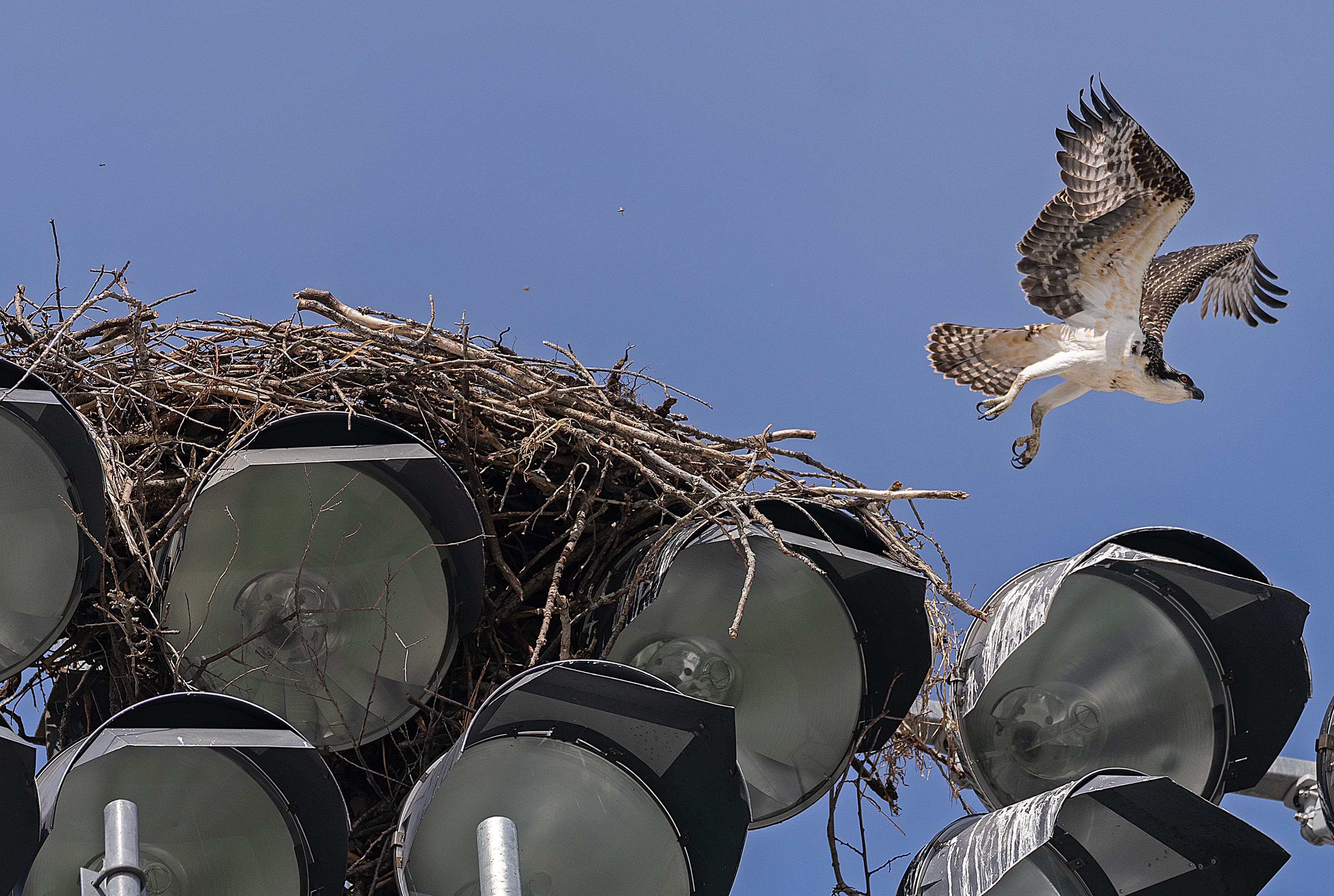
Working with the Minnesota Department of Natural Resources (DNR), the school began using a drone to monitor the nest twice a week. Photos showed as many as four chicks being raised there. Now, with the young ospreys starting to take flight, the school hopes to remove the nest within the week and bring back its traditional Friday night lights.
“Luckily for Apple Valley, they should be able to remove the nest within probably a week because the birds have already taken some of their first flights,” said Heidi Cyr, nongame wildlife permit coordinator with the DNR.
Once the nest is cleared, officials plan to relocate it to a new platform nearby, hoping to encourage the ospreys to return—just not to the same light pole. Deterrents will be added to keep future nests off the stadium lights.
Despite the unexpected interruption, Hanson says other schools have been understanding about the schedule changes. “When you see these large birds flying across your field with these humongous sticks, you start to ask questions like, ‘What is going on here?’” he said. “And you take one look at that nest, and you’re like, ‘OK, this is not your average bird.’”
For now, Cyr says, there’s no need to worry. “The birds are safe. They’ve successfully left the nest and they’re on their way to becoming adults themselves.”
About Post Author


