Nature’s Palette: Creating Beautiful Colors from Everyday Kitchen Ingredients

Naturally Dying Easter Eggs: A Beautiful, Eco-Friendly Tradition
When it comes to coloring Easter eggs, many of us reach for the bright, convenient store-bought kits. While these dyes deliver vibrant colors, they often rely on artificial chemicals and synthetic pigments, which may feel a little out of place for a natural, home-centered celebration. If you’re looking for a way to combine tradition, creativity, and eco-friendly practices, naturally dyeing your Easter eggs is a beautiful alternative.
The Beauty of Naturally Dyed Eggs
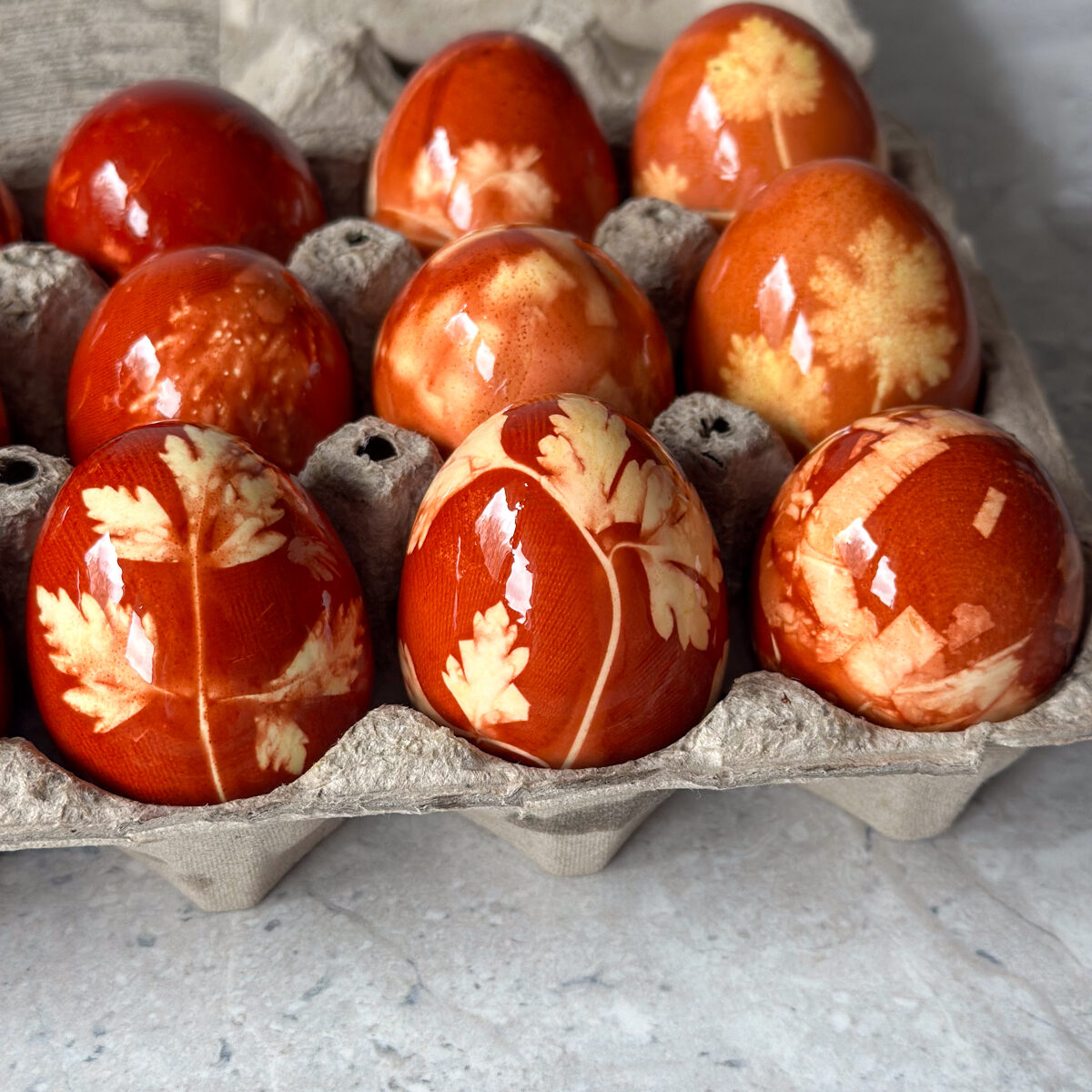
Using natural ingredients like onion skins and beets, you can create eggs that are not only safe and non-toxic but also radiate a warm, organic charm. Onion skins produce rich oranges, golden yellows, and earthy browns that feel cozy and autumnal even in spring, while beets yield delicate pinks and deep reds, adding a soft, romantic touch to your Easter display. Each egg becomes unique—no two are exactly alike—which gives a handcrafted, artisanal feel to your holiday décor. Beyond their aesthetic appeal, naturally dyed eggs connect us with the seasons and the simple beauty of ingredients from our kitchen, making them a perfect fit for any home and garden celebration.
How to Dye Eggs Naturally with Onion Skins and Beets 
Creating these naturally colorful eggs is surprisingly simple. Here’s how to do it:
Onion Skins (Orange/Yellow/Brown)
Ingredients:
- 2 cups yellow or red onion skins
- 2 cups water
- 1 tbsp white vinegar
Process:
- Bring the onion skins and water to a boil, then reduce to a simmer for 15–30 minutes to extract the color.
- Strain the liquid into a bowl or pot, and stir in 1 tablespoon of vinegar.
- Place your hard-boiled eggs in the mixture. For lighter shades, soak for a few hours in the fridge; for deeper, richer tones, leave them overnight.
Beets (Pink/Red)
Ingredients:
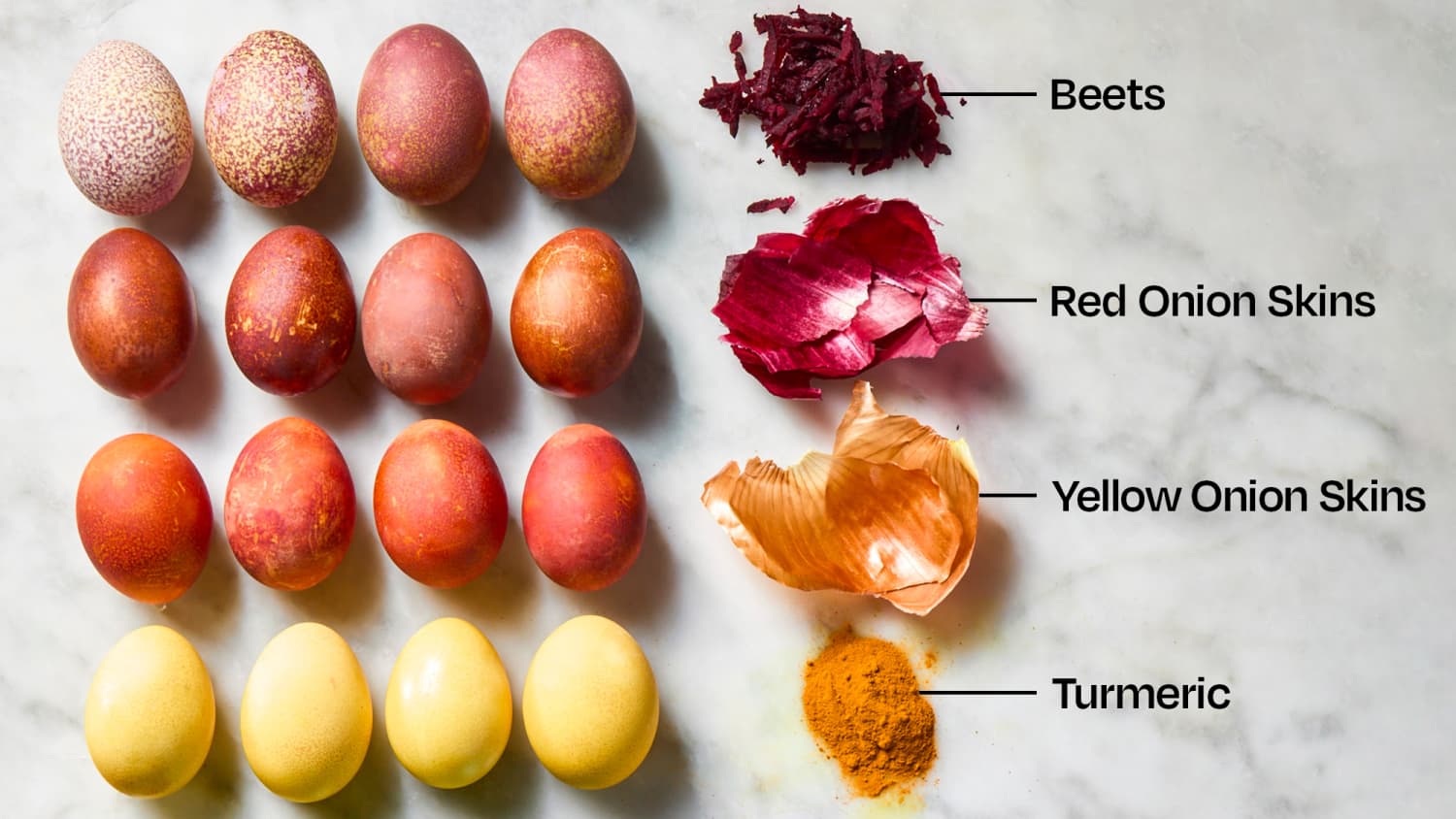
- 2 cups shredded beets
- 2 cups water
- 1 tbsp white vinegar
Process:
- Simmer the shredded beets in water for 15–30 minutes to release their natural pigments.
- Strain the liquid and add 1 tablespoon of vinegar.
- Soak hard-boiled eggs until your desired shade is achieved. Longer soaking produces more vibrant pinks and reds.
Tips for Success
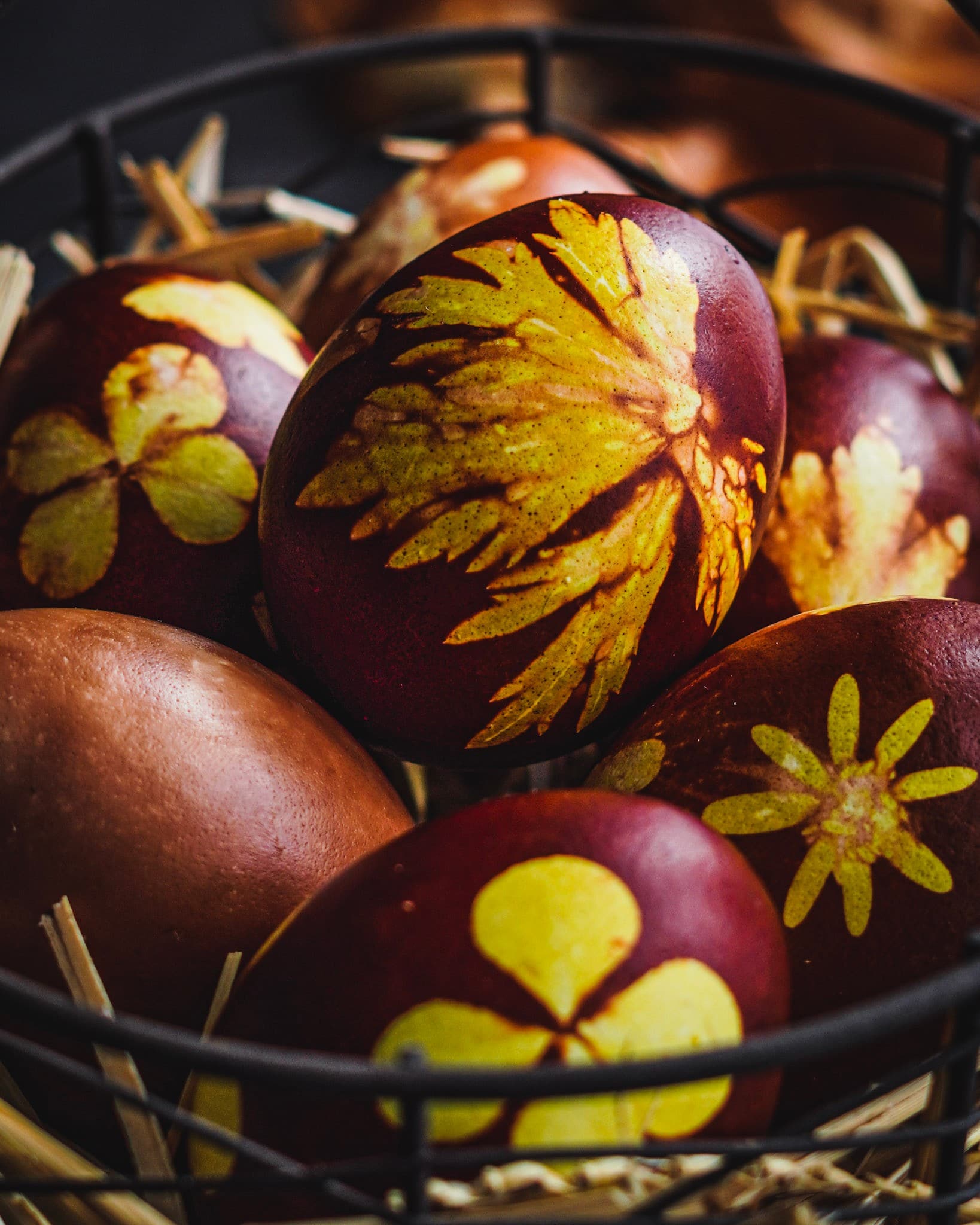
- More Color: The longer the eggs soak, the deeper the color.
- Shine: After drying, rub eggs gently with a bit of vegetable oil for a glossy finish.
- Patterns: Wrap eggs in pantyhose or cheesecloth with onion skins or pressed leaves to create delicate, botanical designs.
- Safety: Naturally dyed eggs are perfectly safe to eat, though some color may lightly seep into the egg white.
Naturally dyed Easter eggs aren’t just a festive treat—they’re a way to bring creativity, nature, and a touch of handcrafted beauty into your home. Whether displayed in a basket, nestled among spring blooms, or shared with friends and family, these eggs celebrate both the season and the simple joys of home and garden living.
About Post Author


