Can You Really Name a Star or Buy Land on the Moon?

Buying a Star
On a clear night, when the sky is dark and the air is still, the universe reveals one of its most beautiful sights: a sky filled with stars. For centuries, people have looked up and wondered about those tiny points of light – some seeing stories, others seeing science, and many simply feeling a sense of wonder.
The truth is that the universe holds an almost unimaginable number of stars. Our own galaxy, the Milky Way, contains roughly 100 to 400 billion stars, and astronomers estimate that there may be hundreds of billions to trillions of galaxies in the observable universe. When you multiply those numbers together, scientists estimate there may be around 10²² to 10²⁴ stars – a number so large it’s difficult to comprehend.
With so many stars scattered across the cosmos, it’s easy to imagine that one of them could carry a special meaning. That idea is exactly what inspired the rise of star-naming companies.
These companies offer a simple but meaningful gesture: the chance to dedicate a star to someone you love. Perhaps it’s in memory of a family member, a friend who changed your life, or someone whose light you never want to forget. When you purchase a star name, the company records your chosen name in its own private star registry database.
Soon afterward, you receive a certificate documenting the star’s name, along with coordinates and instructions that help you locate its position in the night sky. Some packages even include star charts or maps to guide you as you search for that faint point of light among the constellations.
It’s not an official astronomical designation – professional astronomers rely on scientific catalogs for that – but for many people, that isn’t the point. The real value lies in the symbolism. Looking up at the sky and knowing that one tiny light carries the name of someone you cherish can be a deeply moving experience. In a universe filled with countless stars, dedicating one can feel like giving a small piece of the cosmos to a memory that deserves to last forever.
But Can You Own Land on the Moon? 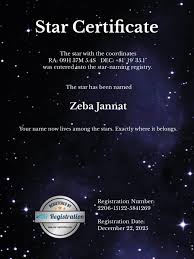
If you can “name” a star, another question naturally follows: could you actually own land somewhere in space?
A quick search online reveals numerous companies offering the opportunity to purchase land on the Moon, Mars, Venus, and other planets. They promise deeds, maps, and sometimes even citizenship in a future off-world nation. It sounds exciting – after all, who wouldn’t want to own an acre of the Moon?
One of the most well-known figures behind this idea is Dennis Hope, a Nevada entrepreneur who says you can.
In 1980, Hope claimed ownership of the Moon after finding what he believed was a loophole in the 1967 United Nations Outer Space Treaty. The treaty forbids the Earth’s nations from making territorial claims on celestial bodies, but it doesn’t specifically address what claims an individual or private company might legally make.
Hope argued that this gap allowed him to declare ownership of the Moon. He went further, claiming Mars, Mercury, and Venus as well. Soon after, he began selling space real estate through his company, the Lunar Embassy.
According to Hope, he has sold millions of acres of extraterrestrial land. While single acres are popular purchases, he has also sold nation-sized parcels. He has said that some of the largest buyers have included about 1,800 corporations, including two U.S. hotel chains.
When someone purchases space real estate through Hope’s company, they receive a package that includes:
- A deed for their land
- A map showing where their property is located
- A constitution and bill of rights for their chosen planet
Naturally, the Moon – or whichever planet you choose – also comes with its own currency. Hope has even gone so far as to make overtures for the Moon to join the International Monetary Fund.
However, there are some places that he refuses to sell for any price. Historic locations such as the Apollo landing sites and the famous “Face on Mars” are considered protected areas. According to the Lunar Embassy, it would be irresponsible to sell these historic locations that hold importance for all humanity.
Despite the sales and the certificates, there is an important catch. The International Astronomical Union (IAU) states that purchasing extraterrestrial real estate does not legally give you ownership of land on the Moon or any other celestial body.
Looking Up at the Night Sky
Ideas like naming a star or buying land on the Moon reveal something deeply human. We are drawn to the night sky because it feels timeless and infinite. For generations, people have connected their memories, dreams, and loved ones to the stars above.
Dedicating a star to someone can be a beautiful gesture, a symbolic way of saying that a person’s memory still shines brightly in your life.
But the universe also reminds us of something important. The stars, the Moon, and the distant planets belong to everyone and perhaps to no one at all.
When we look up into the night sky, we are reminded of the people we love and the memories that stay with us. Yet some of the most beautiful things in the universe were never meant to be owned.
Some things, like the vast sky above us, are simply too wonderful to be for sale.
About Post Author


