From Countertop to Kitchen: Fresh Mushrooms Whenever You Want

Growing mushrooms at home is an intriguing and rewarding endeavour that can yield delicious and nutritious results. This comprehensive guide aims to walk you through the process from start to finish, covering the basics of getting started, choosing the right mushrooms, preparing and inoculating the growing medium, incubating and fruiting your mushrooms, and finally, harvesting and storing your bounty. We’ll also touch upon troubleshooting common problems to ensure your mushroom cultivation is a success.
Introduction
Why Grow Mushrooms at Home?
Growing mushrooms at home is both practical and fascinating. It gives you access to fresh, organic mushrooms whenever you need them while allowing you to explore the unique world of fungi. Since mushroom cultivation takes up very little space and requires only basic supplies, it’s a hobby that almost anyone can start.
Benefits of Growing Your Own Mushrooms
Home-grown mushrooms are fresh, natural, and free from pesticides or chemicals. Growing them yourself can also save money in the long run. Because many varieties grow well on recycled materials such as coffee grounds or other organic waste, mushroom cultivation can also be a sustainable and eco-friendly practice.
What You Need to Get Started
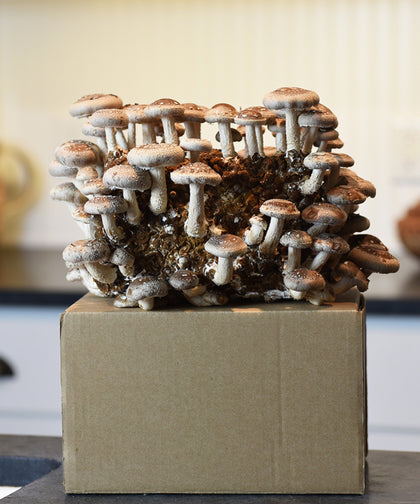
Getting started with mushroom cultivation only requires a few basic supplies. You’ll need mushroom spores or spawn, a suitable growing medium (also called a substrate), containers or bags for incubation, and a clean environment for inoculating the substrate. The exact materials may vary depending on the type of mushroom you decide to grow.
Mushroom Growing Techniques
Since Urban Leaf focuses on growing food in urban environments, this guide highlights methods that work well for people living in apartments or small spaces.
Bucket Method – Using Coffee Grounds and Kitchen Scraps
One simple technique is to use coffee grounds and kitchen scraps as a growing substrate. This approach is ideal for apartment dwellers because it turns everyday food waste into a useful resource for growing mushrooms. Oyster mushrooms grow especially well on coffee grounds thanks to their high nitrogen content. With this method, you typically grow mushrooms in a large bucket that can sit on a kitchen counter or shelf, requiring very little space.
Mushroom Grow Kits
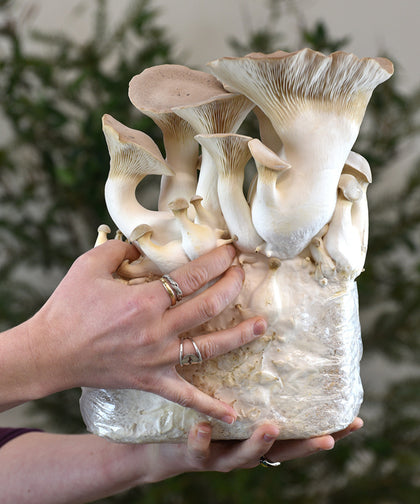
Mushroom grow kits are perfect for beginners and those with limited space. These kits come with everything needed to start growing mushrooms, including the spores and substrate. They are designed to be compact and require only a small area with indirect light. Urban Leaf offers a variety of mushroom grow kits suitable for apartment living, making it easy to get started.
Monotub Method
The monotub method involves growing mushrooms in a single, sealable container, like a large plastic tote. This method is slightly more advanced but can be adapted to small spaces. By controlling humidity, temperature, and light within the tub, apartment dwellers can efficiently produce a substantial yield of mushrooms.
Best Types of Mushrooms To Grow At Home
Certain varieties of mushrooms are more suited to indoor cultivation due to their growing requirements and resilience. Here’s a list of the most suitable mushroom varieties for apartment dwellers, along with some notes on their growing conditions:
- Oyster Mushrooms (Pleurotus ostreatus): Oyster mushrooms are one of the easiest varieties to grow indoors. They thrive on a wide range of substrates, including coffee grounds, straw, and sawdust. These mushrooms prefer high humidity and indirect light. Their fast growth rate and high yield make them an excellent choice for beginners.
- Shiitake Mushrooms (Lentinula edodes): Shiitake mushrooms require a bit more patience but are well worth the effort. They are typically grown on hardwood logs or sawdust blocks. Indoor growers can use shiitake grow kits that simplify the process. Shiitakes need a cool, dark place to incubate and a more humid, brighter environment to fruit.
- Lion’s Mane (Hericium erinaceus): Known for its unique appearance and health benefits, Lion’s Mane can be grown on hardwood sawdust or logs. It requires a humid environment and moderate temperatures to thrive. This variety is particularly fascinating to watch grow and yields a distinctive, flavorful mushroom.
- White Button Mushrooms (Agaricus bisporus): White button mushrooms are the most commonly consumed variety and can be grown in containers using compost as the substrate. They prefer cooler temperatures, around 55-60°F (13-16°C) for the incubation phase, and slightly warmer temperatures for fruiting. Regular misting is necessary to maintain the high humidity levels they love.
- Enoki Mushrooms (Flammulina velutipes): Enoki mushrooms are known for their long, slender stems and small caps. They require a cooler temperature range, similar to button mushrooms, and high humidity. Enokis grow best on a substrate of hardwood sawdust and benefit from being kept in the dark during their initial growth phase.
- Portobello Mushrooms (Agaricus bisporus): Portobellos are simply mature white button mushrooms and can be grown under the same conditions. They need a nutrient-rich compost substrate and consistent moisture. The key difference is allowing the mushrooms to mature fully to reach the large size that Portobellos are known for.
- Reishi Mushrooms (Ganoderma lucidum): Reishi, a medicinal mushroom, prefers hardwood substrates, like sawdust or logs. They require a warm and humid environment to start but need less humidity as they mature. Reishi mushrooms are more challenging to grow but rewarding for their medicinal properties.
Steps For Growing Mushrooms At Home
Growing Medium / Substrate Preparation
The first step is to prepare the substrate that the mushrooms will be growing in.
- Bucket Method: If you’re using the bucket method, then you just want to collect the coffee grounds and/or other kitchen scraps in a large bucket, mix them well, and ensure they are moist but not waterlogged.
- Monotub Method: The monotub method typically uses a more controlled substrate, often consisting of sterilized grains (like rye berries) mixed with a bulk substrate (such as coco coir and vermiculite). The preparation involves soaking and sterilizing the grains to eliminate contaminants, then mixing them with the pasteurized bulk substrate in a large, sealable plastic tote.
- Kit Method: not applicable – the kit supplier does this for you.
Inoculating
- Bucket Method: Inoculation involves adding mushroom spawn directly to the cooled mixture of coffee grounds and kitchen scraps. It’s important to mix thoroughly to distribute the spawn evenly. This method may require a slightly higher spawn rate due to the potential for contamination in the non-sterile substrate.
- Monotub Method: After preparing the substrate in the monotub, inoculate by evenly distributing the spawn throughout the substrate. Because the substrate and grains have been pasteurized or sterilized, the risk of contamination is lower, allowing for a lower spawn rate compared to the bucket method.
- Kit Method: not applicable – the kit supplier does this for you.
Incubating
This phase involves keeping the inoculated substrate in a dark, warm place to allow the mycelium to colonize the substrate fully. This process can take several weeks, depending on the mushroom species and environmental conditions. The ideal temperature for incubation usually ranges from 75-80°F (24-27°C).
If you’re buying a kit, then this will have been completed before it ships to you.
Fruiting
The fruiting phase is the first one that all three methods have in common.
What we’re wanting to achieve here is:
- An increase in the amount of light – typically either from indirect sunlight or a fluorescent,
- Lowering the temperature a little,
- Increasing air exchange and
- Increasing humidity
The monotub method allows the most precise control here because you’re growing within a small ‘controlled’ environment. You’re likely to have far less control when using the other methods. For this reason, you should expect that the results will differ at different times of the year. Most homes will experience some variance in temperature and humidity through the year.
Harvesting
The harvesting process is similar for all methods once the mushrooms are ready. Mushrooms should be harvested just before or as the veil beneath the mushroom caps begins to tear. This timing ensures the best texture and flavor. To harvest, gently twist and pull the mushrooms from the substrate. Avoid pulling too hard to prevent damaging the mycelium, which may yield additional flushes of mushrooms.
Start Your Mushroom Journey Today!
About Post Author


