California rolls out a hidden camera system that tickets drivers without cops, mailing fines up to $500 straight to your home

California is moving into a new era of traffic enforcement, and if Lauren Fix is right, many drivers may not fully grasp how much the rules of the road are changing until the citation is already sitting in the mailbox.
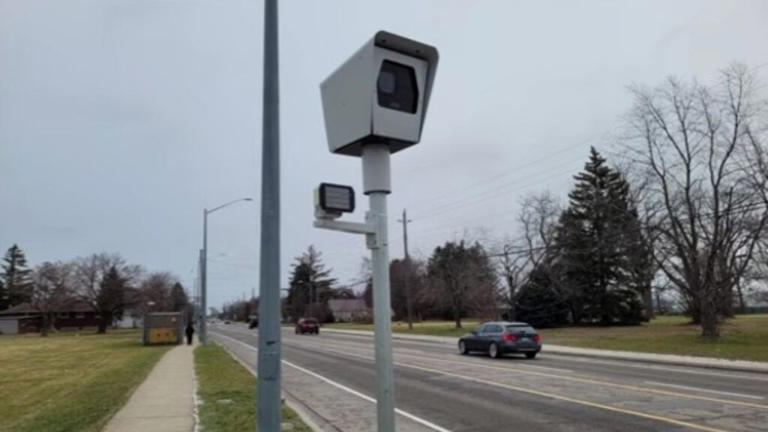
In a new report on her YouTube channel Car Coach Reports, automotive expert Lauren Fix said the state is building out a growing network of automated traffic cameras that can watch intersections, school zones, and major roadways without any officer pulling a driver over. No flashing lights, no roadside conversation, and no warning from a patrol car in the rearview mirror – just a photograph of a license plate and, in some cases, a fine that can reach $500.
That is what gives the story its sting.
A normal traffic ticket at least comes with a moment of confrontation. You know you have been stopped, you know why it is happening, and you can speak to a human being in real time. What Fix describes is something much quieter and, to many people, much more unsettling: enforcement that works in the background, logs the alleged violation automatically, and sends the penalty straight to the registered owner later.
A New System Built By Three California Laws
Fix explained that this expansion did not happen by accident or through one isolated local ordinance. In her telling, California’s new camera regime is the product of several laws passed in Sacramento that together created a broad framework for automated enforcement.
The first, Assembly Bill 645, was signed in 2023 and created a five-year pilot program that allows six California cities to install speed cameras along what officials call “high-injury corridors,” as well as in school zones and on streets where reckless driving is said to be common. According to Fix, those cities are San Francisco, Oakland, Los Angeles, San Jose, Long Beach, and Glendale.
That list alone shows how serious the state is about this experiment.
These are not tiny trial communities tucked away where nobody will notice. They are major California cities with large populations, heavy traffic, and a lot of political influence. If this system works the way state officials hope – or at least if they say it works – the pressure to expand it elsewhere will be hard to resist.
Fix said San Francisco was first to move forward, with warning notices starting in March 2025 and actual citations beginning that August from 33 camera locations. Oakland, she said, is preparing to follow, while the remaining cities are working toward launching their systems through 2026.
That means this is no longer theoretical. It is already happening.
Cameras Are Moving Beyond City Streets
The second piece of the framework, according to Lauren Fix, is Assembly Bill 289, which authorizes California to install 35 automated speed enforcement systems in active highway work zones.
Those cameras, she said, operate only when construction crews are present, with the stated goal of protecting workers from drivers who ignore reduced speed limits. On that point, Fix actually gave some ground, saying that protecting road workers is “not a bad idea,” which is a useful reminder that even critics of automated enforcement do not necessarily oppose every application of it.
And that is what makes the debate more complicated than slogans.
Few people would argue that speeding through a live construction zone is harmless, and most drivers probably understand why the state wants stronger tools in places where a careless mistake can kill a worker. Still, as Fix suggested throughout her report, once the infrastructure exists, the temptation to broaden its use becomes much easier to justify.
The third major law she discussed was Senate Bill 720, signed in October 2025, which reworked California’s red-light camera framework. Instead of treating those violations through older criminal penalties that could vary from place to place, the new system treats them as civil offenses with standardized fines and updated privacy rules.
That change may sound technical, but it matters a lot.
A civil violation is still expensive, still annoying, and still enforceable, but it changes how the state frames the conduct and how it pursues the money. It also helps make these systems feel less like classic policing and more like automated administrative enforcement, which may be one reason the state is comfortable scaling them up.
The Numbers Are Already Big Enough To Raise Eyebrows
Fix pointed to San Francisco as the clearest early example of how large this system could become.
She said the city’s 33-camera network is operated by Verra Mobility under a six-year contract worth $7.4 million, funded by the state. The agreement, she noted, specifically prohibits compensation tied to the number of tickets issued, which is meant to prevent quota-style enforcement.
Even with that safeguard, the early figures she cited were eye-catching.
According to Fix, San Francisco’s cameras issued more than 16,500 citations during the first month of enforcement in August 2025. Depending on the penalties involved, she said, that could represent somewhere between $600,000 and $1.2 million in fines in just one month.
That is the kind of number that makes critics instantly suspicious, and not without reason.
–
City officials say the money first covers the cost of running the program, and then goes toward traffic safety projects like crosswalk improvements, speed bumps, and pedestrian infrastructure. Fix noted that state law bars cities from using this revenue to plug general budget holes, and after three years, any surplus must be directed into broader transportation programs.
Still, her skepticism was obvious.
Fix bluntly suggested that many drivers already know what they think happens when governments promise that traffic revenue will go toward safety rather than simply become another dependable income stream. Whether that judgment is fully fair or not, it reflects a real public mood. Once a system starts generating seven figures, a lot of people stop hearing the word “safety” and start hearing the word “business.”
How The Tickets Work – And Why That Bothers Critics
One of the most important points in Fix’s report was that these camera-based violations are handled differently from traditional stops.
She said automated citations are treated as civil offenses, and they are mailed to the registered owner with photographs of the rear license plate, along with the date, time, location, and the recorded speed or red-light violation. Because the violations are civil, they usually do not add points to the driver’s license and generally do not bring immediate insurance consequences.
That may sound gentler on paper, but the money still adds up fast.
Fix laid out the fine structure: speeds 11 to 15 miles per hour over the limit bring a $50 penalty, speeds 16 to 25 over cost $100, and anything more than 26 over brings a $200 fine. Speeds above 100 miles per hour can trigger fines as high as $500. Red-light camera penalties follow a similar escalation, with first offenses starting at $100 and repeat violations climbing toward that same $500 ceiling.
In other words, the points may not hit your license, but the hit to your wallet is very real.
Fix also emphasized that the citation goes to the registered owner, not necessarily the person who was actually driving. That is where one of the deepest fairness concerns enters the picture. If the system cannot always prove who was behind the wheel, then someone may be forced to deal with the ticket simply because the car is in their name.
That is not a trivial problem.
She mentioned a Broward County, Florida, judge who recently dismissed a red-light camera citation while raising constitutional questions about holding an owner responsible without proving who was driving. Similar legal fights, Fix argued, could easily make their way into California courts as this system expands.
Safety Tool, Money Grab, Or Both?
To her credit, Lauren Fix did not pretend the safety argument is completely fake.
She noted that California officials report speeding at monitored San Francisco locations dropped by 72% once warnings and citations began, with some locations seeing reductions as high as 82%. She also cited findings from other jurisdictions showing that speed cameras can reduce crashes, while red-light cameras have been linked to fewer deadly crashes caused by red-light running.
Those are meaningful claims, and they deserve to be taken seriously.
At the same time, Fix clearly believes there is another side to the story, and that side has less to do with engineering and more to do with control. She argued that automated enforcement is becoming part of a much larger surveillance architecture, one that includes license plate readers and vehicle tracking systems that can capture descriptions, timestamps, and location data across wide parts of a city.
That is where her report shifts from traffic policy into something broader.
Fix warned that when speed cameras, red-light cameras, and license plate reader networks begin to overlap, the result is not just a safer intersection. It is a far-reaching monitoring system that can track where vehicles go and when, all while turning traffic enforcement into a largely automated process.
Even for drivers who support tougher enforcement on reckless behavior, that is a line worth thinking about carefully.
California May Be First, But It Probably Won’t Be Last
By the end of her report, Fix made the larger point she clearly wanted viewers to remember: California is not just changing its own enforcement model. It is serving as a test case for what other states may do next.
If the pilot program is judged successful – and “successful” could mean safer roads, steady revenue, or simply fewer political complaints than expected – there will be strong pressure to expand it. Other states are watching, Fix said, and if California proves that drivers will accept mail-order enforcement with limited backlash, this model could spread quickly.
That prediction feels plausible.
Governments like systems that scale, and automated enforcement scales beautifully. It does not call in sick, it does not require endless traffic stops, and it can issue violations around the clock. Whether that makes it smart policy or a troubling overreach depends a lot on your view of privacy, due process, and how much power should be handed to cameras instead of people.
Lauren Fix’s report leaves little doubt about where she stands.
She sees some legitimate safety benefits, especially in work zones, but she also sees a system that can easily become a money machine wrapped in the language of public protection. And that tension is what makes California’s rollout so important, because both sides of the argument contain some truth.
What seems beyond dispute now is this: the old model of traffic enforcement, where getting a ticket usually meant seeing an officer on the side of the road, is already starting to fade in some places.
And in California, your next ticket may already be on its way home before you even know a camera saw you.
–
About Post Author


