Questions have been raised about connections between billionaire political activist George Soros and an electronic voting technology company whose systems are used in multiple U.S. states. The company, Smartmatic International, is headquartered in London and has voting machines deployed in 16 states.
The chairman of Smartmatic is Lord Mark Malloch-Brown. He has professional ties to Soros and serves on the board of the Open Society Foundations, the global network of organizations founded and funded by Soros. Malloch-Brown’s biography on Smartmatic’s website also notes that he previously served as vice chairman of Soros’s investment funds as well as the Open Society Foundations.
Public attention to the issue has grown. In the five days leading up to October 26, more than 71,000 people signed a petition on the White House website asking Congress to convene an emergency session to consider removing Smartmatic voting machines.
A report released in September by the Institute for Critical Infrastructure Technology, a cybersecurity think tank, examined potential vulnerabilities in electronic voting systems. According to the report, one of the most effective ways to influence an election result would be by accessing a company responsible for voting machines. The report explained that software updates could theoretically introduce code that changes how votes are tallied, and such code could be designed to erase itself after a certain time.
The study also pointed out that companies producing electronic voting machines often do not carry out extensive background checks on employees, contractors, or interns. As a result, the report warned that any insider with access to the system could potentially alter hardware, firmware, or software. It also stated that with brief physical access to a machine and minimal cost, a system could be compromised.
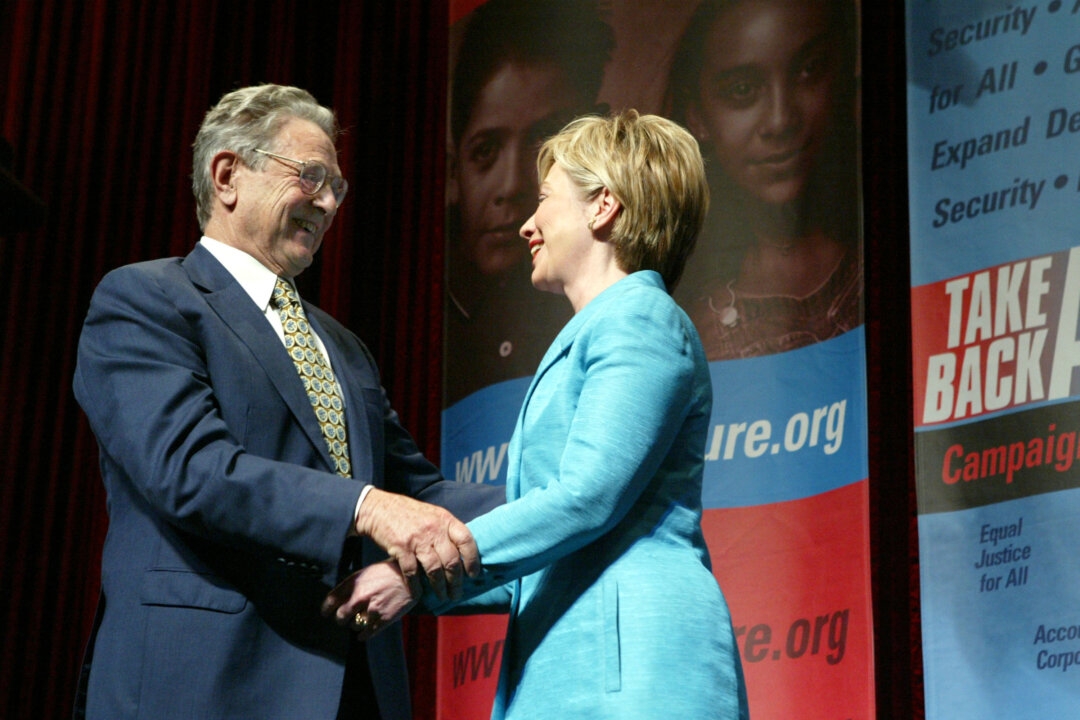
Soros has a long record of funding progressive and left-leaning political efforts. According to Politico, he has contributed nearly $25 million to super PACs and other organizations supporting Hillary Clinton and her presidential campaign.
Emails released by WikiLeaks and DCLeaks also revealed communication between Soros and Clinton’s circle. Messages from January 2011 show Soros offering Clinton guidance on how to approach political unrest in Albania. Other emails from October 2014, sent to recipients including Clinton adviser Huma Abedin and campaign chairman John Podesta, indicated efforts within Clinton’s campaign to maintain a positive relationship with Soros.
Soros is also known for making large donations to support specific political causes and candidates. The Denver Post reported on October 12 that he was spending hundreds of thousands of dollars on advertisements opposing Republican District Attorney Pete Weir in a Colorado race. Earlier, The Associated Press reported that Soros donated $300,000 to a group working against the reelection of Sheriff Joe Arpaio in Maricopa County, Arizona.
In Arizona, another Soros-linked political committee has faced accusations of violating election law. According to the Associated Press, a campaign finance complaint was filed by an attorney representing Republican prosecutor Bill Montgomery against a group called Arizona Safety & Justice, which has received Soros funding.
Reports have noted that Soros has spent millions of dollars supporting Democratic candidates in prosecutor races across the country, with most of the candidates he backed winning their contests.
Malloch-Brown has also publicly expressed his political views. Like Soros, he has supported a range of progressive issues and has been an advocate of global governance. He outlined these ideas in his 2012 book, “The Unfinished Global Revolution.”
Smartmatic develops technology used by governments worldwide for services such as digital public records, smart city systems, and electronic voting platforms. The company says its technology has been used by election authorities in 307 counties across the United States, covering 16 states.
Several of those states — including Arizona, Florida, Pennsylvania, and Wisconsin — are key battlegrounds that could play a decisive role in determining the outcome of a presidential election.
original source