Oil Prices Skyrocket 17%+ Crossing $100 Barrel Amid Iran Escalation — President Trump Fires Back: ‘Short-Term Pain’ for Long-Term Peace

Iraq’s Khawr Al Amaya Oil Platform (KAAOT) (Credit: U.S. Navy photo by Mass Communication 2nd Class Nathan Schaeffer/Released)
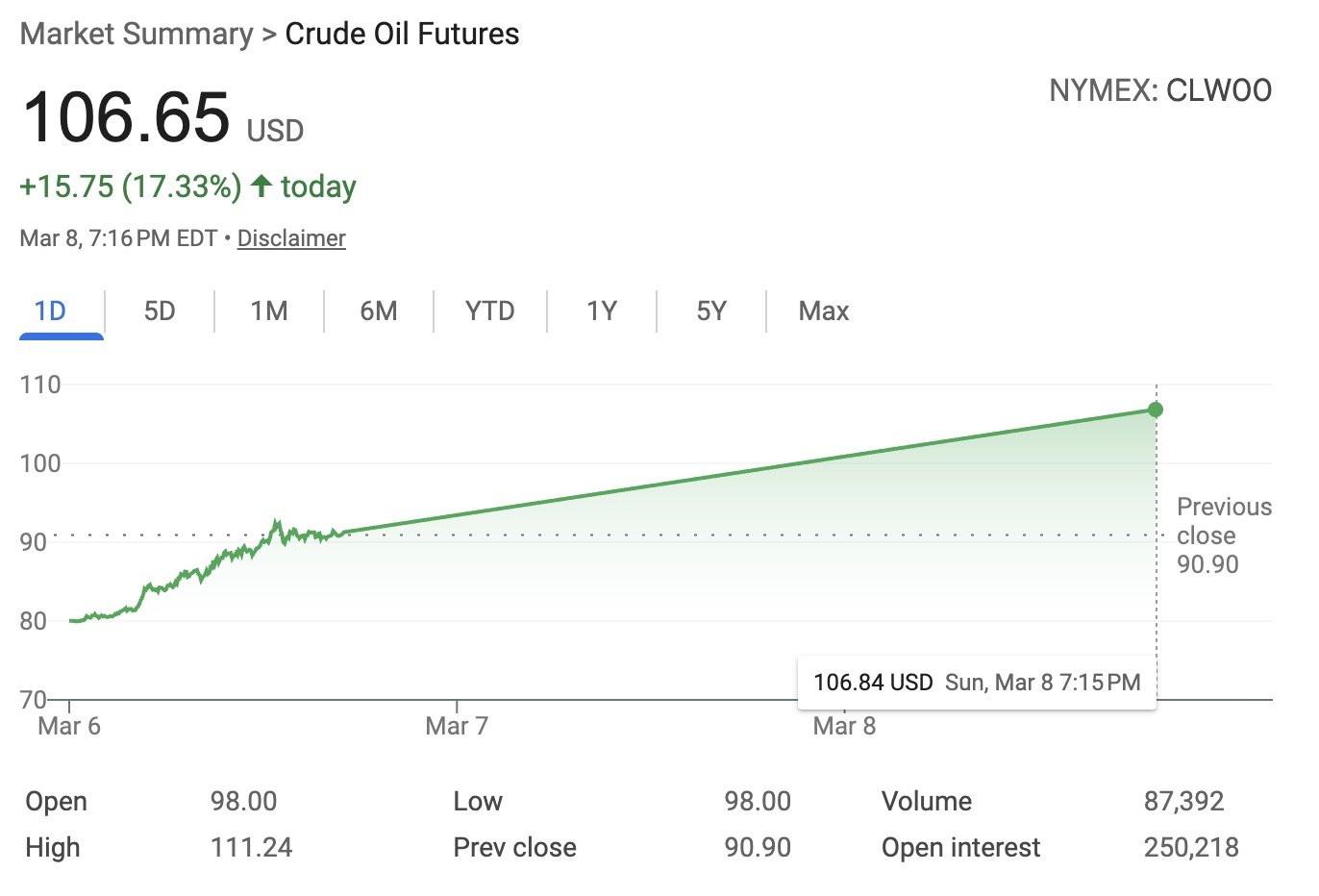
Oil prices surged more than 17% on Sunday, climbing past $100 per barrel for the first time since the early days of U.S. strikes against Iran.
The spike followed the latest round of U.S. airstrikes conducted under Operation Epic Fury, which Treasury Secretary Scott Bessent recently described as the “biggest bombing campaign yet.” Markets reacted sharply as concerns grew about potential disruptions to oil supplies from the Middle East.
U.S. benchmark West Texas Intermediate (WTI) crude rose 16.2% to $102.45 per barrel, while Brent crude, the global benchmark, increased 15.8% to $105.67.
According to Google Finance, global oil supplies are currently about 20 million barrels per day below demand due to the ongoing conflict. Producers in the region, including Kuwait and Iraq, have reduced output. Iraqi production has reportedly dropped by roughly 70% in several major fields as security concerns and shipping risks increase.
Meanwhile, KAN reported Saturday night that the Israeli Air Force carried out strikes on oil storage depots and refinery facilities in Tehran. Israeli officials said the targets included fuel depots and energy infrastructure believed to support Iran’s military operations.
After the refinery in Tehran was struck, Islamic Revolutionary Guard Corps (IRGC) said it launched missiles at the refinery in Haifa, Israel.
President Donald J. Trump addressed the rising oil prices in a post on Truth Social, saying the short-term increase is a cost of confronting Iran’s nuclear program.
“Short term oil prices, which will drop rapidly when the destruction of the Iran nuclear threat is over, is a very small price to pay for U.S.A., and World, Safety and Peace. ONLY FOOLS WOULD THINK DIFFERENTLY!” Trump wrote.
Earlier in the week, White House official Jarrod Agen outlined a longer-term strategy involving Iran’s oil reserves. Agen said that while global energy markets may face short-term volatility, the broader objective is to remove control of those reserves from groups the administration considers hostile.
“This is a long-term gain because what we want to do is get such massive oil reserves in Iran out of the hands of terrorists,” Agen said, adding that the current disruption is outweighed by what the administration believes will be long-term stability for global energy markets.
About Post Author


