A Bird’s Eye View of World’s Fastest-Growing Nuclear Program

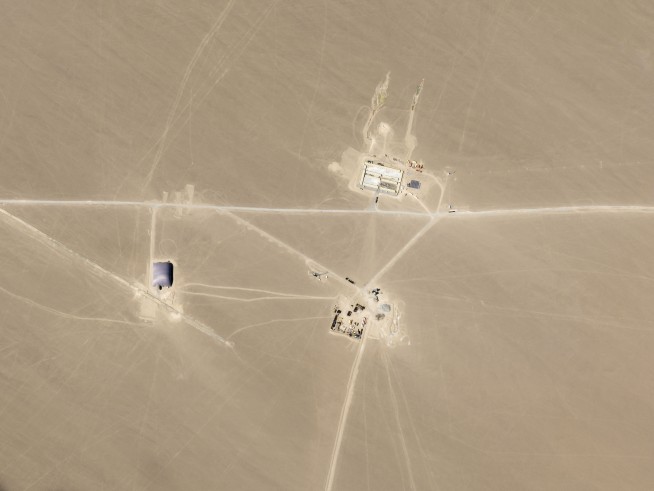
This July 25, 2021, satellite image shows what analysts believe is construction on an intercontinental ballistic missile silo near Hami, China. (Planet Labs Inc. via AP, File)
China is rapidly transforming a Cold War-era nuclear site into a key component of its modern arsenal, with recent satellite images highlighting the speed of these changes. In remote valleys of Sichuan Province, military complexes at Pingtong and Zitong have seen significant expansion and modernization since around 2019, part of what one expert describes as a nationwide “mosaic” of nuclear growth, according to the New York Times. Euronews reports that China now has the fastest-growing nuclear program in the world.
At Pingtong, dominated by a roughly 360-foot exhaust stack, analysts say the site likely produces plutonium “pits,” the dense cores of nuclear warheads. New construction, advanced ventilation systems, and large air-handling equipment suggest increasingly sophisticated operations. Zitong, by contrast, has added new bunkers and blast walls believed to support testing of high explosives critical for nuclear detonations. Its oval test area is roughly the size of ten basketball courts, and the perimeter and secured facilities have expanded notably in recent years.
While some of the upgrades may reflect safety improvements or preparations for new delivery systems, such as submarine-launched missiles, satellite imagery alone cannot determine how many warheads these facilities may eventually produce. The expansion marks a sharp shift from decades of relative restraint. Many of these “Third Front” sites were originally built in the 1960s under Mao Zedong to protect nuclear assets from U.S. or Soviet attacks, and were later downsized as tensions eased.
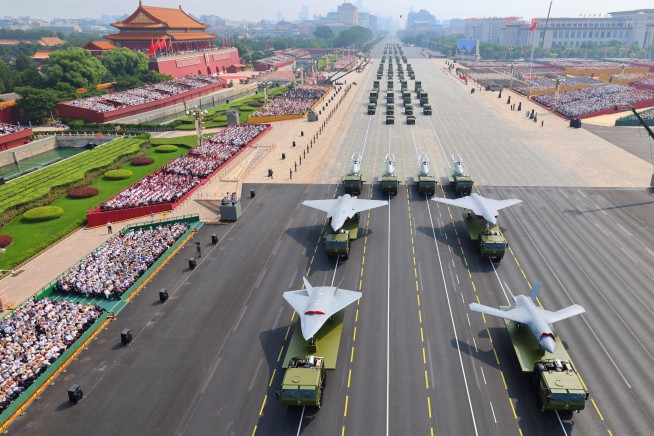
According to the Pentagon, China now possesses more than 600 warheads and could reach 1,000 by 2030—still far below U.S. and Russian stockpiles (3,700 and 4,300, respectively, per the Washington Post), but growing fast enough to concern Washington. U.S. officials emphasize that any future arms control agreement must include Beijing, which has so far resisted negotiations. Analysts warn that with limited direct dialogue, both sides may assume the worst, particularly in a potential crisis over Taiwan, where an expanded Chinese arsenal could reduce U.S. nuclear leverage.
About Post Author


