Scientists Race to Get to the Bottom of ‘Doomsday Glacier’

This 2020 photo provided by the British Antarctic Survey shows the Thwaites glacier in Antarctica. (David Vaughan/British Antarctic Survey via AP, File)
Scientists have reached one of the most closely monitored and potentially consequential ice formations on the planet: Antarctica’s Thwaites Glacier, often referred to as the “Doomsday Glacier.” After weather setbacks left them stranded roughly 19 miles from their target, a 10-member international research team has now set up a temporary camp directly on the rapidly thinning glacier.
Thwaites is one of Antarctica’s largest and most vulnerable ice masses, containing enough frozen water to raise global sea levels by more than 2.5 feet if it were to collapse, according to PBS and The New York Times. Over the coming weeks, the team plans to drill nearly half a mile through the ice to place instruments in the ocean below. Those sensors are designed to reveal how warm seawater is eroding the glacier from underneath and how quickly that process could drive sea level rise around the world.
Time is limited. The scientists must complete their work and evacuate by February 7, when their support vessel—the South Korean icebreaker Araon—is scheduled to depart for a separate mission in New Zealand, the Times reports. So far, helicopters have ferried about 17 tons of equipment onto a narrow, carefully marked stretch of ice. The camp includes a drilling site, single-person sleeping tents, a mess tent powered by generators, and two basic toilet tents dug into the snow. Assembling the drilling system alone is expected to take about a week, and severe weather could cause further delays.
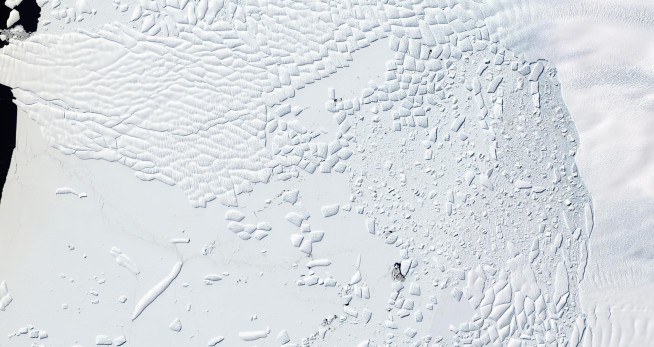
“We’re very lucky to be here; we also work very hard to be here,” said Scott Polfrey, an engineer with the British Antarctic Survey, underscoring both the risks involved and the team’s determination to produce meaningful scientific results.
The urgency extends beyond scheduling. Warm ocean currents are steadily melting the glacier from below, while meltwater generated by friction and geothermal heat escapes from its base, creating feedback loops that can accelerate ice loss in ways current models do not fully capture. Scientists say direct measurements beneath the ice are critical to improving predictions, especially since observed melt rates in parts of Antarctica have sometimes exceeded expectations.
The environment itself poses dangers. At one point, guides heard what one described as a “terrible loud crunching” as ice fractured beneath the edges of the camp, forcing the team to shrink its safe operating area. “My goal is finishing as fast as we can,” said safety guide Jinsuk Kim. “We need to leave as fast as we can.”

About Post Author


You must be logged in to post a comment.