Zelenskyy Announces Eastern Ukraine Citizens Will Not Be Allowed to Vote in Elections

Posted For: Rotorblade
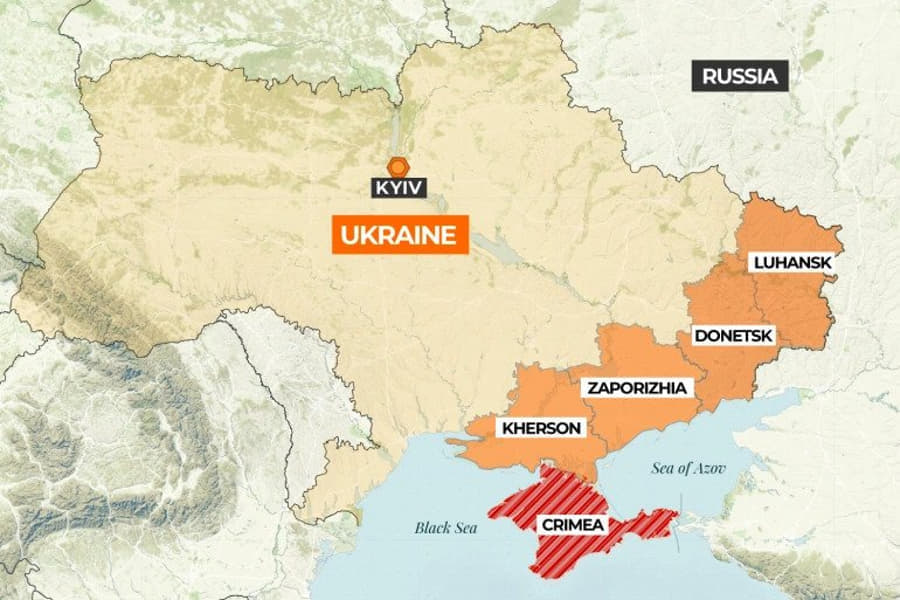
Ukrainian President Volodymyr Zelenskyy has indicated that elections could take place if a ceasefire is established. However, residents of eastern Ukraine—particularly those living in the Donbas region who are viewed as supportive of Russia—would not be allowed to participate in the vote.
This position has drawn criticism for what some describe as an internal contradiction within the Zelenskyy government. While Ukrainian officials insist that eastern Ukraine will never be recognized as part of the Russian Federation, the same regions—representing roughly 20 percent of the country—would be excluded from any future election conducted under Kyiv’s authority.
Zelenskyy, backed by European Union leaders, has reiterated that Ukraine will never acknowledge Russian claims over eastern territories. At the same time, his government maintains that elections cannot be held in areas not under Ukrainian control, effectively barring those populations from voting.
Under this framework, only Ukrainian citizens living in government-controlled territory would be eligible to vote. Zelenskyy has stated that voting abroad is possible, but regions outside Kyiv’s control would not be permitted to submit ballots.
Zelenskyy addressed the issue directly, saying that Russia has no authority to influence when or how Ukrainian elections are held. He emphasized that elections are solely a matter for Ukrainian citizens and that fair and transparent voting can only be guaranteed within Ukrainian-controlled territory. According to Zelenskyy, elections in occupied areas would mirror Russian-controlled voting practices and therefore cannot be considered legitimate.
He noted that the ability to hold elections depends on two key factors: security and legislation. Security, he said, is the top priority, particularly ensuring that Ukrainian military personnel defending the country can vote. Zelenskyy said discussions with U.S. partners have already taken place and that their involvement suggests ways to help ensure safe elections—most notably through a ceasefire, the end of the war, or at least a temporary halt in fighting during the election period.
Zelenskyy also highlighted ongoing diplomatic efforts, including negotiations involving U.S. and European representatives. He described these talks as constructive but expressed skepticism about Russia’s intentions, citing continued frontline assaults, alleged war crimes, and strikes on Ukrainian infrastructure. He urged the international community not to ignore these actions.
While stating that peace is preferable to war, Zelenskyy stressed that peace cannot come at any cost. He said Ukraine has already paid a high price and requires a just and durable peace supported by strong security guarantees to prevent future aggression.
He dismissed the Budapest Memorandum as ineffective, arguing that it failed to protect Ukraine after its territories were occupied and its people killed. According to Zelenskyy, any future agreement must go beyond signing a document and include clear enforcement mechanisms.
He outlined key questions that must be answered in any settlement: how the U.S. and Europe would respond to renewed aggression, what deterrence measures Ukraine would have, what forces or resources would be stationed on Ukrainian territory, how the Ukrainian military would be equipped, and what sanctions would be imposed immediately on any aggressor.
About Post Author


