


The red flags she missed
–
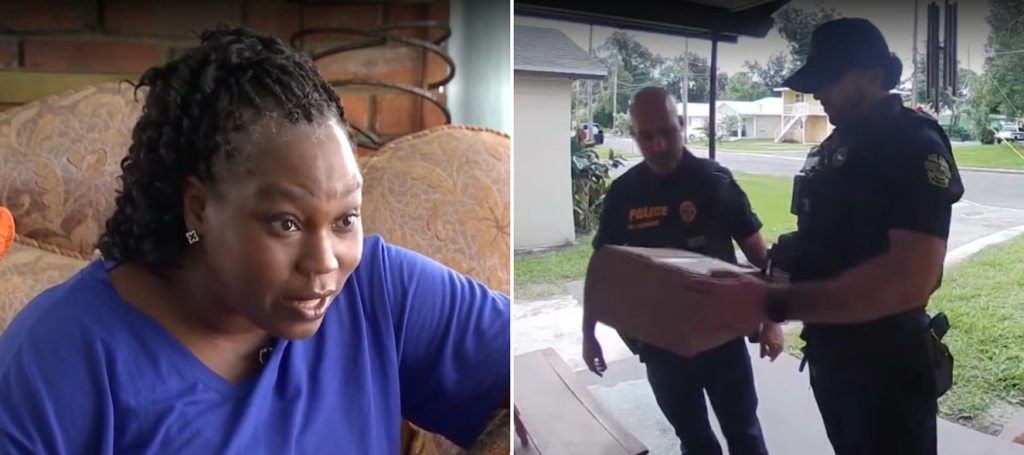
Jawanza Sparks didn’t know she’d done anything wrong. But one sunny day, local police made a seemingly out-of-the-blue visit to her Orlando, Florida, home.
The reason?
A package Sparks sent for her new stay-at-home job was actually part of an alleged fraud scheme.
According to Orlando’s News 6, this scary situation began a few weeks prior when Sparks was browsing for convenient work-from-home opportunities. She eventually found a post for a “package inspector” from a Utah-based business called Freight Steward. Besides the flexibility of remote work, the pay expectations caught Sparks’s eye: $4,300 per month with potential $20 bonuses for packages sent within three hours of receipt.
Sparks didn’t see anything suspicious on the Indeed job listing. As she told News 6 investigators, “It felt so legit. I was just like, okay, yes, I finally got a job now.”
After landing the job, Sparks sent personal details, then completed training courses that walked her through her responsibilities, which revolved around opening, checking, and reshipping products.
Then the boxes arrived. Sparks would open the parcels, snap a few pictures, then send them out as quickly as possible. News 6 said some packages contained high-ticket items, including Tiffany jewelry and Xbox consoles.
Everything seemed to be going smoothly — until that fateful day when an Orlando police car rolled up.
Sparks told News 6 she believed her role was mainly “checking [products] for any damages” before sending the items to their final destination. In reality, she was “the middleman” for items that people allegedly bought with stolen credit card numbers.
That’s why the police showed up at Sparks’s property. Hackers recently broke into another woman’s Amazon account and were ordering goods in her name. This woman managed to track one of those purchases, which arrived at Sparks’s home through the Freight Steward system.
After talking with Orlando police, they told her she was likely involved in a scam known as a “reshipping scheme.”
The Federal Trade Commission (FTC) says these scams all have a similar structure. Like Sparks’s case, fraudsters first lure people in with attractive salaries and a low-stress, stay-at-home job. To build credibility, these companies often claim connections to a big brand like FedEx or Amazon.
Although these job postings promise an official-sounding title like a “quality control manager,” you’re really just covering the tracks of criminals who bought items with hacked accounts or compromised credit cards. The FTC says many workers usually don’t realize something’s wrong until the company doesn’t pay them.
Even though Sparks now knows she got scammed, she still has to worry about identity theft. As she told News 6, “I pray no one has bought a house in my name or opened up a bank account and it’s negative a million dollars or something.”
When reached out to Indeed for more details, and they confirmed all job postings for Freight Steward are now off their platform.
Indeed’s spokesperson also highlighted their dedication to security, stating, “Job seekers are at the heart of everything we do. Fraudulent job postings violate our policies, and our Trust and Safety Team uses human oversight and advanced technology to help prevent, identify, and remove them. We take action against misuse of our platform by removing postings that don’t meet our strict quality standards and suspending the accounts of job seekers and employers who violate our policies.”
But even with these precautions, Indeed said job-seekers have to be vigilant about any suspicious features.
First off, any employer that asks for payment to apply is 100% bogus. Similarly, Indeed says if employers offer you money for work you haven’t completed yet — or if they have very high salaries and perks like in the Freight Steward case — it’s likely these aren’t legit opportunities.
You should also disregard unsolicited job messages claiming to be from companies like Indeed or Amazon.
If you’re still unsure about a job posting, the email an employer uses is a major tell. As Indeed stated, “Look for verifiable company email addresses. Larger, more established companies usually have email addresses with top-level domains that match their websites. Generally, communications from such large established companies do not come from publicly available addresses like Yahoo or Gmail.”
The FTC clearly stated on its website that “reshipping goods is never a real job,” so stay away from any job postings that have similar tasks to those in Sparks’s story. If you notice one of these reshipping scams, or if you’re afraid you’re involved in one, you can report it to the FTC at its official “Report Fraud” page.
–
Original Article: ‘I was the middleman:’ Orlando woman unknowingly becomes link in reshipping scheme