


Indigenous Canadians are being advised to exercise caution when crossing into the United States following reports of heightened scrutiny by U.S. federal officials.
In a statement shared on social media, the Assembly of First Nations (AFN) said it has received reports that some First Nations citizens have faced increased questioning and detention by U.S. Immigration and Customs Enforcement (ICE).
“The AFN strongly condemns these actions,” the organization said.
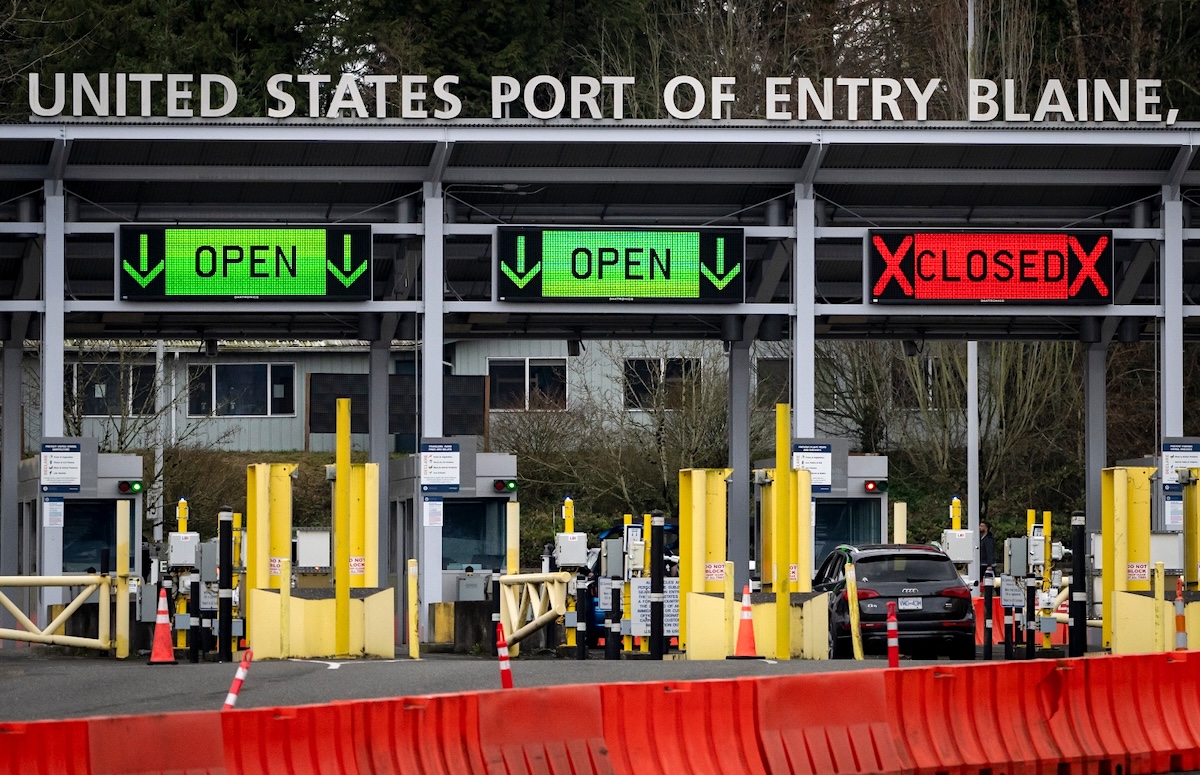
AFN National Chief Cindy Woodhouse Nepinak told the Canadian Press on Friday that the organization is deeply concerned about what it describes as ongoing harassment and obstruction of First Nations people attempting to cross the Canada–U.S. border. She said such actions violate inherent Indigenous rights and breach the Jay Treaty, a 1794 agreement that affirms the right of Indigenous people born in Canada to live and work in the United States.
Woodhouse Nepinak called on the Trump administration to uphold the right of First Nations people to cross the border without harassment or undue interference.
“Border agents and ICE officials must be properly trained to recognize and accept tribal identification, including status cards,” she said. “First Nations were here long before the border was drawn. That border affects daily movement, cultural practices, economic activity, and family ties with our Native American relatives.”
She also urged the Canadian government to affirm and defend First Nations border mobility rights, calling for action to ensure those rights are protected.
Global Affairs Canada said it is aware of multiple cases involving Canadians who are currently or were previously held in immigration-related detention in the United States, noting that countries ultimately control who enters or exits their borders. The department said status cards are generally accepted at U.S. land and sea crossings, but acceptance remains at the discretion of U.S. authorities. First Nations travelers are encouraged to carry additional government-issued photo identification, such as a Canadian passport, which is required for air travel.
Canada’s current travel advisory for the United States continues to recommend that travelers take normal security precautions.
The AFN’s warning comes amid rising tensions in the United States over large-scale immigration enforcement operations. Federal agents carried out more than 300,000 arrests last year, including cases involving U.S. citizens who were detained for extended periods.
A report from the American Immigration Council shows ICE detentions increased by 75 percent over the past year, rising from roughly 40,000 detainees in January to nearly 66,000 by December — the highest level on record. The report projects further increases in the coming year. Although ICE is tasked with enforcing immigration laws, media investigations have documented repeated instances in which U.S. citizens were detained, prompting protests in cities including Minneapolis, Los Angeles, and Portland.
In recent weeks, two U.S. citizens — Renee Good and Alex Pretti — were killed during protests against ICE operations in Minneapolis after being shot by federal agents.
Several Indigenous Americans have also been arrested during the immigration crackdown, raising concerns that racial profiling is influencing enforcement actions. Earlier this month, the Washington Post reported that Indigenous families across the U.S. said relatives were stopped, questioned, harassed, or detained based solely on their appearance or names. Those cases included an Ojibwa man in Minnesota and members of the Oglala Sioux Tribe in South Dakota.
The Nooksack Indian Tribe, whose territory spans Washington state and southern British Columbia, issued a warning in December stating that ICE has no jurisdiction over the tribe, its lands, or its enrolled members. Other First Nations with cross-border territories — including Rainy River First Nations, the Saint Regis Mohawk Tribe, Garden River First Nation, and Six Nations of the Grand River — have also issued alerts.

Ontario Regional Chief Abram Benedict told the Canadian Press that one First Nations man was detained by ICE, had his status card seized, and was later returned to Canada.
“He was fortunate that the situation didn’t escalate further,” said Benedict, who co-chairs the Jay Treaty Border Alliance. “The last thing we want is one of our citizens placed in detention and forced through a process that is intrusive and unnecessary.”
In a January statement, the Native American Rights Fund condemned what it described as unlawful ICE actions and said Indigenous people are being targeted because of race. Executive Director John Echohawk said it is deeply troubling that Native people — the first inhabitants of the land — are being detained during immigration sweeps.
The U.S. Department of Homeland Security has not responded to requests for comment on the reported incidents. In an October statement, the department said ICE does not arrest or deport U.S. citizens, though investigations by ProPublica have documented more than 170 cases of U.S. citizens being detained.
The AFN is advising First Nations people traveling to the United States to carry valid identification, including status cards and passports, and to contact Indigenous Services Canada for urgent assistance. In emergencies, Canadian citizens are advised to contact a consulate at 613-996-8885.