


After years of what they describe as dismissal and misrepresentation by government officials and major media outlets, The Gateway Pundit and a group of election investigators say they are preparing to release new findings related to Detroit’s 2020 presidential election—an election Michigan officials have repeatedly described as “secure.”
On Election Night 2020, President Donald J. Trump held substantial leads in several key battleground states, including roughly 100,000 votes in Wisconsin, 300,000 in Michigan, and 700,000 in Pennsylvania. For Joe Biden to overcome those margins, his share of remaining ballots would have needed to be exceptionally strong, particularly in Democratic strongholds such as Detroit, Milwaukee, and Philadelphia.
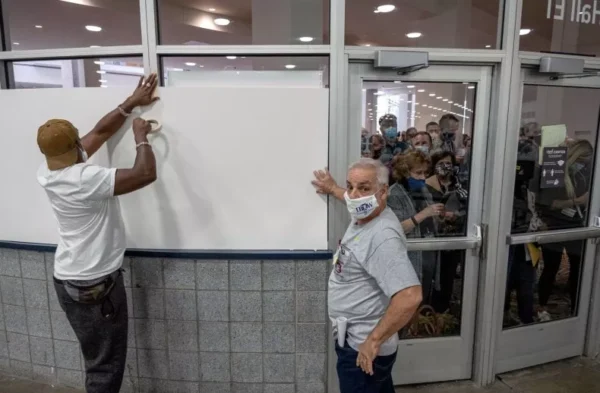
As the night progressed, reports emerged—often conflicting—that vote counting had paused in certain locations, workers were sent home, or tabulation resumed under unclear circumstances. While officials continue to dispute the significance of these reports, vote totals in Wisconsin, Michigan, and Pennsylvania continued to change well into the night and early morning hours.
HEY, @JocelynBenson, DO YOU KNOW HOW THIS HAPPENED AND WHY NO ONE WAS TOLD ABOUT IT during or after your “perfectly secure” election? 🤨
OVER 10K ballots from Detroit’s 2020 election have ovals filled in for write-in candidates with no candidates name next to the oval. This is a… pic.twitter.com/OvVqT8s7BI
— PattyMI (@PattyLovesTruth) January 8, 2026
By November 4, Wisconsin and Michigan had flipped in Biden’s favor, followed days later by Georgia and Pennsylvania. For many Americans, the rapid reversals, combined with confusion surrounding election-night procedures, raised serious questions about transparency and integrity.
Legal challenges in Michigan were dismissed by judges without hearing testimony from eyewitnesses or election-integrity experts, according to critics. Media outlets broadly rejected allegations of fraud, and a Michigan Senate report—supported by Republicans Ed McBroom and Lana Theis alongside Democrats—concluded there was no evidence of widespread fraud. That conclusion was rejected by numerous poll challengers who submitted sworn affidavits alleging irregularities in Detroit.
Those affidavits were largely ignored by lawmakers and law enforcement, including Michigan Attorney General Dana Nessel, who publicly mocked and warned individuals questioning the election results.
Detroit’s election results were ultimately certified by two Republican members of the Wayne County Board of Canvassers after they received multiple threats following an initial refusal to certify. Board Chair Monica Palmer later revealed she received a death threat involving her teenage daughter. Palmer agreed to certification only after being promised a full forensic audit—an assurance she says was later withdrawn by Secretary of State Jocelyn Benson.
A major point of contention involves Detroit’s absentee ballot processing at the former TCF Center (now Huntington Place). Approximately 70% of Detroit’s absentee counting boards were reported as “out of balance,” rendering those precincts ineligible for recount under Michigan law. Critics argue this prevented meaningful review of ballots that were later secured and stored until eligible for destruction under retention laws.
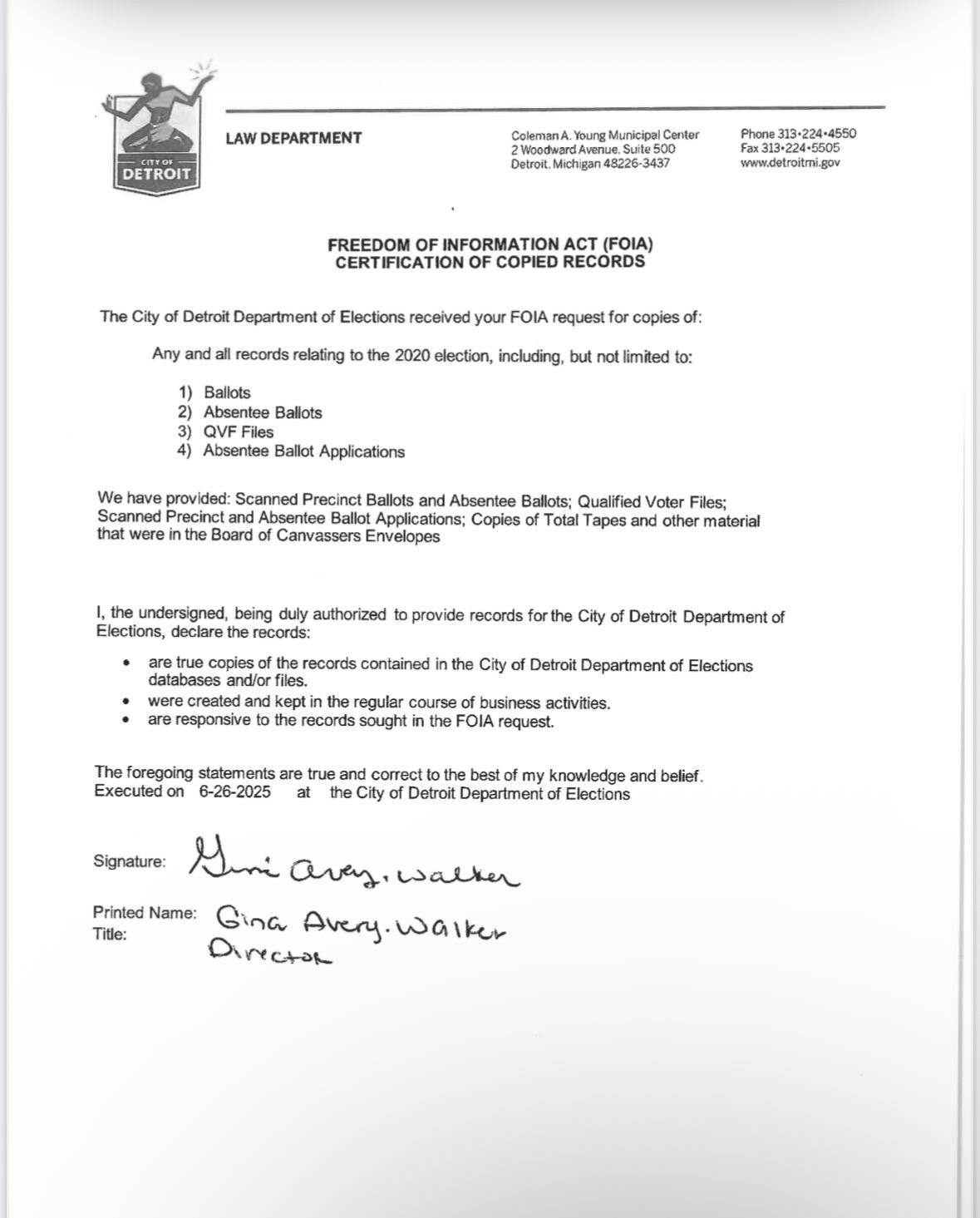
Independent investigator Yehuda Miller of New Jersey intervened before destruction could occur, successfully suing Detroit and Wayne County after being denied election records under FOIA. In September, Miller transported nearly one million physical election documents from Detroit to a secure location, along with obtaining digital files. A team of election analysts has been reviewing these materials for several months.
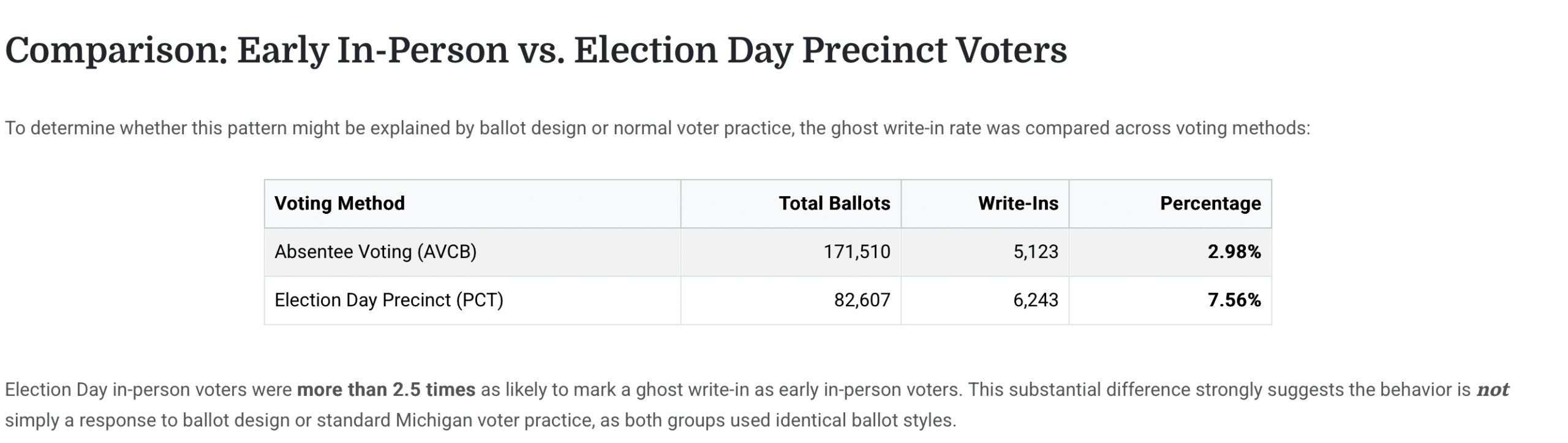
According to investigators, their first report has uncovered more than 10,000 ballots displaying what they describe as a highly unusual anomaly: voters filled in the oval for a write-in candidate but left the name field blank. These ballots appeared across both absentee and Election Day voting and were concentrated in down-ballot races.

Detroit’s 2020 election had an unusually high adjudication rate—approximately 33%, or about 40,000 ballots—far exceeding typical norms. While adjudication can occur for legitimate reasons such as stray marks or overvotes, investigators argue that the scale and consistency of these blank write-in markings—roughly 6% of ballots—has no documented precedent in Michigan elections and was not flagged in official audits.

Analysis conducted by Phillip Davis, a member of the Detroit election review team, found that these anomalies overwhelmingly occurred on ballots where voters selected straight-ticket Democrats or voted for Biden and Democratic Senate candidate Gary Peters at the top of the ballot.
Under Michigan procedures, write-in issues on down-ballot races should not affect up-ballot tabulation, which is handled by Dominion tabulators. However, investigators are questioning whether ballots flagged for adjudication were fully re-created and re-scanned, potentially resulting in up-ballot votes being counted more than once.

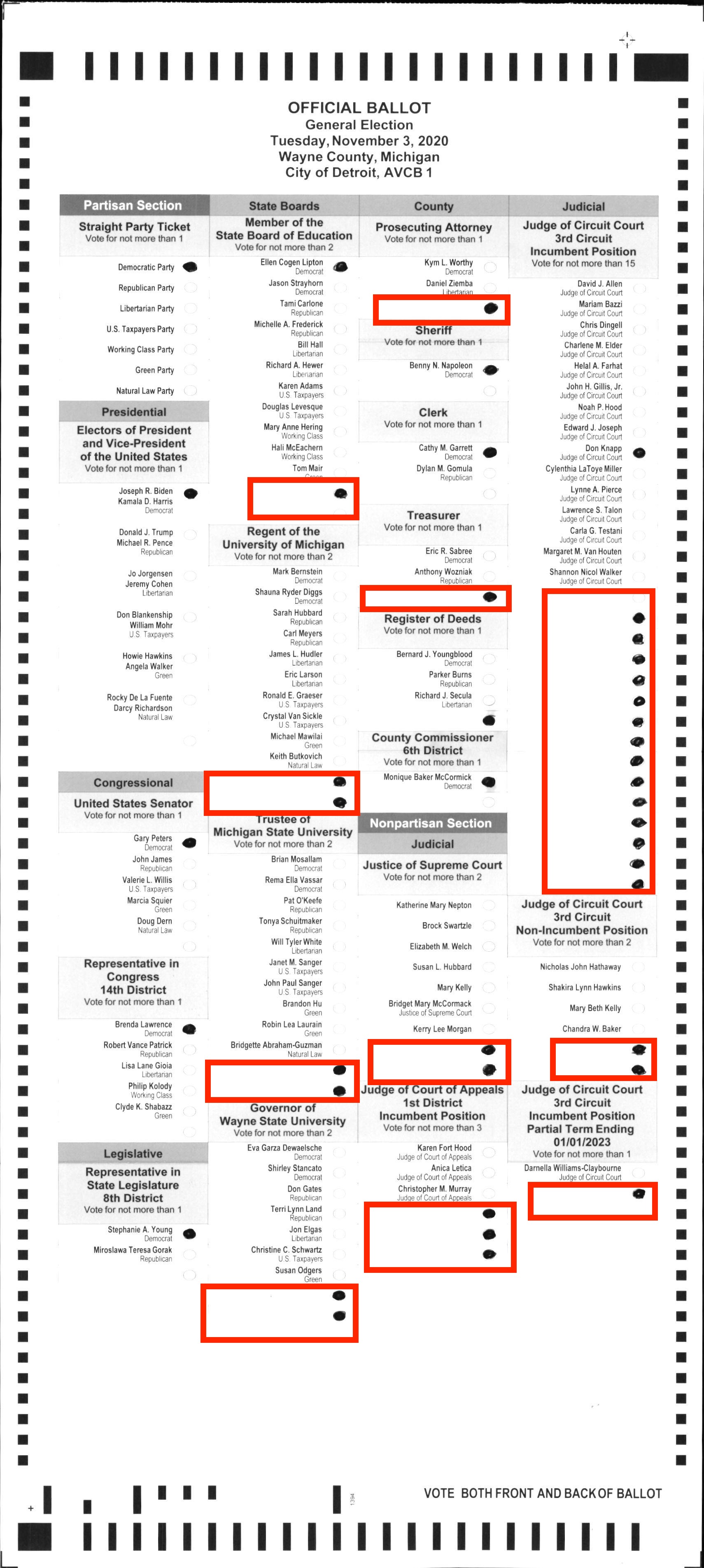

Here is an example of the back page of the ballot:
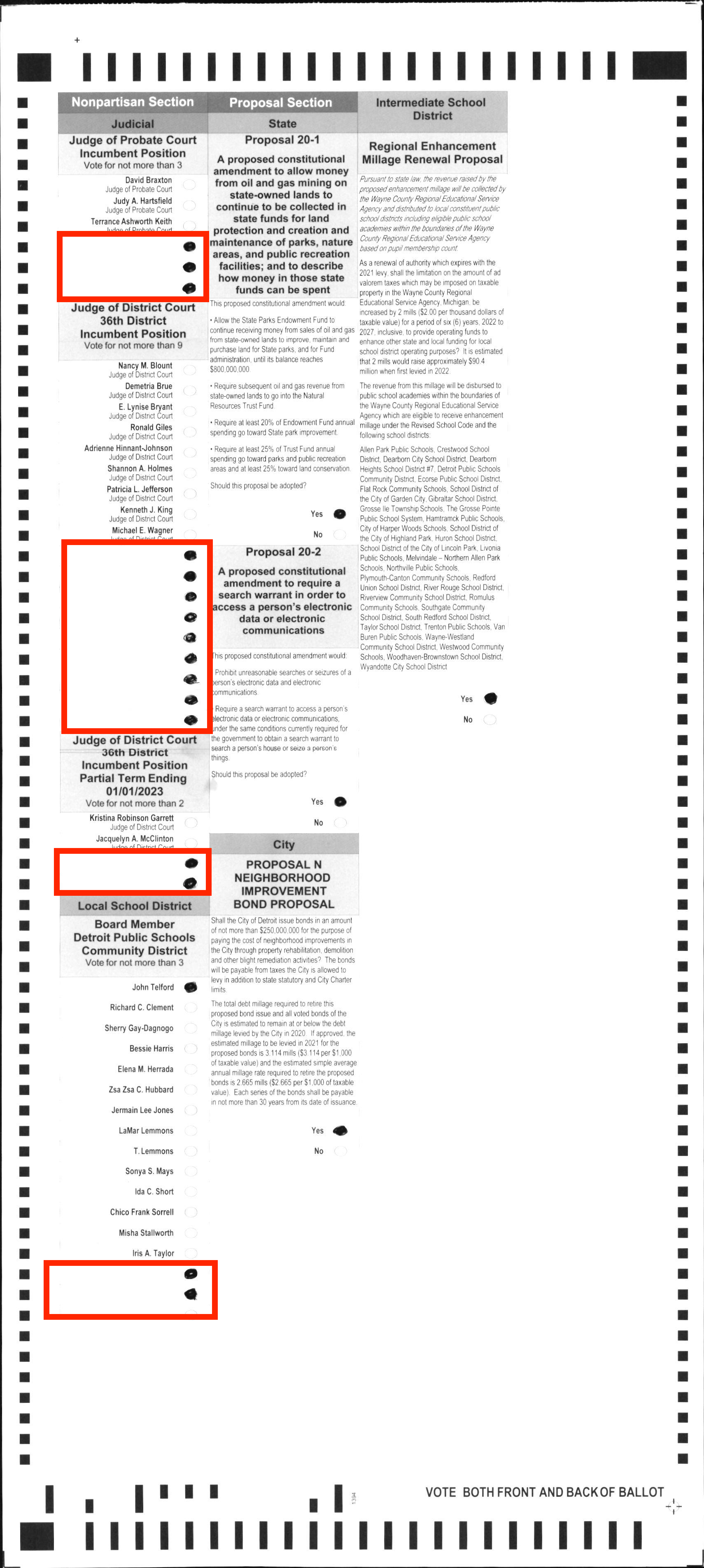

To date, no official explanation has been provided for the more than 10,000 blank-name write-in ballots, and investigators say none have been publicly acknowledged by state officials. A video highlighting samples of these ballots has circulated online, directed at Secretary of State Benson, who has called the 2020 election “the most secure” in Michigan history.
Investigators are now calling for further scrutiny, including potential federal review, and are asking the public for assistance as they continue analyzing the data. They argue that the scale and uniformity of the anomalies demand answers that have yet to be provided.